This page will have news
about all the human remains that have been located. I do my best to find out
whether these remains are identified. If you can help identify any of them
please phone Crimestoppers on 1800 333 000 or some of the articles have
individual Police station numbers listed.
*NOTE - As this page is now getting very
large, and sometimes a body may be found but not identified for several months I
think I need to organise it better so you (and I!) can more easily find people.
So I will be compiling a list at the top of this page that will be an index of
the remains that have been found and when they are identified I will move them
to another page HERE.
This man was killed by a northbound train between Burswood and
Victoria Park WA train stations 20 years ago — and his identity remains a
mystery. Aged between 20 and 40, he was struck about 11.20pm on Saturday March
7, 1998. He had fair skin, a slim-to-medium build, was 170cm-175cm tall with
hazel eyes and balding ginger-blond hair.
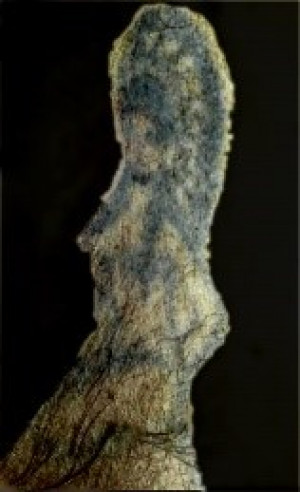
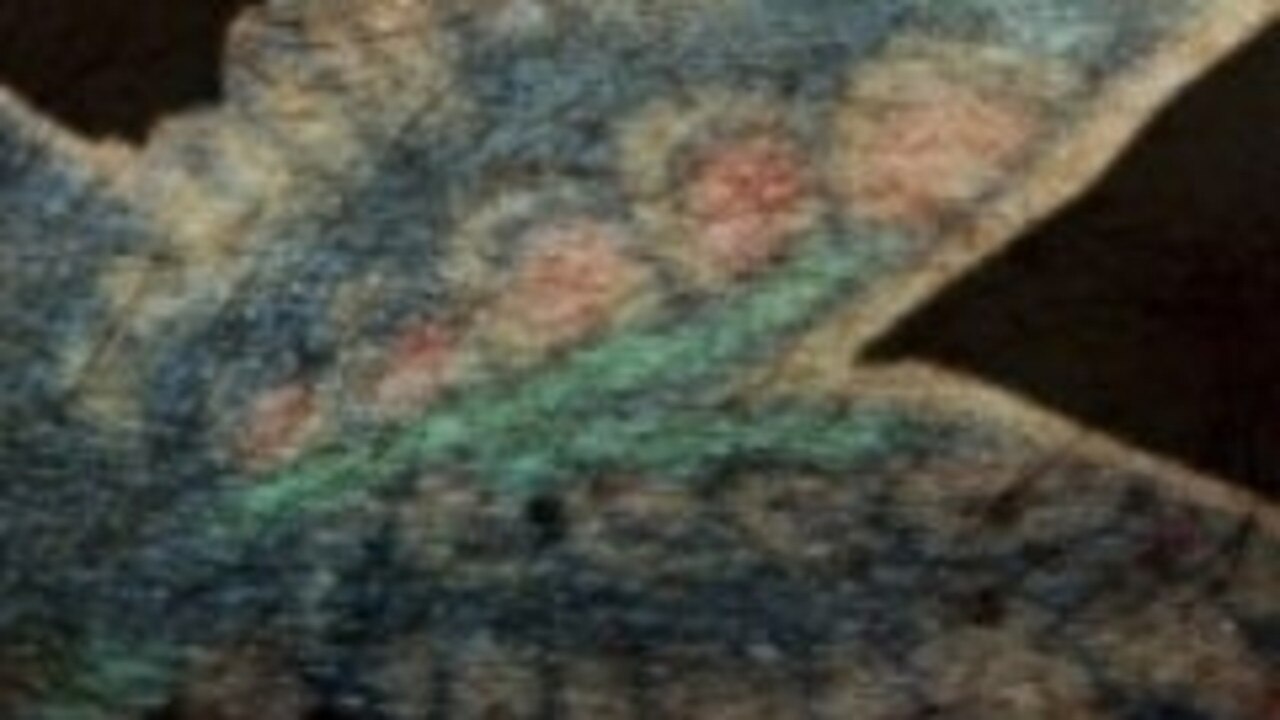
Tattoos from Poona man
Police use new technology to solve the mystery of the Poona Dam body
New DNA techniques are being used to try and crack one of
Queensland’s most intriguing unsolved mysteries.
Kate
Kyriacou, The Courier-Mail
Police have used new DNA techniques to try and solve a decade-long mystery -
the identity of a man found dead at Poona Dam.
The man was discovered by a workman near the eastern spillway of the Poona Dam
near Nambour on September 9, 2008.
His death is not believed to be suspicious but police have never been able to
link him to any known missing persons case
Investigators have today launched a fresh public appeal for information, after
new scientific and DNA techniques gave them a better picture of the man’s
heritage.
Detectives from the Missing Persons Unit have engaged scientific experts to
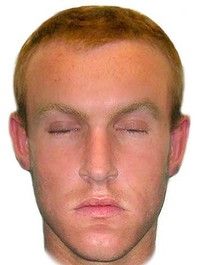
narrow down his ancestry and facial characteristics through DNA phenotyping.
The results have shown the man, who is aged between 45 and 65, may have New
Zealand ancestry and green or hazel eyes.
The results have also helped police come up with a new computer generated image.
Missing Persons Unit Detective Acting Senior Sergeant Dario Goriup said
information from the public was still vital to solving the case.
“While we are keeping an open mind, current information indicates this man may
have close family connections to the North Island of New Zealand, specifically
the Tauranga, Bay of Plenty area,” he said.
“We would ask members of the public who are missing a loved one or perhaps have
not spoken to a family member or friend since September 2008 to consider this
information, take a good look at this image and if there is a resemblance,
please contact police.
“All it could take is one person who recognises the image or details to come
forward and this could help us identify this man and find an answer to this
12-year mystery.”
The man is described as having a solid build, approximately 185cm tall, balding
with grey hair with an appendix scar and four tattoos.
The tattoos are of a shark and eagle on his left shoulder as well as on his
right shoulder, a woman with an American Indian headdress and what appears to be
a warrior or gnome figure.
The man was wearing a red ‘Bauhaus’ baseball cap, long sleeved ‘Duchamp’ brand
black shirt, ‘Aus sport’ grey tracksuit pants, white orange and grey ‘Fila’
ankle socks and a pair of ‘Cougar’ white, navy, silver and orange sandshoes. A
brown leather ‘Fox’ satchel was discovered next to his body.
Police thought they had solved the mystery three years ago - even sending away
for DNA comparisons - after a relative of missing man Charlie Rawlins came
forward to say he had not been seen since 2008.
But while investigators were waiting for the results, Mr Rawlins’ remains were
discovered off a Mount Coot-tha walking track.
Acting Senior Sergeant Dario Goriup said it was “somewhat unique” to have a body
but nobody claiming it over such a long period.
“It is not a common occurrence. This is somewhat unique there are there are
currently a few cases like this,” he said this morning.
“So this is why we’re really looking at seeing how this technology works in the
space in terms of providing us some additional leads.”
He said police would like to solve the long running case to give closure to the
man’s family.
“This is what we endeavour to do every day,” he said.
The DNA technology has only just become available, he said.
“The technology’s at the stage where we thought it would benefit for us the
most,” he said.
7/8/2020
NSW Police are appealing for information after DNA testing
revealed the likely description of a man whose unidentified bones were
discovered in bushland in the Sutherland area almost two years ago.
On Saturday 22 September 2018, officers attached to Sutherland Police
Area Command were called to Sir Bertram Stevens Drive, in the Royal
National Park, after human remains were found by a member of the public.
A post-mortem examination determined that the remains were that of a
man, but all other tests at the time were inconclusive.
The matter was referred to the State Crime Command’s Homicide Squad who
established Strike Force Gleam to investigate the identity of the
remains and circumstances surrounding the man’s death.
Following consultation with the Forensic Evidence & Technical Services
Command, an examination by a forensic anthropologist confirmed all of
the bones found belonged to the same skeleton, and that the man was
about 175cm tall and aged between 25 and 40 at the time of his death.
With the assistance of NSW Health Pathology, the bones were sent for DNA
phenotyping to identify the likely ancestry of the person, along with
their hair and eye colour.
The results suggested a high probability that the bones were that of a
man of Asian descent, with brown eyes and black hair.
Bomb pulse carbon dating tests were then undertaken by the University of
Waikato, New Zealand, which revealed that the man died sometime between
1985 to 2005.
As part of ongoing investigations, the State Crime Command’s Missing
Persons Registry identified 565 men who are long term missing persons (LTMPs),
each of which were cross checked against the description derived from
the various tests.
The list was reduced based on the criteria established by the
phenotyping results, with detectives now tasked with locating families
to obtain DNA samples for comparison.
Homicide Squad Commander, Detective Superintendent Danny Doherty, said
advancements in technology are crucial but information from the
community would be the key to unlocking this mystery.
“It has been a hugely collaborative effort with our partnering agencies
to get us to this point, where we know the likely age, ethnicity and
select details of this man’s physical description,” Det Supt Doherty
said.
“We realise that we are casting a broad net in relation to identifying
this man, but we would strongly encourage anyone who has a loved one
that is missing that fits this description to contact police.”
NSW Health Pathology Executive Director, Michael Symonds, said DNA
experts work with NSW Police to identify cases suitable for DNA
phenotyping.
“Our team use the DNA found on skeletal remains to create a picture of
what the person would have looked like; including characteristics such
as hair and eye colour, as well as geographic ancestry,” Mr Symonds
said.
“This type of testing is helping investigators provide families of
missing persons with answers that may not have been possible without
these advanced forensic capabilities.
“NSW Health Pathology is firmly committed to its positive partnership
with NSW Police and the NSW Coroner and will continue to work closely to
ensure families and loved ones receive the care, dignity and answers
they deserve,” Mr Symonds said.
Investigations under Strike Force Gleam are ongoing and anyone with
information is urged to contact Crime Stoppers: 1800 333 000 or
https://nsw.crimestoppers.com.au. Information is treated in
strict confidence. The public is reminded not to report crime via NSW
Police social media pages.
Skeletal remains found on Mackay riverbank likely to be human,
Queensland police say
Police investigating the discovery of skeletal remains along a riverbank in
north Queensland say they believe they are human bones.
Key points:
Forensic testing is expected to confirm the remains are human
Police cannot yet say if they relate to a missing persons case
The bones were revealed as a result of recent high tides
A passer-by noticed the bones slightly submerged in sand along the Pioneer
River, about 2 kilometres from the Mackay CBD on Friday afternoon.
Senior Sergeant Mark Sweetnam said while the bones were yet to undergo forensic
testing, it appeared the remains were part of a human skull.
"They appear to be quite old," he said.
Police excavated around the site on Saturday.
"We began an investigation to try to determine firstly, are they human remains,
and also the origin of those remains," Senior Sergeant Sweetnam said.
"At this stage it's a bit difficult to tell ... there's only bones that have
been located, nothing more than that."
Senior Sergeant Sweetnam said forensic testing would be carried out to confirm
the remains are human and to determine how long they have been there.
He said it was too early to connect the remains to missing persons cases.
"We'll find out how old they are and if they date back for some time there might
not be any need for any further investigation."
He said the bones were unearthed as a result of recent high tides.
"A sand bank has collapsed and the bones have been exposed."
The crime scene will remain established overnight.
Officers have ceased further excavation while the age of the bones is being
determined.
CORONERS COURT OF NEW SOUTH WALES Inquest:
Inquest into the death of an
unknown male person
Hearing dates: 7 November 2018
Date of findings: 7 November
2018
Place of findings: State Coroner’s Court, Glebe
Findings of: State Coroner
Les Mabbutt
File number: 2018/114406
Publication Pursuant to s 75 (5) of the Coroners Act 2009
I order that these findings may be published.
Introduction
1. On Wednesday
morning 11 April 2018 at about 6.35am a member of the public walking on Fletcher
Street Campsie noticed a man near the fence at the rear of 402 Beamish Street
Campsie. Upon closer examination it was realised the person had a rope around
his neck and was hanging from metal reinforcing mesh overhanging the fence from
the adjoining property. A milk crate was observed under the man’s left leg. A
call was made to 000 and an ambulance attended the location. Paramedics arrived
at the scene and determined the man had been deceased for some hours.
2. Police
established a coronial crime scene. After examination of the scene police
located no evidence to suggest another person had been involved or any elements
of foul play or suspicious circumstances were involved. Except for an opal card,
no identifying documents, mobile phone or other material was located on the
deceased or at the scene. Police recorded the following description of the
deceased person: Male Asian appearance Possibly 50-70 years of age
Medium build About 170 cm tall Clothing; long sleeved royal blue checked
shirt, cream cargo pants with black slippers and socks.
Cause of death
3. A Post
Mortem was conducted at the Department of Forensic Medicine at Glebe on 13 April
2018 by Forensic Pathologist Dr Rebecca Irvine. The cause of death was
determined as hanging. Dr Irvine noted that “No suspicious or inconsistent
findings were identified on external examination of the body.” The presence of
bony lytic lesions (partial destruction or replacement of part of a bone) was
noted. Dr Irvine stated they are “suspicious in particular for multiple myeloma”
and added “a range of other malignancies are also associated with lytic bone
metastases. Multiple other conditions may cause this presentation.” Dr Irvine
concluded “The deceased is likely to have been in considerable discomfort
because of his disease.” Toxicology tests revealed a nontoxic level of
paracetamol, and a blood alcohol concentration of 0.023g/100mL.
Why was an
inquest held?
4. The role of the Coroner pursuant to s 81 of the Coroners Act
2009 is to make findings regarding: The identity of the deceased The date
and place of that person’s death The cause and manner of that person’s death
Under s 27 of the Act an inquest is mandatory where the identity of the deceased
person has not been sufficiently disclosed.
5. Pursuant to s 82 of the Act, a
Coroner has the power to make recommendations, including concerning any public
health or safety issue arising out of the death in question.
The police
investigation to identify the deceased person
6. The officer in charge, Senior
Constable Ali Dirani from Campsie Police gave evidence at inquest and the brief
of evidence was tendered. Senior Constable Dirani conducted an investigation
into the death.
7. Police investigated the Opal card found on the deceased. The
card was prepaid and had no bank card or personal details attached to it. The
card had been used between 8 April 2018 and 10 April 2018. Each trip started or
finished at Dan’s Corner Campsie, only two buildings from where the deceased was
found. The last trip was made at 4.42pm on 10 April 2017, from Dan’s Corner
Campsie to Beamish Street opposite Unara Street Campsie. This is a distance of
about 250m. Police concluded it is likely the deceased lived in the area. Police
are of the view there are many share houses and boarding houses in the area
where “unlawful non-citizens” may reside.
8. Police conducted a canvass of 402
Beamish Street and other surrounding buildings on Fletcher and Marlowe Streets
without success. No person reported to police seeing anything related to the
death of the deceased person. No one was found who knew of a person matching the
deceased’s description. Police were not able to locate any CCTV camera footage
that showed the area where the deceased was found. Subsequent inquiries to
obtain footage consistent with the use of the Opal card did not result in the
recovery of any footage of the deceased person.
9. Police conducted checks
through the Missing Persons Unit. No reports had been made of missing persons
matching the deceased’s description.
10. Consideration was given to publicly
releasing a photo of the deceased through the media. However, the only photo
available for public release was the coronial crime scene photo of the deceased
person. Police decided this photograph should not be publicly released. Having
viewed the coronial scene photographs, I consider that decision appropriate in
the circumstances.
11. On 4 July 2018, Campsie Police sent out a media release
to a number of Chinese media outlets in Sydney asking for information regarding
a person matching the description of the deceased. No information was received
by police to assist with identifying the deceased.
12. The deceased’s fingerprints were taken at the Department of Forensic
Medicine. No match was found in the Australian police fingerprint database. A
DNA sample was also taken. No match was found on the NSW and National Criminal
Investigation Databases.
Are there any suspicious circumstances surrounding the
death?
13. Having considered all the evidence, oral and documentary received at
inquest, I am satisfied on the balance of probabilities no other person/s were
involved in the death. Post mortem examination did not reveal any indications of
force or restraint being used. The toxicology results do not support a
suggestion the deceased may have been incapacitated and placed in the position
he was found.
14. The results of the Post Mortem, the examination of the
coronial scene and all the circumstances satisfy me the death is not suspicious.
Was the death intentionally self inflicted?
15. The Post Mortem results reveal
the deceased was most likely in considerable pain from bone deterioration and/or
malignancy. A finding that a person has taken their own life intentionally
should only be made if the evidence is clear, cogent and exact. Briginshaw v
Briginshaw (1938) 60 CLR 336. Nothing is known of the deceased’s background or
medical history.
16. Police suspect the deceased may be an unlawful non citizen.
If that was the case, then accessing health care and other community support may
have presented difficulties. That may be consistent with no identification being
located on the deceased and that deceased has not been reported missing.
Alternatively, the deceased may be estranged from his family who reside
somewhere in Australia.
17. On all the evidence, I am unable to find
conclusively the deceased was in the category of persons referred to as unlawful
non citizens. There are a number of other possibilities. That a person is of
Asian appearance is also consistent with that person being born in Australia or
having lived in a number of different countries and/or having migrated to
Australia (legally) at some point in their life. The evidence does not allow for
a finding on the deceased’s country of origin.
18. On all the evidence,
including the physical evidence of the coronial scene, the circumstances of the
death and the medical condition revealed Post Mortem, I am satisfied the
deceased intended to end his life. The exact reason for doing so remains
unknown.
Conclusion
19. The inability to publish a photo of the deceased has
impeded procedures that may assist in identifying the deceased. Forensic
procedures have not identified the deceased. No one has reported the deceased
missing.
20. The deceased is somebody’s son, possibly somebody’s sibling and
perhaps somebody’s father. Tragically, there is a possibility he has a family in
Australia or overseas who do not know what has become of him. On all the
evidence available I am unable to make a positive finding regarding the identity
of the deceased. It can only be hoped that information may come to light in the
future that may assist in identifying the deceased and reuniting him with those
who knew him.
21. I thank Coronial Advocate Mr Creagh for his assistance in this
matter.
Findings pursuant to s 81 of the Coroners Act 2009
Identity
The identity
of the deceased male person is unable to be ascertained
Place of death 402
Beamish Street Campsie
Date of death Between 4.42pm on 10 April and 6.35am on 11
April 2018
Cause of death Hanging
Manner of Death Intentionally self inflicted
Les Mabbutt
State Coroner
Police searching for clues at Bondi apartment block where human
remains were found
Jack Houghton & Chris Harris, The Daily
Telegraph
FORENSIC police yesterday dug up a garage at a Bondi
Beachapartment block where the remains of a human foot were found.
Construction was halted yesterday as more than a dozen detectives combed through
the site looking for clues after the bones were discovered in a cavity
underneath a stairwell.
Bondi resident Duncan Graham, who lives opposite, said police had concentrated
their search at a garage underneath the property.
Officers armed with shovels lifted concrete and carefully dug into the dirt
below yesterday, their efforts documented by police photographers.
“They were sitting through some of the rubble and some of the dirt from where
the bones were found,” Mr Graham said.
“There’s a lot of activity. All the neighbours are talking — we’re all wondering
what the hell is going on.”
Police are expected to spend the next few days digging in the area, looking for
evidence of further human remains.
A NSW Police spokesman said yesterday preliminary tests had confirmed the
remains were human.
“Detectives are still awaiting the outcome of further forensic testing on the
bones but we can confirm there was activity at the site today and there will be
more activity tomorrow,” he said.
“It is forensic service group officers who are examining the scene as per
protocols. We have no update at this stage.”
Senior police told The Daily Telegraph the tests would determine the age and
gender of the person. It is not known how long the remains have been hidden at
the block.
The bones were found in a 1930s building of four apartments which has been
undergoing renovation for several months. “It was a foot, a f … king foot,” one
of the builders told media after making the grisly discovery.
Another neighbour said the bones weren’t buried.
“The fellow found it under a bit of old carpet,” he said. “The forensics said it
had been done it was an axe or a large knife because (the bone) was cut off just
below the knee.”
Police pathologists examine human jawbone found at The Basin at Mona
Vale
POLICE are awaiting the results of a forensic examination of a
human jawbone found tangled in seaweed at The Basin at Mona Vale
Beach yesterday.
Manly Daily
MYSTERY surrounds the origin of a human jawbone found on Sunday at The
Basin at Mona Vale Beach.
All police are able to say at the moment is the jawbone belonged to an
adolescent but the gender, ethnicity and vintage of the jawbone are yet to be
determined.
It was found among kelp on the beach at 10am on Sunday, sparking a search by
police of the beach and the water.
Northern Beaches crime manager Inspector Craig Wonders said the jawbone appeared
to have been in the water for some time.
He said initial examination by police pathologists had determined only that it
belonged to an adolescent human.
He said further examination of the jawbone later this week will be undertaken by
anthropologists and DNA testing would also be undertaken.
Insp Wonders said police had been looking at missing person reports.
“That’s ongoing but we’ll have to wait for the forensic examination later this
week before going any further with missing person inquiries,” Insp Wonders said.
“We’ll know more once the results of that examination are known and the DNA
testing has been done.”
The most famous discovery of bones in recent times occurred in January 2005,
when workers digging a ditch for electricity cables near the corners of Octavia
St and Ocean St, Narrabeen, unearthed a number of bones just below the surface.
Radiocarbon dating of the bones suggested an age of around 4000 years for the
skeleton and examination by scientists determined it belonged to an Aboriginal
man who was not native to the northern beaches and had been ritually executed.
Narrabeen Man, as the skeleton came to be known, is the oldest Aboriginal
skeleton found in Sydney.
THE
hope that bones found at an "underbelly graveyard " belonged to
victims of two of Sydney's greatest crime mysteries have been
dashed - only to become an even greater mystery themselves.
Police have now got DNA profiles of the remains of two, possibly
three, bodies found in the dunes of Kurnell and reveal for the first
time a black wig was found at the crime scene and is part of the
investigation.
"We know positively the bones are of two males, the first a
Caucasian aged 24 to 46," said Detective Superintendent Michael
Willing, Commander of the NSW Homicide Squad.
"The second victim is also a white male, aged 24-40 and there is a
possibility of a third person, which could be female but is still
undetermined."
He said carbon dating putting the bones as being anywhere round 1962
to 1981.
A shin bone was first uncovered by workers at the desalination plant
in October, 2007. A week later, 300m away, ribs and smaller bones
were discovered in sandy scrubland off Sir Joseph Banks Drive.
Further searching unearthed a pelvis and foot bones.
The discovery sparked a flurry of theories from cops, crooks and
armchair detectives. Missing Kings Cross heiress Juanita Nielsen's
name was bandied about.
Survivors of Sydney's 1980s gang wars wondered if the final resting
place of missing hit man Christopher Dale Flannery had been found.
DNA belonging to relatives of Flannery, who went missing in 1984,
and Juanita Nielsen in 1978, was sought and sent away for testing.
"Those results have eliminated Flannery or Miss Nielson," said
Detective Superintendent Willing. The DNA was also compared with
missing Sydney prostitute Lynne Woodward, a friend of Sally Anne
Huckstep who was murdered in 1986 after accusing NSW police of
corruption.
Greek businessman Peter Mitros was another possible victim of the
Sydney underworld rumoured to have been buried in the sand dunes
after he vanished from Kings Cross in 1991.
"There was a lot of speculation about these four but they have all
been positively ruled out by DNA," said Det Supt Willing.
With Flannery and Nielsen out of the equation the whispers of whose
"'handywork" it is will throw up a list of potential new victims
among drinkers in some of Sydney's tougher pubs and inside the cells
of Long Bay.
Killer Neddie Smith was known to favour the dunes of Foreshaw Drive
at Botany Bay for disposing of his victims and some thought the
bones at Kurnell meant he had moved further afield.
"I knew they wouldn't have been his. He would have been too lazy to
drive that far," said a retired detective.
Others believe it could be the work of Stan "The Man" Smith who,
despite his low profile, was one of the most prolific underworld
killers in Sydney from the 1960s through to the 1980s.
A Chuppa Chup wrapper found near a sock led early investigators to
place the victims as being around the 1970s when the lollipop was
popular in Australia.
"The problem is during the construction of Kurnell much of the crime
scene was contaminated by landfill, which came from all over
Sydney," said Det Supt Willing.
The case will be briefly mentioned at Glebe Coroner's Court this
Friday.
In spite of the hurdles confronting investigators, police believe
one day the identity of the remains will be solved.
"DNA is making advances at a rapid rate and I'm confident one day we
will be able to find out who they belong to."
Then the difficult job of finding out how and why they died begins.
Remains identified as truck driver
nine years after disappearance - Cowra Community
News
THE
remains of a man who went missing at Collarenebri, west of Moree, nine
years ago have been identified as those of a Queensland truck driver,
police say.
James Douglas Whyte, 31, went missing on
Collymongle Station at Collarenebri in November 2003.
At the time an extensive search was
conducted but was unable to locate Mr Whyte.
Strike Force Tanunda was formed to
investigate his disappearance.
Inquiries continued and in September last
year, a farm worker discovered human remains on Collymongle Station.
Police say the remains underwent DNA
testing which positively identified them as being Mr Whyte.
During a coronial inquest yesterday
(Tuesday), the Deputy State Coroner found the remains were those of Mr
Whyte, however, the manner and cause of death remains unknown.
Castlereagh Local Area Command Crime
Manager, Inspector Tony Mureau says: “This has been a long-running
investigation and I would like to acknowledge the patience and
understanding of James’s parents along with the considerable work by
Detective Sergeant Russell Pitt, who lead the initial investigation.
“Unfortunately we will just never know
exactly what happened to James,” Inspector Mureau says.
Cops probe Kalgoorlie
skeleton find
Michelle Wheeler, The West AustralianOctober 18, 2012, 8:47 am
Police are investigating the discovery of human remains in
Kalgoorlie.
A police spokeswoman said the body was reported to police just
before 3pm yesterday after bones were found by a person on the outskirts
of town.
Kalgoorlie detectives and the major crime squad are investigating.
Mystery Sydney leg bone to be tested
15:48 AEST Fri Sep 21 2012
Rashida Yosufzai - SMH
A human leg bone discovered in
Sydney Harbour is being carbon tested to determine its age and whether it
could be from a nineteenth century shipwreck.
The leg bone was discovered by scuba diver John Swift at Middle Head
in May 2011.
Testing conducted in September that year found the femur belonged to a
caucasian male aged around 18 but it is still unclear how old the bone is.
It was found less than 30m from the site of the Edward Lombe shipwreck
in which 12 men perished in 1834.
Tests are now being conducted to determine whether the bone is older
than 100 years, after an inquiry into it at Glebe Coroners Court was
adjourned on Friday.
Counsel assisting the coroner Deb Williamson told AAP the bone would
undergo a test known as bomb pulse dating, which determines whether the bone
post-dates the episode of nuclear weapons testing after World War II.
But she said there's no possibility the bone belonged to one of the
Edward Lombe crewmen, because bodies were recovered at the time.
"The heritage office is of the view that there's no way the bone could
have been as a result of the loss of the vessel in 1834," she said.
Following the carbon testing, which will take at least three months,
the bone will also be tested against the DNA of family members who have
reported missing persons.
An inquest into the bone will resume for mention on January 11.
Police seek public assistance in
identifying deceased man - Dover Heights
Thursday, 17 May 2012 01:09:22 PM
NSW Police are appealing for public assistance after a
deceased man was located in Sydney’s eastern suburbs in 2009.
On Tuesday 24 November 2009, police from Rose Bay Local Area
Command located a deceased man on a cliff ledge next to Rodney
Reserve in Dover Heights.
Police have made extensive inquiries however the man has not
yet been identified.
He is described as being of Asian appearance, 30 to 60 years
of age, 169cm tall. He was wearing a dark long-sleeve shirt, dark
trousers, black leather “Hugo Boss” brand belt and white and black
socks (no shoes found).
At this stage the cause of death has not been determined and
the matter is due to be put before the Coroner in the near future.
Anyone with information that may assist in identifying the man
is urged to contact Rose Bay Police Station on (02) 9362 6399 or
Crime Stoppers on 1800 333 000.
Nannup bones not linked to missing cult
members
Updated
April 16, 2012 18:47:01 - ABC
Authorities have ruled out links between human
remains found in the South West earlier this year and the unsolved
disappearance of four people who were linked to a religious cult.
The bones were found in a paddock near Nannup in February and
there were suspicions they could be linked to the disappearance of
the four, including Chantelle McDougall and her six year-old
daughter, who were last seen in 2008.
Acting Sergeant Craig Edwards says it is now clear the bones
do not belong to any of the four missing persons.
"At this time we have checked that with the West Australian
and national data bases and been unable to match that to any known
person," Sergeant Edwards said.
"At this stage we are sending the report out to Interpol with
a view to having them check out if this person was possibly a
foreign national.
"We don't have any firm information that the person is a
foreign national, but it's just an avenue we are exploring at this
time."
Cult link in
Nannup bones find
SANDY POWELL, Manjimup-Bridgetown
Times
March 7, 2012, 6:00 am
Human remains discovered in
Nannup last week could be those of
four cult members who went missing
nearly five years ago.
Police are anxiously waiting on
results of forensic tests on bones
and clothing found in a paddock on
February 28 while they investigate
potential links to missing persons
cases.
Det-Sen. Sgt Jon Munday said
the cult members, who mysteriously
disappeared in 2007, were a clear
lead because of where the remains
were found.
‘‘Obviously we’re looking for
any link with any long term missing
persons,’’ Sgt Munday said.
Chantelle McDougall, 28, when
she went missing, her daughter Leela,
8, partner Gary Feldman, 46, and
friend Tony Popic, 42, were last
seen in Busselton.
The four were linked to a
mysterious doomsday cult and
investigations into their
whereabouts were inconclusive.
Sgt Munday said the case was
progressing slowly as forensic
evidence was still being processed.
‘‘We’re hoping to have some
answers by the end of the week as to
the sex and age of the person, which
will help in identification,’’ he
said.
‘‘Actual identification might
take a few weeks, as there is so
little to go on. However, if
pathology is able to match any
missing person’s dental records that
will significantly speed up the
process.’’
The skeletal remains were
uncovered by horses grazing in a
Grange Road paddock and later
discovered by the animals’ owner.
Forensics officer senior
constable Tony Quest said the bones,
which included a skull, were not
previously buried but may have been
submerged due to the swampy nature
of the paddock, and this had
hampered investigations.
Snr const Quest said this made
it hard to determine how long the
remains had been there, though the
property owners told police the
paddock had been cleared about 18
months ago.
Clothing found with the
remains was also examined by
forensics at the scene and sent to
Perth for further testing, though
Sgt. Munday said they were unlikely
to provide answers.
‘‘We were hoping to find other
items with the clothing,
accessories, such as a watch or
jewellery which would be ideal, but
there was nothing of the sort,’’ he
said.
Baffling case of man
killed by train
Henrietta
Cook
March
7, 2012
The mystery man who was
killed by a train in Perth.
Police are urging the public
to help them identify a man who died
14 years ago after being struck by a
train in Perth.
The mystery man died instantly
after he was hit by a train around
11.20 pm on March 7, 1998.
Despite lengthy
investigations, including DNA and
fingerprint checks with Interpol,
the man's identity remains a
mystery.
The man suffered extensive
injuries when he was hit by a
northbound train between Burswood
and Victoria Park railway stations.
He is described as having fair
skin, aged between 20 and 40, a slim
to medium build, between 170 and 175
cm tall, with hazel eyes and balding
blonde or ginger hair.
He was wearing a green/ blue
business shirt, green trousers, a
brown belt and black Rivers shoes at
the time of the incident.
People with information are
urged to contact Crime Stoppers on
1800 333 000.
Police from The Rocks Local Area Command are
investigating the circumstances surrounding the
discovery of a man’s body in Domain Park today.
About 1.20pm (Monday 27 February 2012),
students from a local high school located the
body outside the ranger station.
Police were called and a crime scene was
established. It appears the man may have
suffered injuries to his head and neck.
The man’s identity is at this stage
unknown and routine pathology tests put his age
between 30 and 40.
Early investigations also suggest the man
was homeless, possibly living in the Domain.
A post-mortem is schedule for tomorrow.
Detectives are treating the death as
suspicious, and are asking anyone who may have
information that could identify the man, or that
could assist the investigation into his death,
to contact The Rocks Police Station on 8220
6399, or Crime Stoppers on 1800 333 000.
Police
wait on DNA test
14th February 2012 - The Northern Star
POLICE have yet to release the name of the
person whose skeletal remains and remnants of
clothing were found in scrubland north of Pottsville
at 4.45pm on Thursday.
Police said a member of the public found the
complete skeleton while walking in the scrub
separating the beach and Tweed Coast Rd.
Tweed crime manager Acting Inspector Saul
Wiseman said police believed they knew the identity
of the body, but DNA tests were required to confirm.
"We think we know who it is and we hope to be
able to confirm the identity soon," Act Insp Wiseman
said.
Police will not identify the deceased until
after family members have been notified.
They are not treating the death as suspicious.
Police re-open 41 year old case
Tuesday, 03 January 2012
18:40
Victoria Police has re-opened the investigation
in to the identity of an unknown deceased man, who
was located on 29 September 1970 in Ivanhoe.
The man was found lying in scrub along a walking
track at the edge of the Ivanhoe Golf Course near
the third tee.
A bottle of angina tablets and a one way train
ticket from North Port Railway Station, which was
closed in 1987, was located on the body.
The cause of the death is believed to be Coronary
Artery Disease Myocardial Degeneration.
Despite an extensive search of missing person,
medical and dental records, police have failed to
identify the man.
The man was believed to be aged in his early 40s and
described as about 174cm tall, with curly auburn and
grey hair and a moustache.
He was wearing shorts, thongs and a green t-shirt
over another t-shirt with a green zipper jacket when
he was found.
Police are appealing for anyone who has information
to help identify the man to contact Crime Stoppers
on 1800 333 or visit www.crimestoppers.com.au.
POLICE are investigating the origins of a
mystery jawbone found on a Mornington Peninsula beach.
The coroner confirmed to police late yesterday the
bone was human.
The bone was given to detectives on Friday by a person
who said it had been found at a Portsea area beach in
1981-82.
The missing persons unit has been told of the find.
The jaw is believed to be embedded with three teeth -
molars.
Police say the next step is to extract DNA for analysis.
"DNA samples will be taken to compare with the DNA database
and missing person cases," a Victoria Police spokesman said.
A forensic dentist and archaeologist are also expected to be
consulted.
Former prime minister Harold Holt disappeared off Cheviot
Beach while visiting his Portsea holiday home on December
17, 1967.
His remains have never been found.
Botanic bones
found to be Aboriginal
AdelaideNow
December 09, 2011
2:01PM
HUMAN bones found at the Adelaide Botanic
Gardens in the city and Mount Lofty are Aboriginal
ancestral remains from an Aboriginal burial site,
forensic tests show.
Gardeners uncovered an adult leg bone Adelaide Botanic
Garden last week and another leg bone at the Mt Lofty
Botanical Gardens on Monday.
Both bones had be conveyed to the public gardens in
loam sourced from quarries on the southern Fleurieu
Peninsula.
It has not been revealed if the bones belonged to the
same individual but tests showed they were ancient remains,
police said.
"No further police investigation is required (and) the
Aboriginal Heritage Branch have been advised of the find," a
spokesman said.
Second human bone found in Botanic Park
search
From: AdelaideNow
December 05, 201112:15PM
The
scene of the search at Botanic Park in the Adelaide
Hills this morning. Picture: Doug Robertson Source:
AdelaideNow
POLICE and SES volunteers have uncovered a second
human leg bone this morning while searching through 20
tonnes of sandy loam at Botanic Park in the Adelaide Hills.
Police say the bones, which are being forensically tested,
have been initially estimated as being between 20 and 200 years
old.
On Wednesday the first leg bone was found in mulch at the
Adelaide Botanic Garden which led to the search of the Botanic
Park depot, where soil has been delivered from two loam quarries
on the southern Fleurieu Peninsula.
Detective Sergeant Malcolm Williams said police will continue
searching the Botanic Park today before assessing if they must
attend the quarries.
He said it is possible the bones are that of an aboriginal
person.
"If they turn out to be non-aboriginal we will try to
ascertain the age of these bones, it might well be an early
settler."
It is expected to take several weeks for results to return
from the forensic science lab.
Police appeal for
information following discovery of human remains – #ManningRiver
Police are appealing for information after the discovery of human
remains in the Manning River in the state’s Northern Region.
About 3.15pm on Sunday (20 November 2011), police received reports of
the discovery of human remains in the river.
The human remains are currently being forensically examined and
investigators are conducting further inquiries into the circumstances
surrounding the discovery.
Anyone with information that could assist police with identifying
the remains or help with their inquiries is urged to contact
Manning/Great Lakes LAC or Crime Stoppers on 1800 333 000.
Human remains found in
Manning River on the NSW north coast
A PARTIAL skeleton has been found by the side of a river
in northern NSW.
Police said the human remains were in shallow water in the
Manning river near Forster on Sunday afternoon.
"It is not a full skeleton so we do not have a lot of information at
this stage," a police spokesman said today.
"The age, sex and how long the bones were in the river are all part
of forensic testing which is currently being done."
Police will be checking local missing person as a part of their
investigation.
Anyone with information that could assist police with identifying
the remains or help with their inquiries is urged to contact
Manning/Great Lakes LAC or Crime Stoppers on 1800 333 000.
Alice Springs police have confirmed that skeletal
remains found outside the town are human.
A woman walking her dog along a track in hills near
Ilparpa Road made the discovery about 9:00am (ACST) yesterday.
Police say forensic testing will be conducted next week
to determine the person's gender, age and cause of death.
Officers have set up a crime scene and the area will be
under police guard until the tests are complete.
The Aboriginal Areas Protection Authority has confirmed
the area is not an Aboriginal burial site.
Human
remains found in creek
Cameron
Atfield
May 7, 2011 - 12:09AM
Police are investigating the discovery of a woman's body
in a creek west of Brisbane.
A police spokeswoman said a walker discovered "items" in
Bundamba Creek at Booval at about 3.30pm yesterday, but it was still unclear
whether they were human remains.
"Preliminary investigations suggest the body is that of
a woman," she said.
Advertisement: Story
continues below
The spokeswoman said it was too early to speculate on
how the body, found in the creek at Jack Barkley Park under a railway bridge
near the Booval Bunnings, came to be there.
Police investigations are continuing.
Public appeal: Mystery over bush bones
Crime Reporter Emily Watkins
From:
Sunday Mail (SA)
April 24, 201112:00AM
POLICE are appealing to the public to solve the
mystery of a skeleton found in Mt Lofty last year.
IT was a chilly day in July when a group of scouts on expedition stumbled across
a skull.
They had pushed through the thick scrub of an old Mt Lofty fire track.
It sat neatly on the ground, nestled among the leaf litter and long grass,
waiting to finally be found.
In a riddle worthy of its own episode of CSI, police who have spent close
to a year trying to determine the identity of the skeletal remains have now
turned to the public to help solve the mystery.
"It was like something out of the movies," detective Brevet Sergeant Lucy
Shiek said.
"It was definitely a human skull."
Elaborate forensic tests and searches - locally and internationally - have
failed to shed light on the person's identity.
While the death is not thought to be suspicious,
Sgt Shiek said police would like to return the person to their family for a
proper burial.
This week, police took the Sunday Mail to the thick, scrubby slope where
the bones were stumbled upon.
Sgt Shiek has been investigating the case since the teens found the skull,
hip bone and part of the spine - later determined to be that of a young man.
Forensic bone and dental tests have revealed to police the body is that of
an Asian male aged 25 to 35.
She said the man was found to have had a dental filling inserted in Japan,
because it contained material that was only used in that country.
Sgt Shiek said police found the remains of a backpack at the site but
could only identify some coins, with a date stamp of 2008.
She said the profile determined from the remains did not fit any missing
person reports and there were no abandoned cars in the area.
Two CFS-controlled fires had gone through the area in the past three
years, destroying most clues that were there, Sgt Shiek said.
Interpol, the Immigration Department and interstate police had helped try
to identify the remains but Sgt Shiek said they had no luck.
"He was possibly an illegal immigrant," she said. "Depending on how he got
to the country we may have no record of him being here, but it's just a theory."
She said he may have arrived with family members who were too scared to
report him missing.
"The last thing we can do is put it out to the public," she said. Sgt
Shiek said the man was probably familiar with walking tracks in the area because
the site he was found at was rarely visited by the public.
Forensic scientist Ellie Simpson said if a whole skeleton was found, she
could determine its standing height, sex and some aspects of the person's
medical history. "We differ as much on the inside as we do on the outside and
sometimes the details from the outside you can also see in the bones," Dr
Simpson said.
She said the skull was mostly intact, and while she could not determine a
"population background", the skull had Asian features. She could reach the
approximate age from common patterns that bones age in.
Anyone with information can call CrimeStoppers on 1800 333 000
----------------------------------
FYI: The clues
> From the stereotypical features of the skull, forensic scientists
believe the man was of Asian origin
> Aged between 25 and 35
> Forensic scientists analyse how bones are ageing and can estimate the
skeleton's age when the person died
> Died some time after 2008
> Coins found around the body were all date-stamped 2008 or earlier
> Had dental work done in Japan, fillings in the teeth contained an
ingredient only used for fillings in Japan
> The person was familiar with the area
> Bones found in a picturesque spot away from regular bushwalkers and
close to private property
> Possibly an illegal immigrant
> No missing persons report fits the profile
Bones found at
Mount Lofty
Sunday, 24 April 2011 10:00am
SA Police are seeking the assistance of the public in attempting to
identify skeletal remains that were located at Mount Lofty last year.
On July 17 2010, police located the remains in woodland off an old disused
fire track at Mount Lofty in the Adelaide Hills.
Evidence at the scene suggests the person took their own life. No
identification was located but coins dating between 2004 and 2008 were found
amongst the remains.
The remains were examined by the Forensic Odontology Unit on 19 July 2010,
who concluded that the remains are likely to be of a man aged between 25 and 35
years.
The man is believed to be of an Asian background and had dental work
performed overseas.
Enquiries have been conducted with SAPOL's Missing Person Investigation
Section as well as Missing Persons Units in all Australian States and
Territory.
No matching missing person has been located.
In September 2010, police were advised by Forensic Science Centre a
partial male DNA profile was obtained from a tooth and uploaded to the
searchable DNA database in accordance with current legislation.
Unfortunately there is no match on the current database.
Enquiries are currently being conducted with the Department of Immigration
and Citizenship and Interpol, with regards to the partial DNA and police hope to
obtain a positive result from that line of enquiry.
Police ask anyone with information as to the possible identity of the man
to contact BankSA Crime Stoppers on 1800 333 000 or online at
www.sa.crimestoppers.com.au.
Bones found off Perth highway
From: AAP
March 17, 201110:16PM
REMAINS, believed to be human, have been found off a Perth highway.
A maintenance worker made the grisly discovery alongside the Mitchell Freeway
today.
A police spokeswoman told AAP tonight they were awaiting test results to
confirm the bones were human.
Police and forensic were investigating and more would be known tomorrow
she said.
The maintenance contractor made the discovery while working on the
southbound road reserve between Cedric Street and Karrinyup Road, PerthNow
reports.
It is believed a tent was found nearby and that the remains could belong
to a homeless man known to use the area, it said.
"Police are now looking through missing person cases to see if any links
can be made to the discovery," it said.
A TOTAL of 48 human bones have been recovered from a dam in New South Wales's
far west.
The first bone, a femur, was discovered by a fisherman in the weir pool next to
Little Menindee Creek Regulator, southeast of Broken Hill, on December 28.
A second bone was then uncovered in the same location in early January.
Police divers have since trawled the waterway, which is part of Kinchega
National Park.
Barrier Local Area Command crime manager Detective Inspector Mick Stoltenberg
said today that a total of 48 bones have now been found.
They have been sent to Newcastle for scientific analysis and to try to establish
an identity of the deceased person.
Det Insp Stoltenberg said there was no indication as to when the results will be
known.
Police have previously said it is likely the bones belong to a single
corpse.
Interstate and NSW missing persons databases are being examined to try to
identify the deceased person.
INVESTIGATIONS into the human remains discovered in a
dry creek bed in Koorawatha in July are continuing with a search of the area
being conducted.
Cootamundra Local Area Command (LAC) crime co-ordinator Sergeant David
Cockram said the search that began yesterday is expected to take two days.
“Police from within the Southern Region, and members of the Operational
Support Group, are assisting Cootamundra LAC Detectives in a search of the
ground in the vicinity of where remains were found in Koorawatha some months
ago,” Sergeant Cockram said.
The remains were found on July 25 by two men passing through bushland on
Pipe Clay Road.
Human bones found in paddock
January 28, 2011 - 12:40PM - SMH
Human bones have been discovered in a paddock in
NSW's central west.
A man discovered a collection of bones on Australia Day while digging in a
paddock adjoining his house in Bridge Street at Perthville, near Bathurst.
Police said initial forensic examination by an anthropologist suggested
the remains belonged to a man. They are yet to determine the length of time
since the bones were buried.
Advertisement: Story
continues below
Specialist officers are continuing to examine the bones and the area
where they were located to clarify the age and origin of the person.
Police discover scores more human bones
Published Tuesday, 25th January,
2011 - Barrier Truth
Police have narrowed down the age of the man whose bones were found in a
weir pool next to the Little Menindee Creek regulator.
They said yesterday that it appeared he was in his early 20s.
But the discovery of another 46 human bones by police divers on the
weekend meant they were not ruling out the possibility that they were dealing
with more than one body.
The bones were found in the same weir pool by members of the NSW Police
Diving Unit, who returned to Sydney yesterday.
Barrier Local Area Command Crime Manager, Detective Inspector Mick
Stoltenberg, said the four-member dive crew found 34 bones on Saturday and
another 12 on Sunday.
Det. Inspt. Stoltenberg said finger, arm, leg, pelvis and rib bones were
recovered by the divers, but no skull.
Asked if police believe all the bones belong to the same person, he said:
"We can't say that.
"These bones are with our forensic staff and will be fast-tracked to
Newcastle for further analysis this week."
He said the analysis would include a DNA profile.
Police have narrowed down the age of the leg bone that was found by a
fisherman on December 28, following an initial anthropologist's report.
"We're looking (at someone) around the early 20s," Det Inspt Stoltenberg
said. He said the remains were not those of an Aboriginal.
DI Stoltenberg said police expected to receive more information when
further testing was carried out on the bones.
"We're hoping it will actually identify who the person actually is."
Police will compare the bones against a DNA database of missing people,
including Bendigo man Daniel Rosewall who vanished in the district in January
last year.
Mr Rosewall's car was found abandoned near Eldee Station north of
Silverton.
DI Stoltenberg yesterday said that police were not ruling out who the
bones might belong to, or how they came to be in the weir.
"Close liaisons between Barrier LAC Detectives, NSW Homicide Squad, NSW
Missing Person Unit and interstate law enforcement continues."
But he said no-one had been reported missing from the Menindee area in
recent years.
He also said it appeared unlikely the bones were washed down the river,
given the "circumstances surrounding" their discovery.
DI Stoltenberg said the divers had worked under very difficult
circumstances.
"We put in a request (for the diver unit) and we were allocated two days
and obviously a lot depended on what they found (on the first day).
"We're happy with what they've achieved over the weekend."
Anyone with information about the bones are asked to contact local police
or Crimestoppers on 1800 333000.
Police urge community to assist with investigation
after second bone discovered - Broken Hill
Friday, 14 Jan 2011 09:34pm
Police have urged the community to come forward with information after the
discovery of a second bone near Broken Hill over the weekend.
Initially a fisherman found a leg bone in the Little Menindee Creek Regulator on
Tuesday 28 December 2010, and forensic examinations have revealed the bone is
from a male.
Today, Broken Hill Police were provided with information that on Sunday, 9
January a second bone was located in almost the same location and left at the
creek.
Investigators immediately went to the area and located what appears to be a
second human bone.
The bone which appears to be a tibia was secured and has been taken away for
further forensic and DNA testing.
Barrier Local Area Command Crime Manager, Detective Inspector Mick Stoltenberg,
says that as a result of the second find police formed Strike Force ADJIN.
“We continue to investigate the discovery of these remains at this time and I
reiterate we are accessing a database containing thousands of missing persons,”
Det Insp Stoltenberg said.
“I urge anyone with information about these discoveries who has not yet spoken
to police to come forward.
“All our lines of inquiry remain open and we are not following any particular
investigation.
“I can assure anyone with information that if they come forward it will be
treated in the strictest confidence and if they wish they can remain anonymous
while speaking with Crime Stoppers.
Police reject misleading reports following
discovery of human bone near Broken Hill
Friday, 14 Jan 2011 01:38pm
Police have rejected misleading reports which have arisen following the
discovery of a human femur bone near Broken Hill last month.
A fisherman found the leg bone in the Little Menindee Creek Regulator on Tuesday
28 December 2010, and forensic examinations have revealed the bone is from a
male.
Barrier Local Area Command Crime Manager, Detective Inspector Mick Stoltenberg,
says further searches of the area are being conducted and inquiries are
continuing.
“As part of our procedures, we access a database containing hundreds of
thousands of missing persons and DNA details which we have obtained from their
families,” Det Insp Stoltenberg said.
“The bone that has been located could be the remains of ANYONE on that
database.”
“At this stage, with such little available information, to single out or specify
a particular victim would be both irresponsible and premature.”
“It’s also heartless to raise the hopes of family members that the remains of a
loved one have been located, when that has yet to be proven definitively.”
“This is not a time for jumping to conclusions – and it’s not the time for
misreporting or agendas.”
“However, it is time for anyone with information about the discovery of the
human leg bone late last month to assist us with our inquiry and contact Crime
Stoppers on 1800 333 000,” Det Insp Stoltenberg said.
Police appeal for information after human bone
found near Broken Hill
Thursday, 13 Jan 2011
04:22pm
NSW Police are appealing for information following the discovery of a human
femur bone near Broken Hill last month.
A fisherman found the leg bone in the Little Menindee Creek Regulator on Tuesday
28 December.
Forensic examinations have revealed the bone is from a male.
Although original examinations suggested the bone was from someone who has been
dead for no more than 10 years, police now believe the time frame for death may
be closer to one to six years.
Barrier Local Area Command detectives are conducting further searches in the
area and inquiries with missing persons.
They are urging anyone with information about the discovery to contact them via
Crime Stoppers on 1800 333 000.
Albury police appeal for help on bones discovery
Posted
January 5, 2011 09:46:00 - ABC
Albury police have not ruled out foul play over the
discovery of a woman's skeletal remains in the upper Murray last month.
Inspector Brad Blanchard said the remains were found in the Murray River
which is in New South Wales' jurisdiction, but police believe whatever has
occurred happened in Victoria.
Inspector Blanchard said the bones were found in the very upper reaches of
the Murray River.
"We can confirm through post mortem results to date, that they are that of
a human, we believe, an adult female," he said.
"At this stage we haven't been able to give any range of age, or how long
those bones may have been in the water, or in fact on the land there."
Inspector Blanchard said there is no indication yet of the cause of death.
"We're still waiting further examination," he said.
"And obviously we'll start conducting DNA testing and where we can getting
dental records to try and identify the person."
"But at this stage we haven't ruled out foul play at all. We will continue
to investigate it as suspicious until results tell us otherwise," said Inspector
Blanchard.
Five bushwalkers from Melbourne discovered the bones in the Alpine
National Park near the New South Wales, Victorian border on December the 15th.
Inspector Blanchard said police officers from both states will meet today
to further investigate the case.
He said the bones are unlikely to belong to 18 year old missing Armidale
girl, Niamh Maye who disappeared around Tumut in early 2002.
"We've ruled out a number of people purely just by age," he said.
"And when I say that, it's probably the amount of time they've been
missing and the length of time these bones have been exposed to the climate and
conditions."
"We can go back as far as 2003 and that's the last bushfire that was up in
that area. The skeletal remains we've located indicate they could from that time
because there's no char marks on the bones," said Inspector Blanchard.
He said police would like public help to identify the remains.
"Members of the public who may have knowledge of missing persons or
anything else, particularly up in that Omeo, Bairnsdale, Benambra area, if
anyone has seen anyone at all thre over the years, that's gone missing, or just
seen people about... I know we're asking people to reflect back a number of
years but look anything at all at the moment may be very very relevant to us,"
said Inspector Blanchard.
Body found at Werribee
Tuesday, 04 January
2011 22:49
Police are investigating the discovery of a man's body in the
Werribee River.
The body was located around 6pm this evening under a pedestrian
bridge near Comben Drive.
Member of the Search and Rescue Squad retrieved the body and
Homicide Detectives were called to the scene as a matter of course.
The deceased is yet to be identified but is believed to be a male
aged between 40 and 60.
A post mortem will be conducted to determine the cause of death.
Investigations reveal skeletal remains belong to
man – Fairfield
Thursday, 23 Dec 2010
02:40pm
Police investigating the discovery of skeletal remains found in bushland in
Sydney’s south west earlier this week have confirmed them as belonging to a man
however the identification process continues.
About 6pm, Tuesday 21 December police were called to bushland at a creek near
Bell Crescent, Fairfield, following reports of skeletal remains being located by
a resident.
Police attended the area where they located a large amount of bones and a skull
and established a crime scene.
The area was guarded overnight before being examined by specialist forensic
personnel and the skeleton was removed from the scene.
A preliminary post mortem examination conducted today has indicated the bones
belong to an elderly or middle aged man and there is nothing to suggest his
death is suspicious.
Detectives are however keeping an open mind in regards to the investigation and
are scouring missing person’s reports in an attempt to identify the man.
Police have said while the man did have a titanium metal plate inserted on his
leg this is of little assistance in the identification process and the matter
will require an extensive forensic investigation to confirm who he is.
Bones found under Sydney fence 'are human'
December 22, 2010 - 9:04AM - SMH
AAP
Bones found buried beneath a fence in Sydney's
west are human and probably quite old, the man who found them says.
Police have launched an investigation after the
skeletal remains were discovered in Fairfield, about 6pm (AEDT) on Tuesday.
Mark Harland says he was digging up a fence on
his property in Bell Crescent, which backs onto Prospect Creek, when he made the
grisly discovery about a foot down.
Advertisement: Story continues below
"What I found was leg bones, so that's what made me realise they were
human," Mr Harland told Macquarie Radio Network.
"There was no flesh on it so they'd obviously
been there for a while."
Police gave no indication about the origin of
the bones and say a pathologist will examine them.
A crime scene has been established at the scene
and further examinations of the area are due to take place on Wednesday.
Bones in creek may be missing farmer
Geesche Jacobsen - SMH
July 27, 2010
When Wayne Cooke
disappeared in the middle of the shearing season in October 2001, the Koorawatha
farmer left friends and relatives dumbfounded.
While many acknowledged he was depressed over
his mother's death, problems in his marriage and a fire at his childhood home,
some thought it was unlike him to leave his sheep unattended.
And if it had all become too much for him, why
had he not left a note?
Advertisement: Story continues below
Extensive searches of the farm and surrounding area using a
helicopter, dogs and local volunteers failed to find any trace.
Various theoriesquickly took hold: if it
was not suicide, could he have been murdered?
Nearly nine years on, the mystery that has
puzzled the small town near Cowra, in the central west of NSW, might finally be
about to be solved.
On Sunday morning the owner of a neighbouring
property was walking through dense bush with a friend when they found human
bones in a dry creek bed.
Police set up a crime scene, and seized the
skeletal remains for forensic testing.
The property, about a kilometre from Mr Cooke's
farm, had been searched at the time of his disappearance, said a friend of Mr
Cooke, Alan D'Elboux.
Only last Friday Mr D'Elboux's brother Barry,
who is Mr Cooke's brother-in-law, had suggested they should once again search
for Mr Cooke's body, he said.
Alan D'Elboux said that while it was upsetting
to think the bones might be Mr Cooke's, the find might finally provide closure.
''None of us expected him to be alive … He was
very depressed. I couldn't do anything with him. I tried my hardest.''
A local farmer, Les Sutherland said: ''It'd be
too much of a coincidence for it not to be him.'' Many locals thought Mr Cooke
had met with foul play, Mr Sutherland said.
Alan Gruessing, who sheared for Mr Cooke and
who led four substantial searches for him in the rugged terrain around
Koorawatha, said: ''It was said at the time that he committed suicide but nobody
really knows for sure. There are too many unanswered questions. I suppose a lot
will depend on if they find a rifle next to the body or not.''
Police would not comment on ABC radio reports
that clothing was found near the body.
The farmer who fell off the edge of
the Earth
August 9, 2003 - SMH
Wayne Cooke
vanished in the middle of shearing his prized merinos, and his mates want to
know why, writes Philip Cornford.
In a winter dusk, with cold shadows
fingering down from Black Bull Hill, clutching the farm in the valley, Les
Sutherland feels the hairs on the back of his neck prickle. "Something real bad
happened here," he says softly, not wanting to intrude.
Mr Sutherland, 51, a farmer all his life, is
not one to imagine things. But even the tranquillity of the dying day did not
quell his unease. "I don't like being here when night's coming on." His sons
won't stay, either.
This was Wayne Cooke's farm, and his father's
before that. Cookey, as his friends call him, spent all his 51 years on
400-hectare Rockdale, seldom leaving - physically or in his thoughts. The farm
set the boundaries of his life.
Then he vanished, leaving his two utilities in
the garage and no trace or clues, and the searching began. Nearly two years
later, his friends and neighbours are still looking for Cookey's body in the
rough hill country around the village of Koorawatha (pop: 300) in the central
west of NSW.
"It's a weird feeling; coming
out here you get the shivers," says Alan "Bluey" D'Elboux, 65, who rides the
ranges on horseback. "If I didn't think he was here, I wouldn't keep looking for
him."
Others search on four-wheel trail vehicles, or
on foot among the gullies and stunted hardwoods and pines. Whenever there's a
break in the seasonal disciplines of farm work, they go looking, alone or in
small groups. Crop-duster Fred Fahey searched from 500 feet.
Shearer Alan Gruessing and farmer Kevin Cameron
led four searches of Crowther Hill, a 12-kilometre walk from the farm. Ray
Wilson, for whom Mr Cooke share-farmed 60 hectares of wheat, can't drive past
Rockdale without thinking: "Where are you, Cookey? You drive down a track,
you're looking for signs of him."
The need to find Wayne Cooke has become almost
a communal compulsion, and behind it lies troubling doubts. They believe that if
they find his body - and no one doubts that he is dead - they will learn how he
died.
Was it suicide? Or something else?
Police suspect suicide. "There is overwhelming
evidence that he was deeply depressed," says Detective Senior Constable Michael
Prescott, who prepared a brief of evidence for the coroner. "There is absolutely
no evidence of foul play." It is rare, however, for a suicide not to involve a
body or some evidence - a note, clothes left on a beach, for instance.
The NSW Coroner will investigate Mr Cooke's
disappearance to determine if it is a "suspected death". Research by the Monash
University national centre for coronial information reveals that of 18 missing
persons whom NSW and Victorian coroners found to be suspected deaths in the past
three years, only four were believed to involve foul play or homicide. None was
a suspected suicide.
Within six months of Mr Cooke's disappearance,
the farm had realised $450,000 from the wool clip, two wheat crops, 1800 sheep,
machinery and vehicles, and $150,000 in fire insurance. It was leased for
$15,000 a year.
The land is worth $450,000. The land titles are
still in the name of Mr Cooke's father, Bernard, who died in 1972. Last March
the Supreme Court rejected three applications by Wayne Cooke's wife, Margaret,
to take over administration of Bernard Cooke's estate in her husband's absence.
None of Mr Cooke's friends dispute that he was
very depressed after three personal tragedies in the three months before he
disappeared in the spring of 2001.
At the end of June, Margaret, his wife of 20
years, left him, taking their 16-year-old daughter, Patricia, to live in Cowra,
25 kilometres away.
They had met when Mr Cooke was 31, tall,
nice-looking and shy, and Margaret an attractive divorcee with a son aged eight.
"Margaret was the only girlfriend that boy ever had," says Delma Cowley, 73,
whom Mr Cooke knew as Auntie Del.
Margaret, a partner in the farm management
company, ran the finances, as many farmers' wives do. When she left, she took
the financial records, cheque books and mobile phones.
Then Mr Cooke's mother, Rita, whom he adored,
died in a Cowra nursing home on July 6.
Five weeks later, on August 26, a Sunday night
when Mr Cooke was in Cowra eating dinner with his estranged wife and daughter,
the farmhouse in which his family had lived since the early 1940s burnt to the
ground. He lost all his personal possessions. Police blamed an electric blanket.
In that brief span, the certainties that had
shored up Mr Cooke's bucolic way of life were destroyed. He was shocked,
miserable, confused, tearful. His friends tried, but he could not be comforted.
They gave him clothes and cooked him meals.
Farmer Garry Lawrence hauled over a caravan.
"Wayne never had any money in his wallet or pockets," Colonel Graham Stewart, a
neighbour, said. "Margaret brought him out food from the supermarket, usually on
Sundays. She controlled the finances."
But friends said Mr Cooke would not complain.
He did not want to offend his wife.
"He was always at Margaret, begging her to come
back," Mr Sutherland said. "He'd burst into tears when he talked about her. He'd
walk around the yard, head down, mumbling: 'I don't know what I'm going to do
without her. I'll do anything to get her back."'
Mr Cooke told his nephew Peter D'Elboux:
"What's the use? I might just as well walk up into the hills and not come back."
Police suspect this might be what he did on the
weekend of October 6-7, when he disappeared, explaining the absence of a body
despite a five-day search, which involved the police helicopter Polair for two
hours and a cadaver dog for a day.
Bluey D'Elboux suspects it, too, and keeps
riding the hills. But at a recent gathering of 10 searchers on Rockdale only one
other believed Mr Cooke had taken his own life. A third wasn't sure either way.
Seven believed he had been "taken away".
They are critical of the police. "They had it
set in their heads from the first day that it was suicide," several said.
When they complained that the farm should be
treated as a crime scene, they were told his body would be found in a dam. It
wasn't. Two shotguns, a rifle and rifle scope were, dumped by Mr Cooke a long
time earlier.
They have a contrary view to police about the
lack of evidence of foul play. It could equally suggest, they say, that Mr Cooke
willingly left the caravan in which he had lived after the fire, expecting to
return.
But most strongly of all, they argue that he
disappeared in the middle of shearing 1800 fine wool merinos - and they can't
believe he did it deliberately.
"Wayne lived for his damn sheep," says Mr
Sutherland, who has an adjacent farm and who went to school with him. "He
wouldn't leave the farm for even two days for worrying about them. If he was
going to kill himself, there was no way it would be while he was shearing."
He also had two wheat crops, which were due to
be stripped in another two months.
The Cowra coroner, Michael Wolters, read the
police evidence and passed the brief to the State Coroner. Mr Wolters said:
"There's no suspect."
If Mr Cooke took his life, he went to a lot of
trouble to hide his body. If he was so distressed, friends ask, why bother?
To get well into the hills, he had to walk at
least several kilometres over steep, broken terrain. He would have suffered
considerable pain from a blood clot in his left leg, on which he wore a pressure
bandage. He could not walk around the home paddock without stopping to rest.
In the week before he disappeared, Mr Cooke
spoke by phone to Mrs Cowley, and her son, David, who was best man at his
wedding, giving them the impression he was still depressed "but more positive, a
lot more upbeat."
He told them in separate calls that he would
start shearing on Thursday morning. It would take about two weeks, then he was
going to Canberra to give money from his mother's estate to the five children of
his late older sister, Frances D'Elboux. "He said it was his mother's wish and
he wanted to make sure it was carried out," Mrs Cowley said.
Mr Cooke had already begun the legal process to
make the disbursements - $38,000 and $4700 - but his disappearance stopped
payment. The recipients' father, Barry D'Elboux, said Margaret Cooke told him in
April that the money would be paid when released from Rita Cooke's estate.
Mrs Cowley and her son said Mr Cooke talked
about his wife's long friendship with her cousin, John O'Brien, an RAN retiree
from Canberra. David Cowley, 51, a high school teacher, said Mr Cooke was not
happy about the friendship but did not want to make an issue of it.
When Margaret and Patricia came to the farm at
4pm on the second day of the search, Mr O'Brien accompanied them. Last April
Margaret told friends and relatives: "John and I are together now."
In two days, Alan Gruessing and Peter McInerney
sheared 460 sheep, with Mr Cooke doing the woolclassing. "I didn't think Wayne
was too bad when we left on Friday," Mr McInerney said. "He wasn't as down as he
had been."
About 7.30pm, Robyn Mood, a neighbour, rang Mr
Cooke. "He said he was so stuffed he couldn't be bothered cooking. On Saturday
he was going to get the stock ready for shearing on Monday. He was expecting
Margaret and his daughter on Sunday."
From 8pm to 9pm Mr Cooke was on the phone to
Alan Gruessing, discussing preparation for Monday's shearing, among other
matters. "There was no doubt that he was going to get it done," Mr Gruessing
said. "Otherwise, we couldn't shear."
Mr Cooke phoned Margaret, arranging for the
roustabout to get an advance on the roustabout's wages. He picked up a cheque
that night. Barry D'Elboux phoned. There was no answer. Records show the last
call made on Mr Cooke's phone was on Friday night. He did not use it again.
On Saturday a neighbour drove onto the farm. He
was surprised to find the five dogs, led by a big red bitch, waiting halfway
along the 1000-metre access road, watching the front gate, as if they were
waiting for Mr Cooke to return. He wondered why they were not tied up. Mr Cooke
was not around, so he left.
Around lunchtime on Sunday, Graham Stewart took
over a casserole his wife had cooked. Mr Cooke was not at the caravan, so he
took the food home.
Margaret and Patricia also brought supermarket
food, which they left in the caravan, with a note saying they had been there,
and asking him to phone. It said they waited until 4pm.
At 7.15am on Monday, when Alan Gruessing came
to shear, Mr Cooke was missing. None of the work had been done. "Everything was
exactly as we left it on Friday." He raised the alarm.
Graham Stewart said: "You knew where Wayne was
by that red dog. If Wayne had gone for a walk, the dogs would have followed him.
If he was dead on the farm, the red dog would have led us to him. We think they
were watching the front gate because that's where they last saw him."
Soon after Mr Cooke's disappearance, the
insurance company settled the fire claim for $150,000. The wool clip sold for
$69,000, the sheep for about $60,000, the wheat for about $42,000. The farm was
leased.
In March 2001, five months after her husband
disappeared, Mrs Cooke bought a house in Cowra. Two weeks later she auctioned
all the farm plant for about $100,000.
A month after Mr Cooke disappeared, Mrs Cooke
held a service of hope at the local church, attended by 140. They prayed that if
Mr Cooke was alive that he was happy and well; if he was dead, that his body be
found; and they prayed for his friends and family.
"It was difficult for everyone," said the
Reverend Betty Stroud. "There was all that unknown stuff. It's an awful
situation. Finding his body would reveal how he died and help bring closure."
VETERAN homicide
investigators will tell you there is no such thing as an unsolved murder.
There are just murders for which there has not been enough evidence to prove who
did it.
"Most detectives believe they know who the
killer is, and there is an old adage, 'you end up speaking to the killer even
though you may not know it within about 48 hours of the murder'," retired
homicide detective Michael McGann said.
Mr McGann said every homicide cop had at least
one case which sticks in their craw - one they could never prove, but knew who
did it.
"Mine was a little five-year-old girl called
Renee Aitkin," he said.
"Over a few beers my partner and I discussed
the idea of grabbing him, tying him to tree, putting a gun down his throat and
asking him what he did with Renee's body."
But sanity and reason prevailed instead of
justice and Renee's murder is still considered unsolved.
Renee was five when she was abducted from her
Narooma home on the South Coast in February, 1984. Her body has never been found
and she is still listed by NSW police as a missing person.
"My partner and I knew who did it. We needed to
find her body," Mr McGann said.
Fast forward to 2009 and the horrific mass
murder of the five Lin family members is another example of detectives having a
good idea of the killer but biding their time until the evidence is there to
pounce.
A source within Strike Force Norburn, set up to
investigate the brutal murder of Min and Lily Lin, their sons Henry and Terry
and Mrs Lin's sister Irene, said detectives had always been confident they knew
who was responsible for the killing on July 18 last year, but they had to be
strategic.
"You only get one go, it's not something you
rush for the sake of it," the police source said.
Similarly, officers working to solve the
execution-style killing of North Shore businessman Michael McGurk have always
been confident they knew who was behind his murder.
What makes it more difficult for homicide
officers is when no body is ever found.
But every time human bones are found, there is
a group of detectives - retired or still serving - who take a very keen interest
in their discovery.
They are the cops who have an unsolved case on
their books, and they hope the bones belong to "their" case'.
"When I hear about bones being found, my ears
prick up," Detective-Sergeant Damien Loone said.
Thirteen years ago, Sgt Loone was handed the
cold case file of missing Sydney mother Lynette Dawson, 34, who vanished from
her Northern Beaches home on January 9, 1982. "At that stage it was a missing
person's case, and was 15 years old then.
"Even after 28 years, you hope the bones turn
up and provide the last pieces in the jigsaw," Sgt Loone said.
When trail bike riders stumbled across a human
skeleton in the Belanglo State Forest last Sunday, cold case detectives across
NSW braced for the possibility it could be the last piece of the puzzle and
solve their case.
"You never know. Lynette's sibling's DNA is on
a data base and if they believe these bones are of a female aged 30 to 40 it's a
possibility," Sgt Loone said.
Frustration of not being able to get the killer
leads to fantasies of breaking the case and creative "ways" of getting the
evidence.
Another "bones" case still being investigated
by police is the remains of a male and female unearthed by workmen clearing land
for the desalination plant at Kurnell about three years ago.
A shin bone was found by the workers in
October, 2007, and days later, about 300m away, ribs and other smaller bones
were found in sandy scrubland off Sir Joseph Banks Drive.
Then, a pelvis and foot bones, eerily still
wearing a sock, were found.
Forensic tests carried out revealed the bones
belonged to two people who died less than 50 years ago.
Just as the bones in Belanglo raised the
spectre of a new- found victim of Ivan Milat, the discovery at Kurnell had many
speculating they could be the victims of convicted killer Arthur "Neddy" Smith.
Smith was known to favour the dunes south of
Sydney as a dumping ground for murders he committed in the '70s and '80s of
unwanted underworld associates. Rubbish found with some of the bones indicates
they were probably from some time after the 1970s but tests offer no clue to
whether the pair were murdered, died accidentally, or even died together.
Body recovered from rocks – La Perouse
Wednesday, 03 Nov 2010
10:50pm
A body has been recovered from rocks at La Perouse, in Sydney’s south-east, this
afternoon.
Police were called after a member of the public spotted the badly-decomposed
body of a male aged between 20-30 old, on a rock shelf near Cape Banks, in the
Botany Bay National Park.
A rescue helicopter was brought in to remove the body.
It will undergo a post mortem examination in coming days in a bid to identify
the deceased and establish a cause of death.
Detectives from Eastern Beaches Local Area Command have commenced an
investigation.
A report will be prepared for the information of the NSW Coroner.
Claim of human remains found in Pakenham
Wednesday, 22 September
2010 13:42
Police have received a report that human remains have been buried
at a residential address in Pakenham.
An investigation is currently underway to substantiate the claims.
A 31-year-old man from Cranbourne is currently assisting police with
their enquiries.
Detectives release image of T-shirt located near
skeletal remains at Belanglo – Homicide Squad
Wednesday, 15 Sep 2010
01:16pm
Homicide Squad detectives have today issued images depicting an artist’s
impression of a T-shirt located near skeletal remains at Belanglo State Forest.
A group of trail bike riders alerted police to the remains in dense bushland
near Dalys Waterhole on Sunday 29 August, 2010.
A ground search of the forest was completed by police and during the search
officers located the T-shirt near the skeletal remains.
The T-shirt is described and being short sleeved, with a distinct motif
featuring the word ‘Angelic’ in pink text, a rose and a heart with angel wings.
The brand, “Chain Reaction for Girls” is no longer in operation in NSW, however
police believe the brand was available in the mid-2000s and are appealing to
anyone who has any information about the T-shirt or anyone who may have worn one
similar.
During the search police also located a white anklet sock, a sleeper earring, a
shoe lace, and a number of teeth. These items are undergoing further forensic
analysis.
Investigations are continuing and at this stage police are yet to identify the
remains. In light of tests completed to date, police can reveal the remains are
that of a female, aged between 15-25 years at the time of death, and the bones
are believed to have been in the area up to 10-12 years.
A post mortem examination has been completed however a cause of death is yet to
be determined.
Strike Force Hixson comprises detectives from the State Crime Command’s Homicide
Squad and has been established to conduct investigations following the discovery
of the remains.
Anyone with information about the incident is urged to contact detectives via
Crime Stoppers on 1800 333 000
Belanglo bones appear to be female: police
Updated Wed Sep 1, 2010 1:33pm AEST
Police say it looks like bones found in the New South Wales
southern highlands belong to a woman.
It is the fourth day of the search of Belanglo State Forest, where human
remains were found on Sunday afternoon.
The forest is infamous for being the site where backpacker murderer Ivan
Milat dumped seven bodies in the 1990s.
The bones, which include a skull, are at the Glebe Morgue undergoing a
post-mortem examination.
Acting Superintendent Evan Quarmby says the results should shed some light
on who the remains could belong to.
"The early indications are that they are possibly female," he said.
"We won't be able to confirm that until after the result of the scientific
examination."
The Homicide Squad has taken over the investigation.
Acting Superintendent Quarmby says police are combing through the soil to
make sure they have collected all the evidence.
He says it is still too early to narrow down the missing persons list to
identify the remains.
Skeletal remains located – Belanglo State Forest
Sunday, 29 Aug 2010 09:12pm
Goulburn police are investigating the discovery of skeletal remains found in the
Belanglo State Forest this afternoon in the Southern Highlands.
About 3.15pm (Sunday 29 August) a group of trail bike riders discovered a number
of bones in the Belanglo State Forest.
Police were immediately called and secured a crime scene.
Goulburn detectives along with Wollongong Crime Scene attended and
investigations are continuing.
A search of the area was suspended due to poor lighting and will continue
tomorrow morning.
*As I am not sure which is the most accurate I will include both photos I
have.
New lead on dead man's identity
By Nikole Jacobi - ABC
Posted Wed Aug 4, 2010 10:03am AEST
Police say they have received new
information as part of an investigation into the identity of a man who was found
dead near Nambour on Queensland's Sunshine Coast almost two years ago.
The man, believed to have been aged between 45
and 60, was found dead at Poona Dam in September 2008.
His death is not suspicious.
Police have tried unsuccessfully to identify him
by his fingerprints, DNA and tattoos and through an international investigation.
Detective Senior Sergeant Damien Powell from the
Missing Persons Unit says police have been told a couple of people from Kingaroy
in the South Burnett may know the man.
"We are currently conducting further inquiries at
Kingaroy which is a good thing because he did have a Kingaroy video card, a very
old one, in his wallet. It was about the only piece of identification," he said.
Unidentified deceased
male located – Poona Dam Sunshine Coast
QLD Police continue their investigations to
identify a deceased man located by a workman on the eastern spillway of Poona
Dam near Nambour on September 9, 2008. Police believe the man may have been at
the location for a few days and extensive enquiries have failed to assist in the
identification process. Recently police released a facial image reconstruction
(see left) of the man in a bid to help with the process, however no information
was received. While the death is considered non-suspicious, it is important
police identify him. The man was located wearing a red ‘Bauhaus’ baseball cap,
long sleeved “Duchamp” brand black shirt, “Aus sport” grey tracksuit pants,
white orange and grey “Fila” ankle socks and a pair of “Cougar” white, navy,
silver and orange sandshoes. It is estimated the deceased was approximately
178cm tall, with short straight grey hair and heavy build. The deceased also had
four distinct tattoos on his body, one of a Native American woman in headdress
and a warrior style image (on his right shoulder), a shark and what appears to
be a buzzard (both on the left shoulder).
Search continues to identify body found almost 2
yrs ago
By Nikole Jacobi - ABC
Posted Thu Jun 17, 2010 8:40am AEST
Police say they have been unable to identify a man who was
found dead almost two years ago at Poona Dam near Nambour on Queensland's
Sunshine Coast, despite an extensive international investigation.
The man, who is believed to be aged between 45 and 60, was found dead on
the eastern spillway of the dam by a workman in September 2008.
Police say they have tried unsuccessfully to identify the man in various
ways including by his fingerprints, DNA and tattoos.
He will feature in a missing persons display at this year's Sunshine Coast
Show.
"This gentleman is somebody's son, he's somebody's mate," he said.
"He could be somebody's brother and we need to get in touch with the
family and let them know what's happened to him.
"Somebody must be missing him - he's an unidentified deceased person who
obviously someone must care about."
The man's death is not considered to be suspicious.
Remains found on Tas beach
Updated Sat Apr 3, 2010 1:02pm AEDT - ABC
Tasmanian police say human remains found on an east coast
beach will not be identified for weeks.
The remains were discovered washed ashore on Friday morning near the
Esplanade at Triabunna.
A full scale forensic examination of the beach was done.
Police say the remains will need to undergo further forensic examinations.
Police say there is a possibility the find could be linked to a missing
persons case.
New Zealand fisherman Basil Alexander Lee went missing off the Triabunna
wharf in mid January.
A land and sea search at the time failed to find any trace of the 40 year
old.
Detectives appeal for information after body found
in house fire
Wednesday, 31 Mar 2010
12:37pm
Tweed Heads and Homicide Squad detectives have formed a strike force to
investigate the death of a man whose charred remains were found in a house fire
last week.
The severely burnt body of a man – who has yet to be formally identified – was
found by police who attended a house fire in Urliup Rd, Tweed Heads, early last
Friday (March 26). The house was completely destroyed by the fire and it has yet
to be determined whether the fire was accidental or deliberately lit.
When police and fire brigades attended the scene at 6.30am, the house was well
alight. It was not until the fire was extinguished that the charred remains were
found. Due to the extent of the fire, the remains have been sent for forensic
testing in Newcastle to identify the man.
Detectives from Strike Force Daruk are appealing for any information from the
public, particularly between the hours 2am and 5am Friday (March 26).
“While we have spoken to a number of witnesses, it’s important we receive
information from any members of the public who may have seen or heard something
in or near the house in the early hours of Friday morning,” said Tweed/Byron LAC
Crime Manager Detective Inspector Shane Diehm.
“As the body has not been formally identified, we can’t determine if the
deceased lived at the house or was just visiting.
“We are also looking for a motorcycle that belongs to one of the occupants of
the house. It was last seen on Golam Drive, about five minutes from the house
fire, between 2 and 5am. However it is now missing.”
Anyone with information is urged to contact detectives either on Crimestoppers
1800 333 000 or Tweed Heads Police Station on 07 55360999.
Texas lab joins effort to solve our cold cases
LES KENNEDY - SMH
July 19, 2009
DNA experts in the United States are providing NSW Police with new clues on some
of the state's most baffling missing persons cases and unidentified human
remains.
The cases include bones from at least two
people found in sand dunes on Sydney's Kurnell peninsula in 2007 and remains
located near Ballina on the north coast.
Unsolved homicide squad police believe the
north coast bones, found at an undisclosed site, may be those of missing
31-year-old Lennox Head mother-of-two Bronwyn Joy Winfield, last seen at her
home in 1993.
Scientists at Orchid Cellmark in Dallas,
Texas, have spent the past two months examining 31 exhibits of bone and tissue
specimens, and a further 15 saliva swabs taken from relatives of missing
persons.
The samples were delivered to them by
Detective Sergeant Damian Loone, of The Rocks station, who has spent the past 12
years investigating the disappearance and suspected murder of northern beaches
woman Lynette Dawson.
The only possible clue about the fate of
the 34-year-old Bayview mother, who went missing in January 1982, is a pale-pink
cardigan found near a hole that was dug for a swimming pool on her property.
Detective Sergeant Loone took the cardigan
to the US to try to match Mrs Dawson's DNA with a sample from one of her
daughters.
The detective is expected to return to the
US in the next month to reclaim the exhibits and DNA results, which will be
screened against those from relatives of other missing persons.
Saliva swabs taken from Mrs Winfield's
daughters will be compared with DNA from bone fragments found on the north coast
amid renewed inquiries by police in the past three months.
Mrs Winfield, who a coronial inquest
declared dead in 2002, was reported missing by her estranged husband 11 days
after she was last seen at her home.
The US tests could also reveal the sex of
at least two people from three separate sets of bone fragments found in dunes in
2007 during land clearing preparation for the construction of the Sydney
desalination plant at Kurnell.
Man’s body located – Eugowra
Monday, 10 Aug 2009 05:16am
NSW Police are conducting inquiries after the discovery of a man’s body in the
state’s west.
About 11am yesterday (Sunday 9 August), a male bushwalker located the body of a
man in the Nangar National Park near Eugowra, east of Forbes.
The man contacted police from Canobolas Local Area Command who attended and
established a crime scene.
Inquiries into the circumstances surrounding the man’s death continue; however,
police are not currently treating the death as suspicious.
Police are checking records of local missing people to assist with determining
the identity of the man.
A report will be prepared for the information of the coroner.
Police conduct inquiries
following discovery of human skull - Gooloogong
2009-06-11 05:51:19
NSW Detectives in the state's Central West are conducting inquiries following
the discovery of a human skull on a Gooloogong property.
The owner of a property on Kangarooby Road found the skull about 11.45am last
Friday (5 June).
As a result, detectives from Canobolas Local Area Command and the Forensic
Services Group at Bathurst attended the scene and conducted inquiries.
Initial inquiries suggest the skull was from a person of white/European
appearance and had been there for some time.
State Crime Command's Homicide Squad has been briefed about the discovery.
Local police conducted a line search of the property yesterday in a bid to
locate any evidence that might assist their inquiries.
Anyone who has information that might assist investigating officers is urged to
contact Orange Police Station via Crime Stoppers on 1800 333 000.
Police will today update the media on their investigation.
Location of human remains, Westlake: Last updated
25/04/2009
QLD Police have located
human remains on the edge of the Brisbane River at Westlake late this afternoon.
A member of the public discovered the remains at low tide around 5.40pm. Scenes
of Crime Officers have seized the remains, which will be subject to an
examination. The remains are believed to be that of an adult. Investigations are
continuing.
Skull found in Qld bush
Posted
Thu Mar 19, 2009 3:38pm AEDT
Queensland police are searching bushland outside Toowoomba,
west of Brisbane, after finding a fragment of what they believe is a human
skull.
Officers say the piece of bone was found by a bushwalker in Glen Lomond
Gully in January and is about 10 years old.
Forensics are testing the remains but the age or sex of the remains is yet
to be determined.
Police say they have ruled out the possibility that the skull belonged to
a pre-European settlement Indigenous person.
They are preparing a report for the coroner.
Location of human skull fragment in Toowoomba
Last updated 19/03/2009
QLD Police are investigating the
location of a human skull fragment in rugged bushland at Glen Lamond Gully, near
Toowoomba on January 13.
An extensive land search has been conducted of the area however no further
human remains have been located.
Initial investigations suggest that the skull fragment may have been
exposed to the elements for at least 10 years and further investigations
regarding possible carbon dating are being conducted.
The skull fragment is being examined by scientists at the John Tonge
Centre in Brisbane and no suspicious circumstances have been revealed in the
examination so far.
Police have ruled out the possibility that the fragment comes from an
ancient indigenous skull however investigations have not yet confirmed the age
and sex of the individual.
Police are continuing their investigations and a report is being compiled
for referral to the Coroner.
Border Ranges body may have drug
link
2nd February
2009 - The Northern Star
POLICE have not ruled
out the possibility that the body of a man found near Kyogle is one of two
missing men linked to a $3 million Condong drug raid.
Police found the body in the
Border Ranges National Park, near the NSW and Queensland border, about 2pm
last Friday and then issued a call for public help to identify him.
It is understood investigations are under way as to whether the body is that of
Barry Grant, 52, or Jethro Matheson, 30, who have been missing since last month.
Police said the men were connected to a Condong property where, on January 16,
officers from the Tweed/Byron command uncovered 1549 cannabis plants in an
elaborate hydroponic set-up with an estimated street value of $3 million.
They also found $65,000 worth of cannabis leaf.
It is not known what connection the men have to each other, or to the Eviron
Road property, as police have been unable to provide any further details.
The men, Grant, from Murwillumbah, and Matheson, from Brisbane, have not been
seen or heard from since before the January 16 raid.
Friends and family members of the pair have told police it is unusual for them
not to make contact.
Meanwhile, a crime scene was established following the discovery of the body in
the Border Ranges National Park, with officers from the State Crime Command’s
Homicide Squad assisting Tweed Heads police.
Police would not say how long the body had been there, or who made the grisly
discovery.
While police would not provide any further details on either investigation
yesterday, Inspector Jim Kain would not rule out the possibility the two were
connected.
“That would just be speculation at this stage, because no identification has
been found (with the body),” Insp Kain said.
“We can’t say any more at this stage.”
Insp Kain could not say whether police believed Grant or Matheson had met with
foul play, but he said detectives were following a specific line of inquiry into
the case.
A NSW Police spokeswoman could not confirm any link between Matheson and Grant
and the unidentified body yesterday because, she said, it might hamper police
investigations.
However, she said police were likely to release further details on the discovery
of the body and its identity today.
Body found in bushland - NSW / Queensland border
Friday, 30 Jan 2009 06:24pm
NSW Police are appealing for public assistance following the discovery of a
man's body in bushland near the NSW - Queensland border.
About 2pm today (Friday 30 January 2009), police located the body of an
unidentified male in the Border Ranges National Park near Kyogle.
A crime scene has been established and investigators from Tweed Heads Police,
assisted by officers from the State Crime Command's Homicide Squad, are
examining the circumstances surrounding the man's death.
Anyone with information concerning the man's identity or death is asked to
contact Tweed Heads Police or Crime Stoppers on 1800 333 000.
Human foot located - Evans Head
Wednesday, 21 Jan 2009
03:27pm
A partially decomposed human foot has been located on the State’s north
coast yesterday.
About 6.15pm a man was walking along the coastline south of Goanna Headland at
Evans Head when he entered a sea cave and discovered a partially decomposed
foot.
Police were notified and attended the scene. The foot was taken for examination
and verified to be human. Police suspect the foot is possibly that of a
27-year-old motorcyclist who went missing shortly after 12am on Saturday 10
January.
The missing man set off on a short motorbike ride along Airforce Beach and when
he hadn’t returned by daylight, his family contacted police.
Officers from the Richmond Local Area Command located the man’s damaged
motorbike, submerged among rocks leading to the beach.
Tyre marks suggest the motorcycle entered the rock formation at high speed and
crashed.
Police fear the man suffered serious injuries in the crash, only to be washed
out to sea by a king tide.
The missing man is described as white/European in appearance, 178cm tall, with a
medium build and very short, sandy coloured hair.
He was last seen wearing a chequered black and grey shirt, denim jeans and
shoes.
Anyone with information about the matter is urged to contact Evans Head Police
on (02) 6682 4202 or Crime Stoppers on 1800 333 000.
Police appeal for public assistance to identify
deceased woman – Lurnea
Wednesday, 07 Jan 2009
05:14am
Liverpool (NSW) detectives are appealing for public assistance to identify a
woman who is believed to have died in Sydney’s south west this week.
About 10.15pm on Sunday (4 January) police and Fire Brigade personnel attended a
grass fire at a park in Reilly Street, Lurnea.
Fire Brigade officers extinguished the blaze and located a burnt body in grass
more than two metres high.
A crime scene was established and fire and police investigators attended the
scene.
The post mortem examination at Glebe has concluded; however, the identity of the
deceased has not yet been established.
Liverpool Local Area Command detectives are continuing their inquiries to
establish the circumstances surrounding the death, as well as the identity.
The forensic pathologist has indicated to police that the deceased is a female,
aged in her mid to late 20s, and of Asian origin.
Inquiries are in their early stages, but police are investigating the
possibility the death is not suspicious.
Investigators have released images (above) of a woman believed to be the
deceased at Liverpool Train Station and are appealing for public assistance to
identify her.
She is described as Asian in appearance, with black hair and wearing a red and
blue poncho over a white top and black pants.
Anyone who can identify the woman is urged to contact Liverpool Police on 9821
8444 or Crime Stoppers on 1800 333 000.
Human remains uncovered in storm-ravaged
Brisbane
November 29th 2008 - ABC
QLD Police have found what appears to be human remains near
the storm-ravaged suburb of The Gap in Brisbane's north-west.
Foresic officers are examining what appears to be a human skull.
It is believed the remains, which were discovered next to a popular
mountain bike trail near Gap Creek Park, could have become uncovered by flash
flooding during wild storms which recently hit Brisbane.
Police say the remains do not appear to be of someone who died recently.
Bones identified, Beerburrum State Forest:
QLD Police
have identified the human remains located at Beerburrum State Forest on November
9 as belonging to a woman missing since 2000. Through scientific and dental
analysis, police today identified the bones as belonging to Bokarina woman Gail
Jones. Ms Jones, who was aged 48 at the time of her disappearance, was last seen
around June 10. Her death is being considered as non-suspicious.
Bushland bones there for years: police
Posted
Wed Nov 12, 2008 3:32pm AEDT - ABC
Police say human bones found in bushland last Sunday at
Glenview, on the Sunshine Coast, appear to have been there for a number of
years.
The bones of a 50 to 60-year-old man were found by a man walking his dog.
Superintendent Ben Hanbidge says old missing person files are being
examined.
"We have SES [State Emergency Service] volunteers down there scouring the
nearby vicinity to where the skeleton was located, just looking for any other
pieces of evidence that might give us a clue as to the identification of this
body," he said.
Bones located near Caloundra
Last updated 10/11/2008
QLD Police are currently investigating
the circumstances surrounding human bones that were found yesterday afternoon
near Caloundra.
The bones were located around 1.30pm near a walking track by a man who was
walking through the bushland.
On information available at this stage, the bones do not appear to be
linked to any ongoing missing person’s case.
Scientific officers will continue examining the area and updates will be
issued as more information becomes available.
Body of missing man found on Crescent Head property
Thursday, 30 Oct 2008 08:13pm
The body of a man reported missing to police has been located this afternoon
following a land and air search of a property on the State’s mid north coast.
The 56-year-old man was reported missing to police on Sunday by his landlord as
he had not been heard from since earlier this month.
Shortly after 9.30am today an air and ground search was launched of the
property, more than 600 acres in size, at Crescent Head.
The search involved police from the Mid North Coast Local Area Command,
supported by PolAir and State Emergency Service volunteers.
At 1.45pm today a man’s body was located in rugged bushland. The man’s death is
not being treated as suspicious and information will be included in a report for
the Coroner.
While the body is yet to be formally identified, it is believed to be the
56-year-old missing man.
Oatley Bay body in the water
at least a week
Josephine Tovey - SMH November 3, 2008 - 7:01AM
- with Arjun
Ramachandran
A BODY found wrapped in
plastic, wire and an extension cord and floating in the Georges River by two
young boys at the weekend could have been there more than a week, police said
yesterday.
The two boys, aged nine and 14, made the gruesome discovery while canoeing
in Oatley Bay on Saturday evening and immediately told their parents.
Police retrieved the body - which had still not been identified this
morning - from the river later that night and yesterday revealed some details
from the preliminary post-mortem examination.
"We went over and [it] smelt a little bit and it had an extension cord
wrapped around it," one of the boys, Hayden Wright told reporters yesterday.
"Some water came out of it and some blood came out of it."
His friend, Matt Langham, said: "We went home and told our dads and they
came over."
Detective Inspector Terry O'Neill, from the Hurstville police, said the
body was a male of Asian appearance, 176cm tall and aged in his late 20s to
early 30s.
"We're going through the missing persons records across the state to
determine if this man has already been reported missing," he said.
The corpse was found wrapped in a "rug-like material" near Morshead Drive
in Connells Point. The body was also clothed, but police would not describe the
type of clothing for "operational reasons".
Police said a number of items were also taken away from the area where the
body was found, but would not elaborate on what they were.
Police are treating the death as suspicious and have established Strike
Force Renfree to investigate the case, together with the Homicide Squad and the
Marine Area Command.
"Today detectives attached to Strike Force Renfree canvassed water users
and residents in the Oatley Bay area," Inspector O"Neill said. "The canvass was
aimed at finding anyone who might have witnessed any unusual activity or seen
any vehicles or vessels not usually in the area … we're asking people to think
back … if they remember anything suspicious in the area ."
Anyone with information is urged to contact Crime Stoppers on 1800333000.
Human
remains thought to be those of suspected killer
2008-10-15 11:45:08
NSW Police believe human remains, found on the Central Coast last night, could
be those of missing murder suspect, Stanley Francis Maguire.
Around 6pm, a man walking through bushland discovered the skeletal remains, east
of the Pacific Highway, near Mount White.
Police from Brisbane Water Local Area Command were alerted and a crime scene
established.
A forensic pathologist and investigators from Strike Force Alpita and the
Homicide Squad were also notified as an overnight guard was placed at the site.
Investigators have returned to the scene today to search for evidence and
retrieve the remains.
Police issued an arrest warrant for 59-year-old Maguire in relation to the
shotgun murder of father-of-four, Stephen Holmes, at Woonona near Wollongong on
November 24, last year.
Maguire's car was found abandoned near the F3 freeway near Mount White, several
days after the killing.
He was also placed on the state's Most Wanted list.
A post-mortem examination will be carried out on the remains to confirm the dead
man's identity.
Anyone with information about Stanley Maguire's last known movements is urged to
contact Wollongong or Gosford Police; or Crime Stoppers on 1800 333 000
Human remains undiscovered for up to 12 years
2008-08-21 05:32:22
NSW Police are seeking public assistance to identify a human skeleton, thought
to have remained undiscovered for up 12 years in Sydney's south west.
The remains were hidden from view in a small area of scrubland, 120m off the
Bellbird walking track leading to Casula Railway Station.
A passer-by made the discovery early last month.
Investigators from Liverpool Local Area Command, in consultation with the
Coroner and a pathologist, suspect the man was not a victim of foul play.
Police hope a number of items found at the scene will lead to the dead man's
identification.
He'd been in possession of a silver ring, bearing a unique marijuana leaf
emblem; and a metal flip-top lighter, also featuring a cannabis leaf design.
Police also located a "Tazo" disc, commonly found in snack food packets, which
dated back to 1996.
Officers believe the remains are that of a white/European male, who was aged
between 20 and 30 when he died. He was between 170 and 175 centimetres tall and
had a small build.
Investigators believe the dead man may have been a heavy cannabis user.
Inquiries are continuing and anyone with information about the matter is urged
to contact Liverpool Police on (02) 9821 8444 or Crime Stoppers on 1800 333 000.
'Tazo' disc the clue to human skeleton
Arjun Ramachandran - SMH August 21, 2008 - 7:22AM
A chip-packet "Tazo" disc
and a silver ring bearing a marijuana leaf emblem could hold clues to the
identity of human skeletal remains found in Sydney's south-west last month,
police say.
The items were found beside bones in thick bush about 120 metres from the
Bellbird walking track in Leacock Regional Park, near Casula railway station,
police said.
The bones, found by a member of the public on July 2, were believed to
have been undiscovered for up to 12 years, Senior Constable Philip Daenell, from
Liverpool police, said.
Police have checked dental records and missing persons databases but have
been unable to identify the man, Senior Constable Daenell said.
Forensic analysis shows he was a white or European man aged between 20 and
30. He was between 170 and 175 centimetres tall and had a small build, Senior
Constable Daenell said.
"We would think he was a habitual substance user given he had a ring with
a marijuana leaf and had a bit of foil in his pocket, and there was a lighter
also with a marijuana leaf logo," he said.
A "Tazo" disc, believed to be from a chip packet and found in the man's
possession, was from 1996, police said.
Police do not believe the man was a victim of foul play. They found some
rope attached to a tree where the bones were located.
The bones were not believed to be buried, and were found in a park used by
members of the public to walk to and from Casula railway station.
"We suspect [the man] was someone with a bit of local knowledge of the
area," Senior Constable Daenell said.
"It's not really in the way of anything and you wouldn't go there unless
you had a reason to go there.
"There's a track that goes through the park that gives people access to
the station, but the bushland is [quite far] from the track and is really dense
scrub, so it's not surprising [that no one discovered the bones by accident].
"However it is a bit ironic that hundreds of people walk past it every day
and no one had located the remains."
Anyone with information is asked to phone Liverpool police on 9821 8444 or
Crime Stoppers on 1800 333 000.
Help police identify unknown dead man
Release
date: Tue 19 August 2008
Pakenham (Victoria)
Police are appealing for public assistance in identifying an unknown
man.
On Thursday 14th August at
9.15pm the man was hit by a train at Pakenham Railway station and died
as a result.
There are no suspicious
circumstances surrounding the man’s death.
At the scene there was no
identification and fingerprint checks have been conducted with no
success.
The man’s identity remains a
mystery.
He is described as between 20-30
years, olive complexion, approximately 170 cm’s, short dark hair, un
shaven, wearing a blue windcheater with red stripes on the sleeves with
Valley Statesman RLFC printed on the front, a grey Nike t-shirt with
white trim, white runners and blue jeans.
Anyone with information is asked
to contact Crime Stoppers on 1800 333 000 orwww.crimestoppers.com.au
Body found in St Albans
Release date: Sat 19 July 2008
Victorian Homicide Squad detectives are investigating
the discovery of a partially burnt body of a man in St Albans today.
Police were called to parkland at the intersection of Furlong and Persini
roads after two local boys discovered the body in a creek.
The boys went home and told their mothers about the body who went down to
the creek before calling police at 3.20pm.
Police are at the scene awaiting the arrival of the Homicide Squad.
Anyone who may have information surrounding the death is urged to contact
Crime Stoppers on 1800 33 000 or visit www.crimestoppers.com.au
*Believed to be an Asian male in his 40's.
Help needed to identify mystery skeleton
Posted
Thu Jul 3, 2008 1:35pm AEST - ABC
Police have asked for public help after finding skeletal
remains in bushland at Casula in Sydney's west.
Police from Liverpool Local Area Command were told about the human remains
by someone who had been walking through Leacock Regional Park around 2:15pm
(AEST) yesterday.
Forensic investigators say the remains are believed to be that of a man
aged between 20 and 30, and have been at the location for more than two years.
The skeleton will continue to be examined in the hope of identifying the
man and a report will be prepared for the coroner.
Police are asking anyone with information to call Crime Stoppers on 1800
333 000.
Human remains found at Essendon
Release date: Sun 13 April 2008
Victorian Homicide detectives are
investigating the discovery on Saturday of human bones at Essendon.
Police said the owner of an unoccupied house
in McCarron Parade which was being renovated was removing a shed in the back
yard when the bones were found.
Police said that two of the bones found
yesterday had been identified by forensic specialists as human leg bones.
Police continued to dig up a section of yard
where the bones were found today.
The area being excavated measures about
4metres by 4 metres.
Further bone fragments were found today but it
thought that the fragments were unlikely to be human; however forensic tests
will be carried out to determine this.
A pathologist has been working with police to
help identify the remains.
Police believe the bones had been there for
over 30 years.
Police have spoken to a former owner of the
house who had owned the premises for that time, but the former owner was unable
to assist police with any information in relation to the matter.
Police have finished searching the location
where the bones were found.
This is the design that would have been
printed on the front of the t shirt, only in white or possibly silver?
The
remains were found in 2003 but could have been there for at least 12 months
prior to that. Are you missing a young man from approx. 2002 onwards? Do these
clothes look familiar? He might have come from any state, not just NSW.
He wore size 35/89cm jeans
and we believe he was wearing the shorts under the jeans - does that ring a
bell? Plus an Ecko Unlimited shirt. Note - this wasn't an official shirt, he may
have bought it at the markets?
New clues to help ID mystery skeleton
April 03, 2008 - The Daily
Examiner
POLICE have not given up on their search to
identify the bones of a mystery man found in Iluka five years ago. Detectives
from Grafton have renewed their appeal for information by releasing photos of
the clothing found on the body.
"All local inquiries and those involving the Missing Person Unit to date,
have been exhausted and we hope this appeal will lead to new information and
possibly provide closure for the family and friends of a missing person,"
Detective Senior Constable Grahame Burke said. When the body was found the man
was wearing a pair of Levis stonewash denim jeans (size 35), blue Quiksilver
shorts, and an 'Ecko Unlimited' brand shirt.
"It's a pretty identifiable shirt so I'm hoping it might jog a person's
memory," Detective Burke said.
Police do not suspect the mystery man was from this area, so they have
released the photos nationally in the hope that friends or relatives of a
missing person may recognise the clothing.
"There are one or two internet sites dedicated to missing persons and I'm
hoping they will also publish the photos," he said.
The bones were discovered by Landcare workers inside the Iluka Rainforest
Nature Reserve in August, 2003. Detective Burke said since then the bones had
been sent to the United States where forensic testing determined the remains to
be that of a male aged somewhere between 18 and 50 years. DNA samples have also
been taken.
Detective Burke said if a family member of the missing man does identify
the clothing they can use the DNA sample to confirm a match.
"We've got to use every means at our disposal to give closure to a family
out there who is missing a loved one," he said.
Anyone with information that might assist investigating officers should
contact Coffs/Clarence Local Area Command on 02 6642 0222 or Crime Stoppers on
1800 333 000.
Police say human remains found by Bendigo students three
years ago in the Grampians, in south-west Victoria, might not be as old as first
thought.
Police had believed the remains might be those of missing Melbourne
photographer Rex Sutherland, who disappeared in the 1970s, or Ballarat
bushwalker Peter White, who disappeared in the 1980s.
But Senior Detective John Bongiorno says a sports shoe found with the body
was made in Australia in 1992.
He says no missing persons reported in the Grampians from that date are
unaccounted for and detectives are seeking more help from the public.
He says with no missing persons reported in the Grampians from that date,
detectives have little other information to go on.
"All we've got basically through the DNA or examination of the bones, is
that basically we are looking at a Caucasian male, probably around late 20s to
30s," he said.
Human bones in bush: new
clues
22 February 2008 - 5:00AM The
Advertiser - Bendigo
COLD case police have released key photographs they hope
will solve one of regional Victoria's great mysteries of human bones found in
the Grampians by Bendigo schoolgirls.
New information on the human bones found in September, 2004, by a group of
Girton Grammar schoolgirls on a school hike indicates they are not as old as
first thought.
Stawell CIU's Senior-Detective John Bongiourno, who has led the
investigation since the discovery, said the major breakthrough had been
specialist information on the age of a pair of shoes discovered with the bones.
Sen-Det. Bongiourno said consultation between the Cold Case Taskforce and
Adidas had established the shoes were manufactured in Australia in 1992, which
eliminated the possibility of the most likely missing person, Melbourne
photographer Rex Sutherland, who disappeared on Mt William in 1978.
"This answers some questions, but raises quite a few more," Sen-Det.
Bongiourno said.
"One of the biggest problems was that the remains weren't in very good
condition, so forensic scientists weren't confident about accurately estimating
how long they had been there."
Sen-Det. Bongiourno said the bones were distributed over several hundred
metres and possibly scattered by animals or by water flows in the rugged
terrain.
He said to further complicate the mystery there were no unsolved missing
person cases from the Grampians region from the period 1992 to 2004.
DNA testing of the brother of Ballarat bushwalker Peter White who
disappeared in the 1980s has already ruled out another possible identity.
Police are now hoping pictures of the shoes and watch found with the body
will help trigger memories of some knowledge of what they estimate to be a male
Caucasian probably aged in his 20s or 30s.
He said the latest discovery came after the 2006 fires, when changes to
vegetation and soil at the spot turned up another bone.
Unfortunately, repeated searches of the area have not yielded any teeth.
"The first thing we were hoping we would find were some teeth and go
straight to dental records and make an identification that way," he said.
But Sen-Det. Bongiourno said the absence of the jawbone and lower part of
the skull did not necessarily indicate anything suspicious, as the time the
bones had been exposed and the disturbance of animals could have contributed to
the condition.
Forensic scientists still have not been able to establish the cause of
death.
"Everything has to be canvassed," Sen-Det. Bongiourno said.
"It could have been a body dumped there, it could have been somebody who
had grown tired of life and decided to end it in a remote spot."
Girton Grammar schoolgirls made the grisly discovery while on a school
hike on Mt William in September, 2004, after taking a wrong turn near the summit
car park.
Editor's note - March 2008
- I requested a copy of the photographs of the clothing worn by the Grampians
unidentified body, as mentioned in the article above. Victoria Police have
refused my request.
I am well aware that the families of the
missing visit my website every day, and check this page to see if they might
possibly be able to idenify their missing loved one.
When both Victoria and NSW Police missing
persons unit having recently been criticized by Coroners for failing to identify
bodies and inform families, the decision not to allow me to publish a photograph
of clothing that may be recognised by a family member is completely baffling to
me. You will note in the second article this statement -
Police are now hoping pictures of the shoes and
watch found with the body will help trigger memories of some knowledge of what
they estimate to be a male Caucasian probably aged in his 20s or 30s.
Exactly how will these photographs trigger
memories if no one is allowed to see them?!?!?!
NSW Police from Tuggerah Lakes Local Area Command are appealing for public
assistance to identify a man whose body was found in seas off Bateau Bay last
night.
A member of the public called police about 5.45pm after the body was spotted
near an exposed rock platform between Shelley Beach and Bateau Bay Beach.
A rescue helicopter was despatched to assist in the retrieval of the man's body.
Police believe the man may have been in the water for several days. The man is
believed to be of white / European appearance, possibly aged in his 30s or 40s,
and was wearing blue board shorts.
At this time there have been no reports of missing men who match the
description.
Anyone with information about the identity of the man is urged to contact The
Entrance police on 4333 2999 or Crime Stoppers on 1800 333 000.
Decomposed body found under bridge
Article from: AAP
February 21, 2008 04:54pm
THE
badly decomposed body of a man has been discovered under a bridge in Melbourne's
southeast.
The body was found by a passerby beneath the Cheltenham Road EastLink
overpass in Dandenong about 7.45am (AEDT) today, police said.
Homicide detectives have not yet detailed the man's injuries, but say they
are not self-inflicted and are suspicious.
They have not identified the victim, but believe he is a middle aged
Caucasian.
The victim had long, greying hair.
He was wearing black tracksuit pants with white flashings on the outside
of the legs, a shirt and a slipper.
The body has been taken for an autopsy, likely to be completed late this
afternoon.
Jawbone at Kurnell desal site
Article from:
By Kara
Lawrence
December 12, 2007 12:40pm
A
JAWBONE believed to be human has been discovered at the Kurnell desalination
plant work site this morning.
Construction workers noticed the bone, which had been dredged up from the
sand by recent storms at about 11am today.
Police have been contacted about the bones, which follows the unearthing
of several other human bones at the site last month.
Bones previously found include a human shin bone as well as foot bones in
a sock and a pelvis.
Those bones have been sent overseas for carbon testing to New Zealand and
to the US for DNA analysis, and are believed to be less than 50 years old.
It is believed that the bones previously discovered belonged to two
people, one from a man and the other is suspected to be from a woman.
It is unknown if the jawbone discovered today came from either of those
two bodies.
More human remains discovered
- Kurnell
2007-12-12 15:02:27 - NSW Police Media Unit
A human jawbone has been discovered at a Kurnell construction site today.
Police from Miranda Local Area Command were called to the site on St Josephs
Road after construction workers discovered the jawbone, believed to be human, at
11am.
A crime scene has been established and the exhibit taken away for forensic
examination.
On Tuesday 2 October 2007, a tibia bone was located in sand dunes by
construction workers.
A crime scene was established and a cadaver dog was used to search the immediate
area.
No further bones were located at that time.
On Monday 8 October 2007, several ribs and small bones were located by police in
an area about
300 metres from the original location.
A forensic pathologist and an anthropologist have examined the bones and
confirmed that they are human and unrelated.
Further analysis, including carbon dating and DNA testing, will be conducted to
determine the age
and origin of the bones.
Test results are not yet available.
Identity of Deceased Male
At about 7.00am on Saturday 3
November 2007 the body of a male was discovered on the footpath of Glendenning
Road, Tarcoola Beach WA.
It appears that the man had been
jogging before collapsing and dying. There were no items of identification found
on or near the body and as yet police have not been able to establish the
identity of the deceased.
Deceased is described as male,
approximately 60-65 years of age, 173cm, slim-toned build, bald and wearing a
blue/white running vest, black jogging shorts and Asics shoes.
Below is a photo composite of the
deceased and police are requesting assistance from members from the public in
identifying the deceased.
All information can be supplied
to the Geraldton Police Station on 9923 4555 or to Crime Stoppers on 1800 333
000.
Skeleton exposed in excavations - Portsea
Release date: Sat 3 November 2007
The remains of what is believed to be a man of unknown age have been discovered
during excavations at a worksite earlier this afternoon.
Homicide detectives, forensic officers and pathologists are processing the
area this evening located on Point Nepean Road.
Upon initial investigations, police believe the bones, discovered shortly
before 5pm, are that of a man which do not appear to be indigenous and may have
been buried for 50 years or more.
If anyone has any information which may assist detectives in identifying
the remains they are urged to contact Crime Stoppers on 1800 333 000 or visit
www.crimestoppers.com.au
Description released of unidentified deceased man, Sandgate
Last updated 28/02/2007
QLD
Police investigating the death of a man whose body was located in Bramble Bay
off Sandgate this morning have released a description of him and the clothing he
was wearing.
About 6.30am today some people on a morning walk located the man’s body in
the water opposite First Avenue. The man has not yet been identified and
investigations into his death are continuing.
The deceased man is described as being of Asian appearance, aged in his
30s, 162cm tall and of slim build.
He was wearing a grey/blue Sands Point brand spray jacket which was made
in Bangladesh, a grey Next brand t-shirt and blue Nike training shorts with a
white stripe down the side.
Police are keen to speak to anyone who may know the identity of the man
and are urging them to contact Crime Stoppers or Sandgate Police Station.
Three water police vessels are currently conducting searches of the area
around Luggage Point in an effort to locate anything which may assist with the
investigation into the man’s death.
Anyone who may know the identity of the man or who has any
information which could assist in the investigation is asked to contact Crime
Stoppers on 1800 333 000 or Sandgate Police on 3631 8044.
Human jawbone discovered - Hawks Nest
7 August 2007
Police from Lower Hunter Local Area Command have confirmed a human jawbone was
discovered in Northern NSW on Sunday (5 August).
About 11am, a woman was bushwalking with her husband and son along Jimmy’s Beach
at Hawks Nest, when her son located a bone on the rocks. The family searched the
surrounding area, however nothing else was found.
The family handed the bone to Hawks Nest Ambulance Station who notified police.
Forensic officers’ initial opinion is that the jawbone is very old from an adult
male, 18-25 years of age. The filling found in the tooth has been available in
Australia for over 80 years.
Inquires are continuing.
Bones found, Bundaberg:
QLD Police are currently investigating the discovery of what are believed to be
bones under the Elliot River Bridge on the Isis Highway, Bundaberg. They were
located at 11am this morning by a local resident. Police investigations are
continuing into this matter. Scientific examinations will be conducted tomorrow
to determine their nature and origin.
Anyone with information about these incidents is asked to contact Crime Stoppers
on 1800 333 000.
Skeleton may be missing man, say police - The Australian
December 13, 2006
POLICE believe skeletal remains found in central Queensland on Monday may belong
to a man who went missing in the area more than a year ago.
Detectives are investigating whether the remains are those of 50-year-old
Geoffrey Blakey, who left Bundaberg to travel to Childers on November 28, 2005.
Detectives believe Mr Blakey may have hitchhiked from Childers on or about
November 30, and could have been dropped near the Elliott River Bridge on the
Isis Highway about 20km west of Bundaberg.
The skeletal remains have been sent to the John Tonge Centre for scientific
examination and positive identification.
Mr Blakey is described as caucasian, 170cm tall, of thin build, fair complexion
and with blue eyes.
He was carrying two large suitcases and a sports-style overnight bag.
Police are appealing to anyone who may have seen Mr Blakey or given him a lift
to call Crime Stoppers on 1800 333 000.
Police appeal for assistance in identifying human
torso Sunshine Coast
Last updated 27/08/2007
QLD Police are appealing for assistance in identifying a man whose torso washed
up onto a Sunshine Coast beach last week.
Around 9am on August 24 a badly decomposed human torso was located at Warana
beach by a member of the public. Sunshine Coast detectives and forensic officers
attended the scene and the remains were transported to Nambour Hospital for
further investigation.
A post mortem conducted today established some identifying features.
The torso belonged to a man, possibly Caucasian, aged approximately 45 years or
older, large build, approximately 178 to 186cms in height and evidence of double
bypass surgery for a heart condition.
Remnants of clothing found on the torso indicate that the man’s underwear was
size 122cms and his shorts or trousers were a ‘Cargo’ brand.
The post mortem indicated that the man may have been in the water for two months
or longer.
Sunshine Coast CIB is conducting investigations to identify the man.
Police are appealing for public assistance in identifying the man and request
anyone with information that could assist them with their inquiries to contact
Crime Stoppers on 1800 333 000.
Torso found on Sunshine Coast - ABC
Posted Sat Aug 25, 2007 10:29am AEST
Police say they will not be able to identify a human torso found yesterday at
Kawana Waters on the Sunshine Coast until a post mortem examination on Monday.
A spokeswoman says it is not known whether the death is suspicious or related to
the floods on the coast.
The torso was uncovered after rough seas eroded sand from the beach, and it may
have been buried for some time.
Police investigate discovery of man's body - Mid
North Coast
30 August 2007
NSW Police are conducting inquiries following the discovery of a man’s body at
Nabiac, on the state’s mid north coast.
A local property owner was slashing grass on the western side of the Pacific
Highway, near the Gloucester/Krambach overpass, when they discovered the
decomposed body about 3.45pm yesterday (Wednesday 29 August).
Police from Manning/Great Lakes LAC were called to the scene and conducted
inquiries. Forensic Services Group officers also examined the area.
The body was taken to Newcastle Morgue for post mortem examination in an attempt
to identify the man and determine a cause of death.
The man’s been described as being about 50-years-old, with large to obese build
and short cropped grey hair and beard. He was wearing a dark blue bomber style
jacket, black T-shirt with red motif on the front, black tracksuit pants and
brown King Gee work boots.
Anyone who knows the man’s identity or has any other information that might
assist investigating officers is urged to contact Taree Police Station on (02)
6552 0399 or Crime Stoppers on 1800 333 000.
Police will prepare a report for the information of the NSW Coroner.
Skeletal remains located, Darra: 30/06/2007
QLD Police are investigating the cause of death after human skeletal remains
were located on vacant land at Darra this afternoon. A member of the public
discovered the remains while walking on Acanthus Street about 3.30pm. The
identity of the person is unknown at this stage.
Anyone with information which could assist police with their investigations
should contact Crime Stoppers on 1800 333 000.
Police appeal for information - Skeletal remains, Darra
Last updated 04/07/2007
Police are appealing for assistance from the public in identifying a man whose
skeletal remains were found at Darra last week.
A member of the public found the remains in a vacant block of land on Acanthus
Street on June 30.
Following a post-mortem examination, it was found the deceased was aged between
30 and 55 years, about 175-185cm tall and of mixed race.
It is believed the man has been deceased for approximately six to 12 months.
The man was wearing medium-sized ‘Bad Boys’ brown-check, knee length shorts; a
‘Mango Surf’ material belt; black sunglasses; a large-sized ‘Tribute’ brown
t-shirt with blue pin-stripes; and white Nike running shoes with a red motif and
heel.
Anyone with information that may assist police should contact Crime Stoppers on
1800 333 000.
March 17, 2006 - ISSUED AT 7:05PM
Human remains located near Brisbane Airport
A human skull was discovered in bushland this afternoon near the airport.
Private contractors made the discovery shortly before 4pm while searching for
fire ants off Banksia Drive. The area was declared a crime scene and will be
guarded overnight. Scenes of Crime officers will attend tomorrow morning. The
skull will then be taken to the JTC for forensic analysis.
March 17, 2006
A HUMAN skull has been found in bushland near the Brisbane airport.
Private contractors discovered the skull about 4pm (AEST) today while searching
for fire ants off Banksia Place, between the
national and international air terminals in Brisbane's north, police said.
"The skull is believed to belong to a vagrant who disappeared in the area 10
years ago," a police spokeswoman said.
"Forensic analysis will be done tomorrow to establish the skull's identity," she
said.
No other bones have been located at the scene.
The area has been declared a crime scene and will be guarded overnight with
police officers attending tomorrow morning, the
spokeswoman said.
Jewellery, boots only clue to skeleton
By Les
Kennedy - SMH September 22, 2003
For almost four months, police investigating cases of women who have
disappeared in suspicious circumstances have been calling Gosford police
station.
In each case, they want to know if the skeletal remains of a woman found
on June 1 in bush several kilometres north of the small Hawkesbury River
community of Mooney Mooney are those of their missing woman.
Distinctive jewellery found with the body has ruled out Brent MacKay's
wife, Kylie, 36, who went missing on July 25, 2002, after she failed to pick up
their two young sons from school.
Police have also spoken to Margaret Bromfield, whose daughter, Elizabeth,
27, vanished in 1984. Two men were charged with Elizabeth's murder, but were
subsequently acquitted. The pair were alleged to have disposed of her body in
bush at Mooney Mooney.
Other cases include those of Rose Rain Howell, 19, who disappeared on
April 11 while hitchhiking on the Pacific Highway near Coffs Harbour; Niamh
Maye, 18, who went missing on the outskirts of Tumut on March 30, 2002, while on
the way from Batlow to her sister's home in Sydney; Carmel Giannasca, 32, who
disappeared from Gladesville on January 14, 2002; and Maria Scott, 28, a
prostitute and heroin addict who disappeared from Port Kembla in March.All these
woman have been ruled out, and now the small team of Gosford detectives
investigating the remains is looking at expanding its missing persons inquiries
interstate.
The case officer, Detective Sergeant Darren Deamer, said the search to
identify the remains was the flip side of a missing persons investigation:
having a body, but with no name to put to it.
Until that can be established, police cannot begin working on establishing
how the well-dressed woman came to be in such an isolated spot.
Sergeant Deamer said there was nothing to indicate how the woman died,
although the location suggests her body was hastily dumped. Fire trail access
roads half a kilometre either side of the Pacific Highway near where the body
was found are littered with burned-out cars and household rubbish.
Forensic tests have placed the woman's age between 30 and 55, and her body
may have been at the site for between three months and more than two years.
Police believe the woman is Caucasian, with light brown hair and a slight
build, and is between 160 and 170 centimetres tall.
They hope someone may recognise her clothes, especially the distinctive
jewellery she was wearing - a gold bracelet, a silver ring and a gold chain with
a single pearl -
- which alsosuggests robbery was not a motive for her killer or killers.
The high heels on her shin-high EasyStep boots also indicate she was not a
bush walker. The boots were made in 2001, and police have asked for a list of
distribution outlets. The woman was also wearing a light colored top and green
pants.
"We are conducting inquiries of missing women in NSW and interstate,"
Sergeant Deamer said. "We are also trying to identify her through dental records
and DNA."
Anyone with information is asked to contact Gosford police on 4323 5599 or
Crime Stoppers on 1800 333 000.
The Doe Network: Case File 85UMNSW
Reconstruction of Victim
Unidentified White Male
·
Located in August 11, 1994 in Sydney's Hawkesbury River, New South Wales,
Australia.
·
He was a victim of homicide.
·
The victim is most likely to have died between 2 and 5 years before he was
found.
Vital Statistics
Estimated age:
25 - 45 years old
Approximate
Height and Weight:
160-166 cm.
Distinguishing Characteristics:
Possibly of Italian, Austrian. Dark brown hair. Possibly of Mediterranean or
Central to East European origin.
Clothing:
He was wearing a pair of large black No Sweat brand tracksuit paints,
a medium size black polo neck Everything Australian T-shirt and
medium blue & white striped Sparrow brand underpants.
Dentals:
Available, straight teeth with no fillings, and with only one missing.
DNA:
Available
Case History
The victim's body was wrapped in plastic and tied to a metal frame that was
custom made for his size and dumped into the river. In the press he is known as
The man on the rack or Man in iron cage.
Investigators
If you have any information concerning this case, please contact: Homicide Squad Detectives
02-94110940
or 02-94110948
Agency Case #: E48293
Jewellery, boots only clue to skeleton
By Les Kennedy - SMH September 22, 2003
For almost four months, police investigating cases of women who have
disappeared in suspicious circumstances have been calling Gosford police
station.
In each case, they want to know if the skeletal remains of a woman found
on June 1 in bush several kilometres north of the small Hawkesbury River
community of Mooney Mooney are those of their missing woman.
Distinctive jewellery found with the body has ruled out Brent MacKay's
wife, Kylie, 36, who went missing on July 25, 2002, after she failed to pick up
their two young sons from school.
Police have also spoken to Margaret Bromfield, whose daughter, Elizabeth,
27, vanished in 1984. Two men were charged with Elizabeth's murder, but were
subsequently acquitted. The pair were alleged to have disposed of her body in
bush at Mooney Mooney.
Other cases include those of Rose Rain Howell, 19, who disappeared on
April 11 while hitchhiking on the Pacific Highway near Coffs Harbour; Niamh
Maye, 18, who went missing on the outskirts of Tumut on March 30, 2002, while on
the way from Batlow to her sister's home in Sydney; Carmel Giannasca, 32, who
disappeared from Gladesville on January 14, 2002; and Maria Scott, 28, a
prostitute and heroin addict who disappeared from Port Kembla in March.
All these woman have been ruled out, and now the small
team of Gosford detectives investigating the remains is looking at expanding its
missing persons inquiries interstate.
The case officer, Detective Sergeant Darren Deamer, said the search to
identify the remains was the flip side of a missing persons investigation:
having a body, but with no name to put to it.
Until that can be established, police cannot begin working on establishing
how the well-dressed woman came to be in such an isolated spot.
Sergeant Deamer said there was nothing to indicate how the woman died,
although the location suggests her body was hastily dumped. Fire trail access
roads half a kilometre either side of the Pacific Highway near where the body
was found are littered with burned-out cars and household rubbish.
Forensic tests have placed the woman's age between 30 and 55, and her body
may have been at the site for between three months and more than two years.
Police believe the woman is Caucasian, with light brown hair and a slight
build, and is between 160 and 170 centimetres tall.
They hope someone may recognise her clothes, especially the distinctive
jewellery she was wearing - a gold bracelet, a silver ring and a gold chain with
a single pearl -
- which alsosuggests robbery was not a motive for her killer or killers.
The high heels on her shin-high EasyStep boots also indicate she was not a
bush walker. The boots were made in 2001, and police have asked for a list of
distribution outlets. The woman was also wearing a light colored top and green
pants.
"We are conducting inquiries of missing women in NSW and interstate,"
Sergeant Deamer said. "We are also trying to identify her through dental records
and DNA."
Anyone with information is asked to contact Gosford police on 4323 5599 or
Crime Stoppers on 1800 333 000.
Most Anonymous
Sydney Morning
Herald
Friday July 19, 1996
JENNIFER COOKE
Nine surgical screws, a steel plate and a plain gold ring are the clues to
the identity of a man garotted and dumped near Botany Bay last year. JENNIFER
COOKE reports on an apparent underworld execution with links to eastern Europe's
murky underworld.
EARLY one Saturday in February last year, the body of a superbly fit young
man was found off a narrow access road to the NSW Golf Club at La Perouse.
He had been garotted, an unusual form of murder in Australia. He had also
been sliced across the neck with a sharp instrument, which left him almost
beheaded. Homicide police have no doubt it was a quick and professional hit.
But long after the discovery, and despite investigations involving
anthropologists and orthopedic surgeons, as well as inquiries by the Australian
Federal Police, Interpol and the FBI, the man is still unidentified - a John
Doe.
Unlike other cases in which missing limbs and heads have prevented quick
identification, this John Doe was what police term "fresh". He had been found
within 12 hours of being dumped. He hadn't decomposed. He was not merely a pile
of bones. His fingerprints were intact. So were his teeth.
And he was clothed - in casual wear made in several European countries. On
top of that, a surgical steel plate in his leg looked like being a cinch to
trace where his operation took place. Instead, that steel plate has deepened the
mystery surrounding the "La Perouse case" or "garotte man", whom all police
involved believe was probably a visitor in Australia when he was ambushed and
murdered.
GAROTTE man, who for a while joined an elite club of four in a
refrigerator at the morgue at Glebe, has been buried at the Coroner's direction
as an unknown man.
The officer in charge of the South Region homicide unit, Detective
Inspector Ian Kennedy, said it is "rare to have a murder victim remain
unidentified for such a long time - especially one that has not been mutilated
beyond recognition or bones in a grave but is in fact a recognisable, intact
body".
NSW Bureau of Crime Statistics figures record four long-term, unidentified
murder victims, including the garotted man, in the past six years.
Best known is the "headless, legless, armless torso", Kennedy said, found
just off the Princes Highway near Kiama in October 1992.
Twelve days days later the matching right leg, complete with sock and
shoe, washed up at low tide in Woolooware. Eight days after that the left arm -
minus the hand - was found floating in a creek at Kogarah.
It has been dubbed variously "the torso", "Elle, the body" (a pun on Elle
Macpherson's nickname) and "the jigsaw man". Despite investigations in the past
four years by Task Force Avon, now disbanded, the man's identity remains a
mystery.
In August 1994, a skeleton, gruesomely wired to an iron rack, was dredged
from the mouth of the Hawkesbury River. All possible inquiries, including the
taking of DNA samples for future comparison, have failed to identify the
remains, believed to have been dumped near Broken Bay about three years ago.
This John Doe is known as "the rack man".
Almost three months old, and again clueless, is the discovery on April 27
this year of the skeletal remains of a ginger-bearded man aged between 35 and
45, of slight to medium build, with brown hair and tinges of grey around the lip
of his beard. The hallmarks of this John Doe, for whom police are about to
request a facial reconstruction, are his expensive dental bridge work and the
fact that he was wearing four sets of clothing when found off the New England
Highway in the Hunter Valley.
Most baffling - and much older - is the case of "Mr Universe" and his
fabulous teeth.
Despite unique dental work and a T-shirt which was one of only 60 made
especially for a 1979 body-building competition, the identity of a male
skeleton, aged about 25, remains a mystery. It was found by two schoolboys in
bushland off the Princes Highway, Heathcote, in September 1982. The T-shirt
stated "Cenovis Health Foods MR UNIVERSE Sydney Opera House Australia". Despite
repeated media publicity, inquiries have come to nothing.
A consultant forensic dentist to the NSW Institute of Forensic Medicine at
Glebe, Dr Chris Griffiths , said the man had about $20,000 of "beautifully done
and very high-class" gold and porcelain crown and bridge work on 10 of his
teeth.
And both hinge joints on his lower jaw had been removed - usually a last
resort remedy for chronic tempora mandibular joint pain. That sort of dental
operation is rarely performed in Australia but checks with dentists overseas
proved fruitless.
"With that combination of surgery and bridgework he is unique in the
world," Griffiths said.
IN the case of the garotted man, apart from the clear fact that his leg
had been broken in the recent past, the only distinguishing physical feature was
that he was uncircumcised.
Routine checks by homicide police that usually have a body identified
within days, if not hours, came to nothing. The victim was not reported missing.
And no-one already in missing persons files matched the man's physical
characteristics. Height, weight, sex, eye colour, hair, and estimated time of
disappearance are fed into a computer base to produce a range of possible
matches.
Acting Sergeant Jeff Emery , leader of the NSW Missing Persons Unit, said
the continuing non-identification of the garotte man was "pretty rare".
Normally the unit has a 98 per cent success rate, locating about 5,800
missing persons reported each year. But unidentified murder victims - such as
this man - are not missing persons.
The garotted man was big - 186cm tall - and weighed 102 kilograms. He was
broad-shouldered, thick-necked and extremely muscular, with no excess body fat -
a very fit person of almost professional athletic standard.
From the shape of his eyes and nose, he could have been of Slavic descent.
His black hair and grey/green eyes may have made an attractive combination. But
in death, after facial muscles relax and the personality has gone from the face,
he may look different.
Dr Griffiths, who examined the man's mouth, said he had three porcelain
fillings in his front teeth. He had no doubt paid a substantial amount for two
root canal fillings, and might soon have had trouble from two impacted lower
wisdom teeth revealed on x-rays.
Another consultant to the institute, Denise Donlon , an anthropologist and
lecturer at Sydney University's department of anatomy and histology, determined
from samples of his shoulder and pelvic bones and several ribs that he was
between 25 and 28 years old.
Dental charts and DNA fingerprinting are useless as identification tools
without someone to compare them with, so records can be matched, said the
director of the NSW Institute of Forensic Medicine, Associate Professor John
Hilton.
Dental work, however, varied in different parts of the world and might
provide clues as to where it was carried out. To "a limited extent", DNA
sequencing could be used to identify race, he said.
A forensic pathologist, Dr Chris Lawrence , said skeletal remains usually
showed whether the victim was Caucasian, Aboriginal, Asian or negroid through
the shape of the skull and other features, including height proportions.
"Bones can last hundreds of years provided they are not eaten by termites,
or have been left in a dry place."
But for DNA sampling "you have to have a fair idea of who you are trying
to identify", Lawrence said.
"Nuclear DNA" testing is the best option. However, it is necessary for
both parents to give blood to see if there is a match with the DNA found in each
cell of the victim who may be their child.
Less reliable but easier to implement is "mitochondrial " DNA. This blood
test needs only a comparison with the presumed mother or any sibling of the
victim, all of which have the same mitochondrial DNA - passed on to every
developing foetus by its mother - which provides energy to each cell.
DNA from the garotte man, rack man and "Elle" is frozen in test tubes and
kept in the molecular biology laboratory of the institute for any future such
comparison.
Facial reconstruction, Dr Hilton said, can help in some cases (see box,
right), but is resorted to only in "exceptional circumstances".
Human remains - whether bodies or bones - of unidentified murder victims
remain in the morgue until they are either identified or the State Coroner
decides to bury them.
"There is no magical figure on how long the Coroner will keep full
remains," Hilton said.
"This is where DNA is such a great boon with intact bodies. You take the
DNA sample, bury the body and keep the sample - for ever, if necessary - and if
some clue comes along in years to come you can grab a relative and take a blood
sample, if they are willing, and try and match the DNA profile to see if they
came from the same family."
Bones are kept for much longer. "Depending on their age and the conditions
under which they had been interred, such as scattered in the bush, it can be
more tricky extracting DNA (from bones)," Hilton said.
Recent police research has found that more than 900 unidentified skeletal
remains have passed through the morgue since 1970.
Two of these, Lawrence said, are femur bones believed to belong to a
Canadian man who went missing in the late 1970s off a boat near Lord Howe
Island.
The one suspect in the case is dead and he points out it is expensive to
trace relatives in Canada to match DNA.
THERE are several speculative theories concerning the murder of garotte
man: that he was involved in the drug trade; that he was executed to send a
menacing message after a betrayal; that he was involved in a spy ring from
eastern Europe; and even that he was part of one of the biggest growth
industries around today - Russian organised crime.
Strangely for such a large man there were no defence wounds, such as cuts
on his hands, to indicate he had struggled with his attacker. A small bruise
which highlighted a tiny nick on his middle left finger became apparent after
the murder, but that was it.
Police point to several features of the case that defy logic. Despite the
horrific neck wound, there was only one spot of blood on his T-shirt. Was he
executed while hung upside down? Or was he killed, cleaned and dressed in fresh
clothing - successfully avoiding seepage from the gaping wound - before being
dumped?
Pathologists estimated he was killed around midnight on Friday, February
17 . Blood would have pumped out of the severed carotid artery, leaving splashes
and pools. Clearly, he was removed from the murder site, taken by a vehicle and
dumped where he was found by a Phillip Bay resident walking a dog about 8.30 the
next morning.
And if he was cleaned up first, why leave him only four metres from the
roadside where he was easily spotted, and within only 12 hours of the murder?
Police believe he was meant to be found.
Detective Senior Constable Colin Taylor, formerly of the south region
homicide unit who investigated the murder, said: "It was a clean and
professional job. We are looking for more than one person."
Without the victim's identity, however, it's hard to find a motive - or
the killers.
GAROTTING was a Spanish mode of capital punishment. It is a form of quick
death used by some military personnel and those involved in guerilla warfare to
throttle the target quickly and silently.
Interpol inquiries to date have been made in Bonn, Frankfurt and Prague.
The garotte man's maroon T-shirt with grey piping on the sleeves and neck
had a "Budmil" logo in the centre of the chest and a label with Hungarian
markings. The tags on his dark blue knee-length shorts are believed to be German
and carried the logo "Reflax" on the left thigh. The "Newboat" brand of leather
laced-up boating shoes are believed to have been European-made. His underpants,
completing the cosmopolitan ensemble, were made in the United Kingdom.
A police canvass of hotels, motels and hostels from Newcastle south to
Wollongong and east to the Blue Mountains has yet to reveal a guest who left
suddenly without paying the bill.
Toxicology tests found no drugs in his system and his stomach was empty.
No wallet or personal effects were found on him apart from a Benetton watch with
a sky-blue band and a gold ring on his left hand. The pockets of his shorts had
been turned inside out.
The watch is mass-produced and the venetian blind cord that was used as
the garotte - and left around his neck - can be bought anywhere.
Senior Constable Taylor said the man must have possessions somewhere.
Checks with the Port Botany authorities revealed no sailors on foreign vessels
had jumped ship. For a while attention switched to gay bars around Oxford Street
in the belief that the man may have been visiting for the Gay Mardi Gras held
that very wet Saturday, March 4, last year. But police now believe this man's
presence in Australia might have been more sinister.
WHAT is most intriguing about this case is that in a reversal of the norm,
police are trying to identify him from the feet up. This is because it was
inside his body that the biggest clue was found.
A forensic pathologist, Dr Alan Cala , on his initial inspection found a
relatively new scar on the man's lower right leg. Underneath was a 16cm-long
stainless steel plate with nine screws inserted to correct a bad break of the
tibia some time in the year before the man's murder.
In fact, three sutures remained in the wound. They had been left there so
long they had putrefied and appeared as three green dots on his shin.
He may have limped or favoured his right leg and was either unable or had
neglected to get to a doctor to have them removed. Dr Cala told police that the
orthopedic operation was "not real good".
The dynamic compression steel surgical plate carried a manufacturer's
symbol that looks like the rounded letters HFD followed by a number. It was not
manufactured in Australia and police were told by orthopedic specialists that
this particular plate is neither imported nor used by local surgeons.
All Australian stainless steel surgical plate importers were contacted by
police but none could identify its origin or make. However, four of the screws
used to fix the plate in place were identified for police by Danny Cohen , the
managing director of Synthes Australia, one of the larger distributors of
surgical plates to hospitals nationally.
From tiny laser etchings of the company logo on each screw and by tracing
through lot numbers, it was discovered they were made by Synthes's Swiss-based
parent company.
These screws were not sold locally, "which tells us that the victim was
not operated on in Australia", Cohen said.
The four Synthes screws came from several different batches of 1,000 each
made in Switzerland in 1993. From one batch, 300 had been sent to London, and
300 from another batch were sent to Germany. The remaining screws could not be
traced.
Detective Acting Superintendent Roger Thorpe, acting head of the
international division of the Australian Federal Police, knows it would be a
"very good piece of police work - collectively and internationally" to identify
this particular John Doe.
Through the AFP's Rome office, from where liaison trips are conducted
throughout eastern European countries, the case background and photographs of
the metal plate have been referred to local authorities.
It's a "long shot", Thorpe admits, but better than nothing and maybe a
doctor or an orthopedic specialist might recognise his handiwork.
The Russian organised crime theory - that this John Doe was killed in
Australia after a deal went wrong - is "very interesting", he concedes, and at
present "as good as any of the myriad permutations" available.
The man's plain gold ring - not thought to be a wedding ring and found on
the left little finger - was the strongest lead for a while but now there are
none.
"To go to so much trouble and then not throw him over the continental
shelf (out at sea) where the sharks could have him seems to me to be a message,"
Taylor insists. "But even though indications are that he is from eastern Europe,
he might also be from Parramatta."
On Monday, the Deputy State Coroner, John Abernethy, will hear evidence
from Detective Taylor and a pathologist as part of an inquiry into the murder.
* Anyone with any information should contact the Homicide Unit, Major
Crime Squad South on 384 6669.
JOHN DOE: THE CLUES
The physical appearance of the unidentified victim in the case of the
"garotte man" (pictured):
*Male, aged 25-28
*186 cm tall
*102 kg
*solid muscular build
*grey/green eyes
*clean-shaven
*straight, black collar-length hair
*evidence of facial acne
When found, he was wearing:
*yellow underpants;
*blue shorts with "Reflax" logo;
*maroon T-shirt, with grey piping on sleeves and collar, "Budmil" logo on
chest and flower and vine design in white on the back;
*"Newboat" brand brown leather boating shoes;
*plain gold ring on left little finger;
*Benetton watch with sky-blue band and yellow face.
A NAME TO A FACE
UNIDENTIFIED bodies do not usually remain mysteries for long, although it
took some time for the names of the victims in these cases to come to light.
MARGARETHARDY
In 1990 the remains of a woman who had been brutally raped, murdered and
dumped in bush in the Blue Mountains 14 years before were confirmed as those of
MargaretRoseHardy.
She had never returned after leaving her St Mary's home on February 26,
1976, to go shopping.
While the badly decomposed body of the 18-year-old had long since been
buried, the police had kept a print taken from a sliver of skin from one
fingertip and fingernail which had been found near her body.
Not knowing which finger the sliver came from, police spent three years
checking every finger of the 750,000 women on police files. That was 7.5 million
fingers. Computerised comparisons, when they were introduced in 1985, also
failed to find a match.
In March 1990, a photograph of a facial reconstruction of Hardy's skull,
published over the years to no avail, was again printed in a newspaper. It was
recognised by a relative.
Finally, with police able to gain access to Hardy's belongings, a
fingerprint from the front of a single photo in her album matched the print from
the skin fragment on record.
Her dental records also matched. The mystery now is her killer's identity.
VIVIANNE RUIZ
Facial reconstruction was the key to the identity of Vivianne Ruiz , the
Kings Cross prostitute whose bashed and decomposed body was found wrapped in
garbage bags at Arncliffe in December 1991.
She was dubbed "Jane Doe" for the four months it took before a friend to
identified her from a newspaper photograph of the reconstruction.
She had changed the style and colour of her hair and looked different in
death than she did while alive.
Her boyfriend, Richard George Hugh White, was charged with the murder
after returning from England.
After twice being found unfit to be tried, he was last week found guilty
of the murder by Justice Peter Hidden .
STEPHEN DEMPSEY
When Stephen Reginald Dempsey failed to meet a friend for dinner on August
2, 1994, and then did not turn up for work the next day, he was reported
missing.
At least seven newspaper articles followed, hinting at foul play. Police
and family fears were correct.
But before the search had even begun Stephen Dempsey's body had been
hacked into pieces. According to a statement of facts tendered in court last
year, for the next four months it was allegedly kept in a refrigerator.
In November 1994 Dempsey's torso - minus his head, arms and legs - was
wrapped in chicken wire, weighted with rocks and dumped in Pittwater.
The body became known as the "chicken wire torso" after it was washed
ashore at Towler's Bay a month later. In January last year, nuclear DNA tests
established the identity of the gay, New Zealand-born landscape gardener.
After his sister reported him missing, connections between missing men and
tissue from the torso were finally matched with blood from Dempsey's estranged
parents.
At first his murder was thought to be a gay hate killing. But inquiries
soon shifted from Oxford Street to the northern beaches and on to archery clubs
when an arrow head was found embedded in his heart.
In May last year, Richard William Leonard, a 22-year-old Balgowlah
security guard, was charged with the murder.
At his first court appearance, the magistrate heard that Leonard allegedly
told police he had killed Dempsey with an arrow fired from his crossbow.
The court was told the killing allegedly followed Dempsey making a
homosexual advance to Leonard, who was shooting for fish at Deep Creek Reserve.
Leonard's de facto wife, Denise Shipley, 19, also appeared in court,
charged with being an accessory after the fact after allegedly helping Leonard
dispose of the body. They have been committed for trial at a date to be fixed.
JENNIFER COOKE
Central Coast Herald
Wednesday July 2, 2003
By ALICE KELLY
POLICE hope unique jewellery will hold the key to identifying the woman
whose remains were found in bush 20 metres from the Pacific Highway at Mooney
Mooney last month.
They have appealed to the public after extensive forensic, crime scene and
missing person investigations into the suspected murder have failed to unearth
the mystery woman's identity or determine how she died.
Police said investigations showed it was unlikely the remains were those
of a Central Coast woman.
A Brisbane Water police spokeswoman said yesterday that the woman's bones
had been hidden in dense bush for between four months and 21/2 years before
bushwalkers discovered them on June 1.
The woman was thought to have been between 30 and 55 years old when she
died.
She was wearing green cotton stirrup pants, a light cotton top and plain
brown leather Easy Steps Astrid boots.
An unusual antique marcasite ring and an expensive, 18-carat gold chain
with a single natural pearl found on the body could be important clues as to who
the woman was and how she died.
The marcasite ring is not a style commonly available in shops and could be
a family heirloom.
Brisbane Water acting crime manager acting Chief Inspector Julie Hill has
not ruled out the possibility the remains are of Green Point resident Kylie
McKay, missing since June last year, but said it was unlikely.
The remains are too recent to be North Wyong resident Elizabeth Bromfield,
who vanished in 1984.
Police believe she could be from anywhere in Australia and might not have
been registered as a missing person.
``This person might not have been reported to police as being missing, but
could be someone the public has not seen for some months," acting Chief
Inspector Hill said.
Continued on Page 2
Dead woman's jewellery
could hold murder clue
From Page 1
Brisbane Water police have appealed to the public across Australia to come
forward if they recognise the jewellery or have noticed anything suspicious in
bushland east of the Pacific Highway near Mooney Mooney since the beginning of
2001.
The grim discovery is being treated as a murder investigation, however,
the cause of death and how the body came to be hidden is not known.
Acting Chief Inspector Hill said the walking track near where the body was
found was not well-known outside the Mooney Mooney area.
``It is possible she was thrown out of a car," she said.
``I can't comment but she wasn't too far from the Pacific Highway."
Acting Chief Inspector Hill said investigators hoped that identifying the
body would help to solve how the woman died.
``Identifying the body is always a priority, because the family can put a
family member to bed," she said.
``When we find out who she is, we could work out how she might have found
her death."
Anyone with relevant information should contact Gosford police station on
4323 5599 or Crime Stoppers on 1800 333 000.
Homicide - Unidentified Male - Chidlow WA - 27 AUG
1979
Image 1 - Clothing worn by
unidentified male.
Image 2 Entrance to Chidlow Rifle Range where the body was
located
Tragically,
after 30 years the body of an unknown adult male is still yet to be identified
despite the efforts of an extensive investigation.
His
decomposed
body was found partly concealed in bushland off Great Eastern Highway, Chidlow
on the 27th of August, 1979 at around 4.50pm.
It
appears the victim was dragged to his final resting place.
The grisly
discovery was made by a family bush walking near the Chidlow Rifle Range.
When found the victim was dressed in the following:
1.
Red socks;
2.
Bone coloured ‘Yakka’ brand jeans with brown beading on the pockets;
3.
A brown belt with silver buckle;
4.
A grey cardigan with green/grey and off white stripes;
5.
A grey/blue roll neck jumper;
6.
A Seiko Actus, kinetic action model watch; and
7.
A yellow long sleeved ‘Nile’ brand skivvy.
Additionally, a
pair of “Palermo” brown leather slip on shoes and a “Malabones” pig skin money
belt were found in close proximity to the victim.
Considering his
attire it appears that he is out of place in the area located. Surely someone
has missed him or may know information about his identity.
A Post Mortem examination revealed the victim had been murdered.
If you have any information about the unidentified male make a report online or
call Crime Stoppers on 1800 333 000, where all calls are strictly confidential,
and rewards are offered. Quote Reference Number 5312.