 Youliang LIN
Youliang LIN
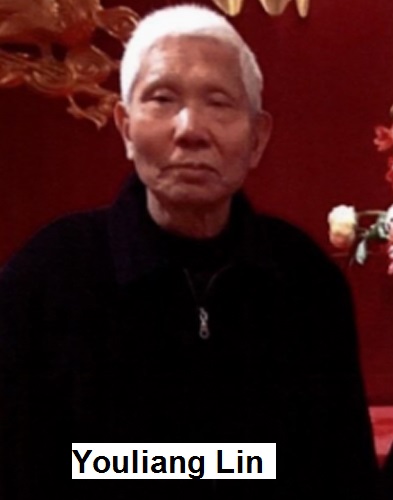
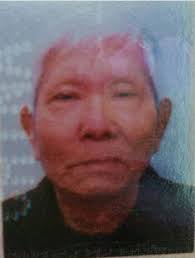

Youliang LIN, age 84, was last seen about 8am on Friday 15th of
September 2017, when he left his home on Cooper Court, Castle Hill,
Sydney NSW.
There are serious concerns for the safety and welfare of Mr LIN as he
suffers dementia and does not speak English.
Mr LIN is described as being of Asian appearance, about 175cm tall, with
a slim build. He has short grey hair and brown eyes. He was last seen
wearing a black jumper and black long pants. Mr LIN has not been seen or
heard from since.
The NSW coroner found Mr Lin likely died in bushland within, and contiguously extending from, Bidjigal Reserve in the immediate vicinity of Eric Mobbs Reserve and Ted Horwood Reserve. This area falls within the suburbs of Castle Hill, Baulkham Hills and West Pennant Hills.
If you have information that may assist police to locate Youliang please call Crime Stoppers on 1800 333 000
CORONERS COURT OF NEW SOUTH WALES
Inquest into the suspected death of missing person Youliang Lin
1. Introduction
At around 8:00am on 15 September 2017, Youliang Lin, an 84-year-old man, left his home in Castle Hill on foot. Mr Lin had previously been diagnosed with Alzheimer’s dementia and a history of recurrent wandering behaviour. Mr Lin was later captured by a CCTV camera walking in a southerly direction along Old Northern Road. At around 11:00am, Mr Lin spoke to a member of the public near Eric Mobbs Reserve, Castle Hill. This is the last time that Mr Lin was seen alive. At around 10:36am, Mr Lin’s family reported him as missing to the New South Wales Police Force (NSWPF). A search for Mr Lin was commenced, initially in the area immediately surrounding Mr Lin’s home. Over the next several days, the search expanded to and focused on Eric Mobbs Reserve and the neighbouring Ted Horwood Reserve. Searches for Mr Lin continued until 22 September 2017 when a decision was made to cease active search efforts. By that time, no evidence was found as to Mr Lin’s whereabouts. To date, no evidence has been found indicating that Mr Lin is still alive.
Why was an inquest held?
As Mr Lin was not found, the NSWPF submitted a report to the Coroner in September 2017 indicating that it was suspected that Mr Lin was deceased. When the case of a missing person, who is suspected to have died, is reported to a Coroner, the Coroner must determine from the available evidence whether that person has in fact died. If a Coroner concludes that a missing person has died then the Coroner is required to make findings, if possible, to determine the identity of the person who died, when and where they died, and what the cause and the manner of their death was. The manner of a person’s death means the circumstances in which that person died. If a Coroner is unable to answer these questions then an inquest must be held.1 Despite the search efforts undertaken, Mr Lin has not been found and the NSWPF investigation has not found any sign of him since 15 September 2017. It has therefore not been possible to answer all of the questions that a Coroner is required to answer. Therefore, it is mandatory for an inquest to be held. In addition, an inquest was required in order to more closely examine the adequacy of the NSWPF response to Mr Lin being reported as missing and the subsequent efforts made to locate him. In this context it should be recognised at the outset that the operation of the Act, and the coronial process in general, represents an intrusion by the State into what is usually one of the most traumatic events in the lives of family members who have reported a loved one as missing. At such times, it is reasonably expected that families will wish to attempt to cope with the consequences of such a traumatic event in private. The sense of loss experienced by family members does not diminish significantly over time. Therefore, it should be acknowledged that both the coronial process and an inquest by their very nature unfortunately compel a family to re-live distressing memories and to do so in a public forum.
Mr Lin’s life
Inquests and the coronial process are as much about life as they are about death. A coronial system exists because we, as a community, recognise the fragility of human life and value enormously the preciousness of it. Understanding the impact that the death of a person has had on those closest to that person only comes from knowing something of that person’s life. It is hoped that what is set out briefly below acknowledges Mr Lin’s life in a meaningful way. Mr Lin was born in China in 1933. He previously worked in a paper factory in Fu Jian, China.
In 2007, Mr Lin migrated to Australia. He lived his wife, son, daughter-in-law and four grandchildren in Castle Hill. Mr Lin enjoyed cooking and sharing meals with his family. He largely stayed at home but would enjoy visits from friends. In his earlier years, Mr Lin enjoyed walking to the local shopping centre with his wife and would pick up his grandchildren from school. Mr Lin was known to be very quiet by nature. One of his granddaughters described Mr Lin as a kind, sweet, and peaceful man who always put the needs of others ahead of his own. There is no doubt that Mr Lin is greatly missed by his family and loved ones, and that the uncertainty that has surrounded Mr Lin going missing has only compounded the grief and loss that they have tragically experienced. Mr Lin’s medical history Mr Lin reportedly experienced memory difficulties prior to moving to Australia.
In April 2014, Mr Lin saw his general practitioner, Dr Cheng Choon Tan, in relation to poor memory and impatience. In early 2015, Dr Tan referred Mr Lin to a geriatrician due to behavioural changes and an overall decline in his function. Mr Lin was diagnosed with Alzheimer’s dementia of moderate severity which was complicated by behavioural and psychological symptoms.
From 2014, Mr Lin began wandering away from his home which occurred on several occasions. He also experienced dizzy spells that were possibly linked to hypertension. As a result, Mr Lin required full-time supervision and care which was provided by his family.
In February 2017, Mr Lin underwent a set of blood tests which showed significant impairment in renal function. Following further assessment by a geriatrician in March 2017, it was noted that Mr Lin was experiencing a range of behavioural symptoms (reduced insight, poor temper control, wandering and disorientation) associated with dementia. It was noted that Mr Lin’s mobility remained good but that he suffered from occasional postural hypotension. The geriatrician concluded that Mr Lin’s worsening dementia had led to “at risk behaviour” as well as carer stress.
5. 5.1 5.2 Summary of relevant factual background
At around 8:00am on 15 September 2017, Mr Lin left his home in Castle Hill without informing his family. CCTV footage from a neighbouring property captured Mr Lin walking down his driveway. At 10:36am, Ms Lin reported Mr Lin as a missing person to the NSWPF. NSWPF officers from Castle Hill police station attended Mr Lin’s home a short time later. Senior Constable3 Pieter Van Boheemen was one of the first attending NSWPF officers. He spoke to Ms Lin and learned that Mr Lin had Alzheimer’s dementia which had deteriorated significantly over the previous 12 months, that he had a history of wandering away from home on several occasions, that he did not speak English and that he did not have any money on him. Initial steps and risk assessment 5.3 5.4 5.5 The initial steps taken by the NSWPF to locate Mr Lin included the following:
(a) NSWPF vehicles conducted a patrol of the streets around Mr Lin’s home;
(b) resources from the NSWPF Aviation Command (known as PolAir) conducted an aerial search of Castle Hill Heritage Park and Fred Caterson Reserve;
(c) staff at Castle Hill Shopping Centre were requested to review their CCTV camera footage for signs of Mr Lin;
(d) a Keep a Lookout message broadcast on NSWPF radio channels;
(e) a media release was issued via the NSWPF Media Unit and The Hills Local Area Command (LAC) Facebook page; and
(f) an internal message (known as NEMESIS) was circulated to NSWPF employees.
Later in the afternoon of 15 September 2017, Senior Constable Van Boheemen returned to Castle Hill police station and completed a risk assessment for Mr Lin in accordance with the NSWPF Missing Person Standard Operating Procedures published in 2013 (2013 Missing Person SOP) which were in force at the time. Mr Lin was assessed as being at “very high risk” (the highest rating available) due to his age and dementia. At around 6:45pm, a land search was conducted of bushland along Castle Hill Creek between Banks Road and Yaringa Road, Castle Hill which was a short walk from Mr Lin’s home. The search was completed at 7:30pm with nothing of interest found. 5.6 Later that evening, Sergeant Stuart Fortier spoke with Leading Senior Constable Marcus Backway, a Land Search and Rescue (LandSAR) Coordinator from the NSWPF Rescue and Bomb Disposal Unit (RBDU), regarding a search of the local area. Leading Senior Constable Backway completed a risk assessment for Mr Lin against a number of criteria (including his age, medical and physical condition, clothing and environmental factors) to determine the appropriate response. The risk assessment score given to Mr Lin indicated that an “emergency response” was required.
16 September 2017
5.7 5.8 5.9 Sergeant Fortier decided that a search was to be conducted of local parks within a three kilometre radius of Mr Lin’s home. The search commenced at around 12:00am on 16 September 2017 involving general duties officers from The Hills LAC and was coordinated by Sergeant Fortier. From around 8:10am on 16 September 2017, State Emergency Service (SES) volunteers searched Castle Hill Heritage Park, Fred Caterson Reserve, Castle Hill Cemetery and the Castle Hill Pony Club. The SES volunteers were stood down at 6:30pm and advised that they were not required to return then next day, On the evening of 16 September 2017, general duties car crews patrolled the area to look for Mr Lin when not responding to other incidents. In addition, Chief Inspector Matthew Harris, the Shared Duty Officer, requested that follow-up enquiries be made with Dan Lin, Mr Lin’s daughter, to obtain any new information that might assist with the search. Enquiries were also made to ascertain whether Mr Lin presented to any hospitals within the Western Area Health Service.
17 September 2017
5.10 On the morning of 17 September 2017, the NSWPF issued a further media release. This was sent to a number of platforms including all media subscribers to the NSWPF media distribution system and various NSWPF social media accounts.
5.11 On the same day, approximately 100 volunteers from the Chinese Australian community commenced searching for Mr Lin. The search was coordinated by Mr Lin’s family utilising social media including Facebook and WeChat. After Mr Lin was reported missing on 15 September 2017, Ms Lin posted information regarding Mr Lin to a WeChat group for Castle Hill Public School. This information was later disseminated to other WeChat groups resulting in posters in Chinese and English being handed out at shopping centres and placed on telegraph poles mostly by volunteers.
5.12 Sometime on 17 September 2017, Ms Lin spoke to a neighbour (whose name Ms Lin did not know) who resided in the same street as Mr Lin’s home. The neighbour reported seeing Mr Lin walking near the corner of Excelsior Avenue and Drayton Avenue, Castle Hill at around the time that Mr Lin went missing (Drayton Avenue Sighting). Ms Lin was unsure of the reliability of this sighting as she was unsure whether the neighbour knew Mr Lin.
5.13 Later in the day, Ms Lin received a phone call from a friend of her parents-in-law (whose name she did not remember and whose phone number she did not know). The friend reported seeing Mr Lin walking along Old Northern Road towards Excelsior Avenue, Castle Hill (Excelsior Avenue Sighting). After being told this information Ms Lin decided to attend Eric Mobbs Reserve the next day to search for Mr Lin. However, she was unable to do so because she needed to attend Castle Hill police station. Instead, after a friend, Shenxiu (Ena) Song, called to offer assistance, Ms Lin provided Ms Song with some posters of Ms Lin and asked her to attend Eric Mobbs Reserve the next day and speak to anyone who may have seen Mr Lin.
5.14 On the evening of 17 September 2017, Chief Inspector Harris attended the Lin family home and spoke to Ms Lin. She told him about the Drayton Street Sighting and Excelsior Street Sighting. With the assistance of general duties car crews, Chief Inspector Harris patrolled the recreational areas in and around Excelsior Avenue. Chief Inspector Harris also called the NSWPF Media Unit to discuss a media stand up the next morning involving Mr Lin’s family to appeal to the public for assistance.
18 September 2017
5.15 On the morning of 18 September 2017, a search was conducted of Mr Lin’s home. A patrol of local parks including Eric Mobbs Reserve and Ted Horwood Reserve was also performed. At around 1:00pm, a media stand up was held at Castle Hill police station. Arrangements were made prior to the stand up to arrange for Mr Lin’s family to be involved and for Chinese media outlets to attend.
5.16 Sometime between 10:30am and 11:00am on 15 September 2017, Les Brown and his wife were walking their dog at the Eric Mobbs Reserve when they encountered a man matching Mr Lin’s description (Brown Sighting). The man appeared disoriented and gestured that he was looking for a toilet Mr Brown gestured towards an amenities block. The man indicated his thanks, walked towards the amenities block and went inside. Mr Brown did not see the man again.
5.17 On 18 September 2017, Mr Brown came across Ms Song who was handing out flyers at Eric Mobbs Reserve. Ms Song showed Mr Brown a flyer which had a photo of Mr Lin and asked Mr Brown if he had seen him. Mr Brown told Ms Song of his encounter with a man matching the appearance of Mr Lin’s photo. Ms Song called a police station and two NSWPF officers attended her location. Ms Song told them about the Brown Sighting and posted information about it on a WeChat group.
5.18 Chief Inspector Toby Austin and Chief Inspector Helen Dean attended Eric Mobbs Reserve later that day and patrolled the area. A shift summary subsequently written by Chief Inspector Dean indicates that she and Chief Inspector Ausin spent approximately one hour searching bushland area within Eric Mobbs Reserve with no sighting of Mr Lin.
5.19 Chief Inspector Stephen Fowler attended the Lin family home on 18 September 2017. Ms Lin informed him of the Brown Sighting. A subsequent Computerised Operational Policing System (COPS) entry made by Chief Inspector Fowler records this report and that the NSWPF conducted patrols of both Eric Mobbs Reserve and Ted Horwood Reserve that day.
19 September 2017
5.20 David Pan heard about Mr Lin being missing and a request for help to find him through a WeChat group. On 19 September 2017, Mr Pan decided to attend Ted Horwood Reserve to help look for Mr 5 Lin. Mr Pan approached Mark Butler, a maintenance officer for The Hills Shire Council and spoke to him. Mr Butler reported that he had seen an elderly Asian man matching Mr Lin’s description walking by himself at around 4:00pm on 15 September 2017 between a tennis court and the oval at Ted Horwood Reserve (Butler Sighting). Mr Butler described the man to be tapping his pockets and turning around as if he had lost his keys. Mr Butler saw the man walk towards some netball courts and then lost sight of him.
5.21 Mr Pan posted Mr Butler’s name and contact details to a WeChat group searching for Mr Lin. At around 12:05pm, Helen Lin, Mr Lin’s granddaughter, called the NSWPF to report the Butler Sighting. When later spoken to by the NSWPF, Mr Butler reported that Mr Lin appeared disorientated and exhausted when he saw him.
5.22 On 19 September 2017, Detective Senior Constable Nikhil Panchal was asked to conduct a CCTV canvas of Old Northern Road, Castle Hill. From this canvas, CCTV footage was obtained Marvalis Automotive, a motor repair business on the corner of Old Northern Road and Cecil Avenue, Castle Hill. This footage showed Mr Lin walking in a southerly direction along the eastern side Old Northern Road at around 8:20am on 15 September 2017 (Marvalis Footage).
5.23 At around 12:00pm on 19 September 2017, Chief Inspector Harris contacted Senior Constable James Evans, a NSWPF LandSAR Coordinator, to arrange for a land search to commence at Mr Lin’s home. At around 2:00pm, Chief Inspector Harris attended Mr Lin’s home to provide the Lin family with an update regarding the proposed search. Helen Lin told Chief Inspector about the Brown Sighting, the Butler Sighting, and that volunteers had obtained CCTV footage from a Korean grocery store which showed Mr Lin walking in a southerly direction along Old Northern Road at 8:17am on 15 September 2017 (Grocery Store Footage).
5.24 Chief Inspector Harris decided to establish a Forward Command Post at Ted Horwood Reserve and redeploy the search efforts to commence at that location. Between around 4:00pm and 6:30pm, search efforts were conducted at Ted Horwood Reserve and Eric Mobbs Reserve. This search was coordinated by Senior Constable Evans involved track searches and sweeps of the bushland and football fields of Ted Horwood Reserve, surrounding streets, the track from Ted Horwood Reserve to Excelsior Reserve and the creek lines of Darling Mills and Bellbird tracks using NSWPF resources and volunteers from the SES and Rural Fire Service (RFS). Enquiries were also made with Baulkham Hills Sports Club (located across from Ted Horwood Reserve) and the Hills Shire Council for any CCTV footage and a canvass was conducted of nearby residential properties.
5.25 Later that evening, NSWPF officers attended 89 Darcey Road, Castle Hill after residents reported their dogs behaving unusually. It was considered that this behaviour may have been a response to Mr Lin being in bushland at the rear of the premises. Due to the difficult terrain, a search could not be conducted at night time.
20 September 2017
5.26 In the early hours of the morning on 20 September 2017, NSWPF officers returned to 89 Darcey Road and searched the dense bushland at the rear of the premises finding nothing of interest.
5.27 Later on 20 September 2017, the search continued with Senior Constable Mark Reynolds from the RBDU coordinating resources from the NSWPF including a Dog Unit, the RFS, and SES. Although the Dog Unit was deployed to search an area near 89 Darcey Road, Senior Constable Reynolds was unaware of the report that had previously been made by the residents of that property.
5.28 PolAir resources were also deployed to search the creek line and NSWPF divers searched Darling Mills Creek.
21 September 2017
5.29 On 21 September 2017, Sergeant Callum Patton from the RBDU coordinated the search efforts which included the following:
(a) PolAir resources were used to search bushland area adjacent to and including Darling Mills Creek extending to Blue Gum Creek and Excelsior Creek to Caprera Road and Windermere Avenue, Northmead;
(b) canvassing of residential properties surrounding Eric Mobbs and Ted Horwood Reserves was performed to seek any available CCTV footage.;
(c) at 2:00pm on 21 September 2017, a further media release was launched urging members of the public to remain alert and report any sightings of Mr Lin.
5.30 On 21 September 2017, Sergeant Patton spoke to Dr Paul Luckin, a specialist anaesthetist and expert in search and rescue and survivability. Sergeant Patton provided Dr Luckin with information regarding Mr Lin’s medical history, the circumstances in which he went missing, and the current weather conditions. Dr Luckin provided two scenarios to Sergeant Patton and expressed an opinion about Mr Lin’s timeframe for survival (TFFS) in each:
(a) if Mr Lin had found a source of water his TFFS would have been the end of 24 September 2017; or
(b) if Mr Lin had not found a source of water he could not still be alive.
22 September 2017
5.31 On 22 September 2017, a teleconference was held involving Sergeant Patton, Superintendent Critchlow (The Hills LAC Commander), Chief Inspector Charlton (the RBDU Commander), Senior Sergeant Smith (the State Search and Rescue Coordinator), Senior Sergeant Robinson, Chief Inspector Harris, Chief Inspector Fowler and Chief Inspector Austin. The group discussed Dr Luckin’s opinion regarding Mr Lin’s TFFS. A decision was made to suspend the bushland component of the land search pending further information regarding Mr Lin’s whereabouts.
5.32 Following the teleconference, Chief Inspector Austin and Chief Inspector Harris, together with Detective Senior Constable Panchal and Detective Johnson, met with Ms Lin and Helen Lin to update them regarding the search activities undertaken during the week. Ms Lin and Helen were also informed that the search would be suspended but that local enquiries and follow-up would continue. Detective Senior Constable Panchal was introduced as the case officer and new point of contact for the family.
Subsequent efforts to locate Mr Lin
5.33 Over the following months, several further appeals for information were made to the public:
(a) on 27 September 2017, Chief Inspector Austin made arrangements for Mr Lin’s story to be run on 2GB radio;
(b) in November 2017, media releases to the Chinese community were organised;
(c) on 15 November 2017, an appeal for information was distributed on Weibo (the Chinese equivalent of Twitter);
(d) in December 2017, a media release was translated into Cantonese and Mandarin and distributed to Chinese traditional media; and
(e) in January 2018, a media campaign was organised through the Australian Federal Police which ran during Missing Persons month in February 2018.
5.34 Between 2018 and 2020, the NSWPF made further enquiries made further enquiries regarding Mr Lin’s whereabouts:
(a) enquiries with made the Department of Home Affairs which confirmed that Mr Lin had not departed Australia using travel documents in his own name;
(b) a number of documentary and electronic searches, which are commonly known as “signs of life checks”, were made with financial institutions, government organisations, and interstate law enforcement agencies to identify whether there are any records indicating that Mr Lin had some interaction with these organisations and institutions after 15 September 2017;
(c) checks were conducted with the Missing Persons Units in each State and Territory, as well as the Registry of Births, Deaths and Marriages in NSW, Victoria and Queensland which produced no results relating to Mr Lin; and
(d) forensic samples were collected for the purposes of DNA comparison which revealed no matches with any DNA profile from the unidentified human remains database. 6.
6.1 What issues did the inquest consider?
Prior to the commencement of the inquest a list of issues was circulated amongst the sufficiently interested parties, identifying the scope of the inquest and the issues to be considered. That list identified the following issues for consideration:
(1) Whether Mr Lin is now deceased and if so, the date, place, manner and cause of his death.
(2) In considering the manner of Mr Lin suspected death, whether the NSWPF response to the report of Mr Lin being missing was adequate and appropriate, in both timeliness and the utilisation of resources, including:
(a) whether the parameters of the initial designated search areas and the resources devoted those search areas were adequate and appropriate;
(b) whether there was appropriate and adequate contact between the NSWPF and Mr Lin’s family during the search conducted for Mr Lin;
(c) whether the strategy of using the media to assist in the search for Mr Lin was adequate and appropriate;
(d) whether there was any unreasonable delay in commencing the search of Ted Horwood Reserve and Eric Mobbs Reserve;
(e) whether the search and rescue resources devoted to the bushland search of Ted Horwood Reserve and Eric Mobbs Reserve were adequate, appropriate and sufficiently coordinated; and
(f) whether it was appropriate to cease the bushland search for Mr Lin on 22 September 2017.
(3) Whether it is necessary or desirable for any recommendations to be made pursuant to section 82 of the Act. 6.2 7. 7.1 As part of the coronial investigation, the following independent experts were instructed to provide reports addressing a number of questions regarding the circumstances of Mr Lin’s suspected death:
(a) Detective Inspector Anthony Combridge, specialist missing persons investigator, Victoria Police;
(b) Adjunct Professor Tuly Rosenfeld, consultant geriatrician and physician; and
(c) Dr James Whitehead, a former Queensland Police State search and rescue coordinator and training officer, and expert in search and rescue activities.
Is Mr Lin now deceased?
The fundamental questions which an inquest into the suspected death of a missing person seeks to answer is whether that person is now deceased. A finding that a missing person is deceased is a finding of great significance and gravity. It carries with it an enormous emotional toll for the relatives of the missing person and has important legal and administrative consequences. Such a finding is made on the balance of probabilities, but there must be clear, cogent and exact evidence that a missing person has died before it can be made.
4 7.2 7.3 7.4 7.5 The last reliable sightings of Mr Lin were the Butler Sighting and the Brown Sighting on 15 September 2017. These sightings are consistent with Mr Lin:
(a) leaving his home at around 8:00am on the same day;
(b) walking in a southerly direction along Old Northern Road where he was captured on the Marvalis Footage and Grocery Store Footage;
(c) turning from Old Northern Road onto Excelsior Avene where the Excelsior Avenue Sighting and Drayton Avenue Sighting occurred;
(d) continuing along Excelsior Avenue to Eric Mobbs Reserve where the Brown Sighting occurred; and
(e) travelling to Ted Horwood Reserve where the Butler Sighting occurred.
Adjunct Professor Rosenfeld expressed the following views:
(a) at the time Mr Lin went missing it is likely that he was confused, wandering, experiencing hallucinations at times and “suffering from the delusional belief that his relatives were nearby”;
(b) without assistance and guidance, Mr Lin would have been unable to locate and access fluids and sustenance;
(c) with his worsening confusion and likely increasing agitation, it is unlikely that Mr Lin would have been able to find his way to sustenance and fluid, and would have become increasingly lost, disoriented and become injured on unstable and unsurfaced ground; and
(d) Mr Lin had not eaten recently and his hydration and renal function was already compromised so that without fluids and sustenance it is likely that Mr Lin would have become “more quickly disabled and unwell leading to worsening complications and death”.
Adjunct Professor Rosenfeld ultimately expressed the opinion that given the lack of shelter, medication food and water and Mr Lin’s exposure to the elements, it is likely that he would have only been able to survive for 24 to 48 hours, or an even shorter period if he had suffered a fall or injury from which he would have been unlikely to recover or seek assistance. Dr Whitehead expressed the view that whilst there were sufficient resources to search Ted Horwood Reserve and Eric Mobbs Reserve “to a reasonably high probability of detection”, this does not mean that the entire area was searched “as there were many locations that were unable to be accessed without specialist equipment and personnel”. Dr Whitehead considered it more than likely that “Mr Lin wandered into one of these secluded areas and succumbed to the environment, dehydration, injury or a combination of all three”.
7.6 7.7 7.8 Detective Inspector Combridge similarly expressed the opinion that it is more likely than not that Mr Lin died on or around 15 September 2017 due to his “considerable health issues” and being exposed in an environment without shelter, food, water and medication. The available evidence establishes the following:
(a) Mr Lin left his home on 15 September 2017 without informing his family where he was going and when he would return;
(b) Mr Lin did not take any food, water or protection from the elements with him and did not have the means to purchase any of these items;
(c) Mr Lin had several significant underlying medical conditions which would likely have led him to become increasingly confused, delusional and agitated in an unfamiliar environment without his usual support and care from his relatives;
(d) Mr Lin’s underlying renal condition would have been significantly impacted by dehydration;
(e) there was reliable evidence of when Mr Lin was last seen alive but the search of these locations found no sign of him;
(f) Mr Lin’s age and significant underlying medical conditions, and lack of water and sustenance made him particularly vulnerable to the physical conditions and elements where he was last sighted;
(g) there is no plausible explanation why Mr Lin has not been seen or found since 15 September 2017; and
(h) there is no plausible explanation why Mr Lin would not attempt to find or make contact with his relatives since 15 September 2017.
Conclusions:
Having regard to the matters set out above and the opinions expressed by the experts who have considered the available evidence regarding the circumstances in which Mr Lin went missing, the conclusion which must be reached is that, regrettably, Mr Lin is now deceased.
8. 8.1 What was the cause and manner of Mr Lin’s death?
Having concluded that Mr Lin is now deceased, the questions that now arise, as part of the functions of the coronial jurisdiction, are whether the available evidence allows for any finding to be made as to where and when Mr Lin died, and the cause and manner of his death. 8.2 A number of possibilities arise as to the cause and manner of Mr Lin’s death:
(a) he may have died from the natural progression of one of his significant underlying medical conditions which quickly worsened with increasing agitation, confusion and disorientation;
(b) equally, Mr Lin may have succumbed to exposure to the elements and lack of hydration and sustenance;
(c) it is also possible that Mr Lin suffered a traumatic injury which was instantly fatal or from which he could not recover; and
(d) finally, as Dr Whitehead noted, it is possible that a combination of one or more of these outcomes caused or contributed to Mr Lin’s death.
8.3 Conclusions:
The available evidence has not been able to rule in or rule out any of the above possibilities. There is simply not enough known about Mr Lin’s movements following the Butler Sighting and what may have happened to him afterwards to reach any reliable conclusion as to the manner of Mr Lin’s death.
8.4 Similarly, as Mr Lin has not been found, a post-mortem examination has obviously not been performed to determine a precise cause of his death. Mr Lin may have died of natural causes from the progression of his significant underlying medical conditions. Exposure to environmental factors and lack of food and sustenance may have contributed to, or hastened, this natural progression or may have been independently fatal. Equally, Mr Lin may have sustained an injury which was immediately fatal, or which, together with his other vulnerabilities, he was unable to recover from or seek assistance. Overall, no reliable conclusion can be reached as to the cause of Mr Lin’s death.
9. 9.1 9.2 What was the date and place of Mr Lin’s death?
Despite the search efforts that commenced on 15 September 2017, no evidence has been found of Mr Lin or his movements after that date. Detective Inspector Combridge expressed the view that Mr Lin died on or around 15 September 2017. Adjunct Professor Rosenfeld estimated that Mr Lin could have survived for 24 to 48 hours after 15 September 2017 but this timeframe would have been less if Mr Lin sustained an injury from which he could not recover. When Dr Luckin was consulted on 21 September 2017, he considered that Mr Lin was likely to already have died if he had been unable to find a source of water or that he could have survived until the end of 24 September 2017 if he had access to water.
Conclusions:
The available evidence does not allow for a reliable conclusion to be reached as to the precise date of Mr Lin’s death. One or more of the factors described above may have contributed to Mr Lin dying a short time after he was last seen alive or, alternatively, within several days afterwards. Therefore, it is most likely that Mr Lin died some time on or after 15 September 2017.
9.3 As to the place of Mr Lin’s death, the available evidence immediately suggests that Mr Lin died within or near the areas where he was last seen alive. Eric Mobbs Reserve and Ted Horwood Reserve are connected by bushland which extends from Bidjigal Reserve and which incorporates Saw Mill Creek, Excelsior Creek and Darling Mills Creek.
9.4 9.5 9.6 9.7 9.8 Sergeant Patton gave evidence that in his view the bushland areas within the reserves had been thoroughly searched and that if Mr Lin had remained in those areas he would have been located. Sergeant Patton gave evidence that he did not consider the bushland to be “particularly dense” and that at no time was the search of an area deferred (and to be searched later using other resources such as a dog unit) because the bushland was too dense. Sergeant Patton therefore expressed the view that Mr Lin must have left these areas prior to when the NSWPF commenced a coordinated land search on 19 September 2017. In contrast, Senior Constable Reynolds considered that parts of the bushland being search was “fairly dense”. This is consistent with the observations of Mr Brown who described “95% of the area” as being unable to be traversed. Similarly, Dr Whitehead expressed the view that there were many areas within the reserves which were inaccessible and which would not have been searched. Dr Whitehead hypothesised that Mr Lin wandered off a walking track in a bushland area and continued on for as long as possible. Dr Whitehead noted that “there are many instances where persons suffering from Alzheimer’s disease or dementia have entered areas of bushland that initially had been discounted due to its density and difficulty”. Dr Whitehead ultimately expressed the opinion that Mr Lin remains within the Eric Mobbs Reserve and Ted Horwood Reserve area. Detective Inspector Combridge acknowledged that the possibility that Mr Lin had left the bushland area in the immediate vicinity of Eric Mobbs Reserve and Ted Horwood Reserve prior to any searches commencing cannot be entirely excluded. However, Detective Inspector Combridge expressed the opinion that it is more likely than not Mr Lin remains within this bushland area. This opinion is based on a lost person behaviour assessment, survivability assessment, and the likelihood that if Mr Lin had left the bushland area it is likely that he would have been seen or found. Conclusions: Given the opinions expressed by the experts and acknowledging that a thorough search of the bushland area in the immediate vicinity of Eric Mobbs Reserve and Ted Horwood Reserve was performed, it is not possible to conclude that this search entirely eliminated the possibility of Mr Lin having died within this area. Indeed, to the contrary, according to the expert evidence it likely that Mr Lin remained in this area and died. Therefore, it is more probable than not that Mr Lin died in bushland within, and contiguously extending from, Bidjigal Reserve in the immediate vicinity of Eric Mobbs Reserve and Ted Horwood Reserve. This area falls within the suburbs of Castle Hill, Baulkham Hills and West Pennant Hills.
9.9 As discussed further below, the primary aim of search agencies is to find a missing person alive or, alternatively, locate a missing person who is deceased and recover their remains. Having regard to this and the conclusion reached regarding the place of Mr Lin’s death, it is necessary to make the following recommendation. 9.10 Recommendation 1: I recommend to the Commissioner of the New South Wales Police Force that, in consultation with the family of Youliang Lin, consideration be given to conducting a further land search operation of the bushland within, and contiguously extending from, Bidjigal Reserve in the immediate vicinity of Eric Mobbs Reserve and Ted Horwood Reserve with the aim of locating Mr Lin’s remains.
10. Was the initial search adequate and appropriate?
10.1 Senior Constable Van Boheemen gave evidence that the priority of the initial search was to cover as great an area as possible. It centred around the areas of Castle Hill Creek, Castle Hill Heritage Park and Fred Caterson Reserve which were all within a three kilometre radius of Mr Lin’s home. This is the type of “reflex search” which is often performed in the initial stages of a missing person investigation. Dr Whitehead explained that it can provide a search coordinator with a rapid response that can cover large areas quickly and considered it to be appropriate in Mr Lin’s case.
10.2 The inquest considered two specific issues relevant to the adequacy and appropriateness of the initial search for Mr Lin: the ability to canvass CCTV footage that may have showed Mr Lin’s movements after leaving home and the engagement of a LandSAR Coordinator from 15 September 2017.
CCTV canvassing
10.3 The 2013 Missing Person SOP did not provide when and in what circumstances a CCTV canvass should or must be undertaken. In contrast, the NSWPF Missing Persons, Unidentified Bodies & Human Remains Standard Operating Procedures (2025) (2025 Missing Person SOP), which were the most up to date version of the document at the time of the inquest, provides that where a missing person is assessed as being at high risk, and there are no other immediate means of locating them available, CCTV canvassing should commence immediately. Chief Inspector Harris gave evidence that even in 2017, CCTV canvassing was an “important line of inquiry” and that it, together with community canvassing, “should be one of the early inquiries” in a missing person investigation.
10.4 Detective Inspector Combridge described CCTV footage as an “intelligence source” to inform a missing person’s last known position (LKP) which is issued to construct search parameters and establish an effective search area. Detective Inspector Combridge described identification of a missing person’s LKP as a “critical step in the emergency response” as it used to calculate a search area, direct resources to areas of high value to locate a missing person, and to support the search response. Detective Inspector Combridge gave evidence as to the importance of obtaining any footage as part of CCTV canvassing: [T]he importance of it is well developed that we need to ensure that we're effectively searching areas of value and not just deployed resources into areas that we think might be right, but there's opportunities there to build a stronger intelligence picture to demonstrate a reason and a rationale to be in those areas.
10.5 Senior Constable Van Boheemen gave evidence as to what he considered to be the immediate priorities for the first attending NSWPF crew, namely: requesting assistance from PolAir and the Dog Unit, briefing the External Supervisor, patrolling the streets surrounding Mr Lin’s home, returning to the police station to brief the Internal Supervisor, creating a COPS event, contacting the NSWPF Media Unit, and contacting local shopping centres and hospitals. As to the patrolling of surrounding streets, Senior Constable Van Boheemen gave evidence that this would have been “fairly random” as the NSWPF did not have Mr Lin’s last known direction of movement. Senior Constable Van Boheemen gave evidence that CCTV canvassing was not a task that an initial crew would perform but would rather be a task “given to a second car crew or detectives to canvas”. However, there is no evidence to establish that any canvass of neighbouring residents to identify potential CCTV footage or sightings of Mr Lin took place at all.
10.6 First, Sergeant Gavin Haydon, the Castle Hill police station External Supervisor on 15 September 2017, provided a statement on 21 July 2025 in which he stated that he had “limited specific memory” of what steps were taken on 15 September 2017. However, Sergeant Haydon stated that his usual practice would have been to instruct Senior Constable Van Boheemen that a “canvas[s] of the nearby residence [sic] should be conducted including any CCTV”. This issue was raised with Senior Constable Van Boheemen during the inquest. He gave evidence that Sergeant Haydon did not instruct him to conduct a CCTV canvas around Mr Lin’s home and neighbouring streets and said that the did not “remember any mention of CCTV at the time, actually”.
10.7 Second, Chief Inspector Toby Austin, the Castle Hill police station Duty Officer on 15 September 2017, provided two statements dated 16 February 2021 and 6 June 2023 which were prepared using contemporaneous NSWPF records. Whilst Chief Inspector Austin described a number of steps that he took on 15 September 2017, no mention is made in either statement of any instructions or request to perform a CCTV canvass on that day. Indeed, Chief Inspector Austin only makes mention of a review of CCTV footage occurring on 19 September 2017.
10.8 Third, Chief Inspector David Lowden and Chief Inspector Harris were the Shared Duty Officers for the morning and evening shifts effectively on 16 September 2017. In the NSWPF records for the Duty Officer Synopsis and Shift Changeover Report, there is no record of any instruction being given by Chief Inspector Lowden, Chief Inspector Harris or any other supervisor to conduct witness or CCTV canvassing on 16 September 2017.
10.9 Senior Constable Evans gave evidence as to the difficulty in attempting to conduct a LandSAR search four days after Mr Lin was reported missing. He gave evidence that performing an initial reflex search was important. However, Senior Constable Evans explained that the absence of any “real credible” intelligence that might be obtained from a witness and CCTV canvass as to where Mr Lin had gone made the possible search area “massive”.
Engagement of a LandSAR Coordinator
10.10 Section 5.3 of the 2013 Missing Person SOP provided the following: If and when a decision is made to conduct a land search operation, the Duty Operations Inspector, VKG Sydney and Police Rescue and Bomb Disposal Unit (Alexandria) is to be notified immediately of the situation [original emphasis]. A qualified Land Search Coordinator must be nominated to undertake the actual search operation planning and coordination function.
10.11 Similarly, section 1.272 of the NSWPF Incident & Emergency Standard Operating Procedures revised in April 2012 (2012 IESOP) and still in force in 2017 provided: When the decision is made to conduct a land search operation, the Police Rescue & Bomb Disposal Unit, is to be notified immediately of the situation. A qualified land search coordinator must be nominated to undertake the actual search operation planning and coordination function. Should such a person not be available in the area, the Police Rescue & Bomb Disposal Unit can provide expert advice and/or a qualified land search coordinator. The decision whether or not to make available a land search coordinator to the area concerned, rests with the Commander, Police Rescue & Bomb Disposal Unit.
10.12 Section 1.282 of the 2012 IESOP also provided that: Upon initial notification to the Rescue & Bomb Disposal Unit by telephone, a LandSAR Coordinator will be appointed to record, monitor and provide advice on the initial actions undertaken by the Search Controller.
10.13 On the evening of 15 September 2017, Sergeant Fortier notified the RBDU that Mr Lin had been reported missing and spoke to Senior Constable Backway. Whilst Senior Constable Backway provided advice regarding search areas and strategy, no request was made for a LandSAR Coordinator to attend the scene, and no LandSAR Coordinator was nominated, to “undertake the actual search operation planning and coordination function”.
10.14 Chief Inspector Harris gave evidence that:
(a) engaging a LandSAR Coordinator at the commencement of a search would have allowed for the “best outcome”;
(b) if had been involved in the initial discussions on 15 September 2017 he may have requested the attendance of a LandSAR Coordinator at an earlier point in time;
(c) there may have been daily discussions over the phone with a LandSAR Coordinator between 15 and 19 September 2017 and they may have been satisfied with the lines of enquiry that were being conducted and with providing advice; but
(d) in circumstances where Mr Lin had been assessed as being at high risk, more was required than simply keeping the RBDU apprised of the search efforts and that a LandSAR Coordinator was required to attend to coordinate the search.
10.15 There is evidence that the absence of a LandSAR Coordinator being appointed on 15 September 2017 impacted the search efforts once a LandSAR Coordinator was eventually appointed. Senior Constable Evans gave evidence that it was difficult for him to become involved in the search by 19 September 2017 when “so much time had passed”.
10.16 Sergent Patton gave evidence that in 2017 whilst the RBDU would attend immediately for an incident involving bushland that required an emergency response, the situation was different if the area being searched was an urban environment. Sergeant Patton gave this evidence: [I]n that case we would generally provide advice to the local area command or now police area command based on that and then they will manage that and we will monitor and continue to provide advice.
10.17 Sergeant Patton also gave evidence that the RBDU had an expectation that a PAC would “do a certain amount of investigation” prior to the RBDU deploying to ensure that resources were being utilised effectively. Further, Sergent Patton gave evidence that the RBDU does not have the resources to attend to commence a coordinated search in every instance where a risk assessment indicates that an emergency response is required, and that doing so would also have a “huge impact on volunteer organisations such as the SES”. Instead, Sergeant Patton gave evidence that a risk assessment is conducted for each incident and: …the deployment of RBDU resources with a search coordinator is determined by the operations coordinator at RBDU, the senior sergeant, they triage all of these incidents and make a decision on whether we're going to attend and commence a land search, whether we're going to provide advice and monitor, or how the search is going to be managed.
10.18 Dr Whitehead gave evidence that the RBDU were notified and advice was provided so that general duties NSWPF officers were able to conduct a search “without the strict supervision of a [search and rescue] coordinator”. However, Dr Whitehead expressed the opinion that “a [search and rescue] coordinator should attend the scene and coordinate locally” as land searches “really can’t be done distally” because they are “fairly dynamic” with a need for a search coordinator “to be on the spot”.
10.19 Detective Inspector Combridge gave evidence that the only reason why a LandSAR coordinator should not be deployed for an incident which required an emergency response is if one is unavailable. Detective Inspector Combridge also gave evidence that “the most desirable outcome” would have been for a LandSAR Coordinator to have been deployed to act as a tactical adviser to the Police Commander. Detective Inspector Combridge gave this evidence: [T]he contextual need to be on ground for the search coordinator is - you know, it can't be overstated. It's important for them to be in the area to understand the nature of the search that needs to take place.
10.20 Conclusions:
Despite Sergeant Haydon (stating in July 2025) that it would have been his usual practice to provide instructions for a community and CCTV canvass to be performed on 15 September 2017 there is no evidence that this occurred. Indeed, Senior Constable Van Boheemen gave evidence that he received no such instructions and that he could recall no mention of obtaining CCTV footage at all. The 2013 Missing Person SOP also did not provide for such canvassing to occur. Notwithstanding, the evidence establishes that in 2017 such canvassing was an important early line of enquiry in a missing person investigation. Indeed, this is reflected in the 2025 Missing Person SOP which provides that it should occur in the initial steps of a missing person investigation.
10.21 Identification of relevant CCTV footage can serve an important function in determining a missing person’s LKP. In Mr Lin’s case, his LKP on 15 September 2017 was determined to be his home. This made the parameters of any subsequent search extremely broad and the actual initial searching that was performed was, in the words of Senior Constable Van Boheemen, “fairly random”.
10.22 Chief Inspector Austin and Sergeant Fortier were unavailable to give evidence at the inquest and Sergeant Haydon was not called to give evidence. Counsel for these NSWPF officers and the NSWPF Commissioner submitted that it would be unfair and inappropriate to make a critical finding that the police efforts regarding immediate canvassing and obtaining CCTV footage were “deficient” or “inadequate”. As Counsel for these NSWPF officers and the NSWPF Commissioner correctly acknowledged, the available evidence demonstrates that no systematic community and CCTV canvassing was performed on 15 September 2017. The absence of oral evidence from these NSWPF officers at the inquest, and the testing of such evidence, means that it is not possible to discern the reason for this omission and what factors may have contributed to it.
10.23 Of course, it is not possible to know whether if CCTV and community canvassing had been performed on 15 September 2017 it would have identified the Marvalis Footage, Grocery Store Footage, Excelsior Avenue Sighting, and Drayton Avenue Sighting at an earlier point in time, or some other information which could have established Mr Lin’s LKP and assisted the search efforts. Therefore, the absence of any CCTV and community canvassing on 15 September 2017 represented a missed opportunity by the NSWPF to gather potential intelligence which could have been used to best determine the allocation of available resources and the focus of search efforts.
10.24 Whilst contact was appropriately made with the RBDU on 15 September 2017 it is evident that no LandSAR Coordinator was “nominated to undertake the actual search operation planning and coordination function”. This was contrary to both the 2013 Missing Person SOP and the 2012 IESOP.
10.25 Counsel for the NSWPF Commissioner submitted that to view the relevant policies as mandatorily requiring a LandSAR Coordinator to be deployed whenever the report of a missing person calls for an emergency response is to “require excessive rigid adherence to the policies and practice”. It was further submitted that the circumstances of Mr Lin’s case need to be considered in context. That is, evidence from Sergeant Patton indicates that the availability of NSWPF and volunteer resources, the expectation that a PAC will undertake some initial investigation before a LandSAR Coordinator is deployed and whether any search to be undertaken is in an urban or bushland environment are relevant considerations to the immediate deployment of a LandSAR Coordinator.
10.26 Neither the 2013 Missing Person SOP nor the 2012 IESOP appear to directly reflect the matters raised by Sergent Patton regarding why a LandSAR Coordinator may not be immediately deployed in every missing person event requiring an emergency response. However, it is acknowledged that section 1.272 of the 2012 IESOP provided that the ultimate decision regarding whether to make a LandSAR Coordinator available rested with the Commander of the RBDU. There is no evidence available to the inquest to indicate that such consideration was given in Mr Lin’s case or that any of the matters raised by Sergeant Patton were in fact considered on 15 September 2017. Accordingly, there is no evidence to indicate that there was any reasonable explanation for non-compliance with the 2013 Missing Person SOP and the 2012 IESOP.
10.27 The effect of this omission was that when a LandSAR Coordinator was eventually nominated on 19 September 2017, four days had already passed in a missing person investigation where active searching ultimately lasted seven days. The evidence establishes that this passage of time made the task of the LandSAR Coordinators that were eventually deployed more challenging. It is not possible to assess the impact upon the efficacy of the missing person investigation if a LandSAR Coordinator had been nominated on 15 September 2017. However, this again represented a missed opportunity to achieve the best possible outcome in the overall missing person investigation by allocating resources appropriately and determining the focus of the search efforts.
11. Was the contact between the NSWPF and Mr Lin’s family adequate and appropriate?
11.1 No specific NSWPF officer was nominated as a point of contact to communicate with the Lin family during the search for Mr Lin. Instead, communication between the NSWPF and the Lin family occurred on a more ad hoc basis. Ms Lin described the arrangement in this way:
I think I would call the detectives working on the case at the time for information but there were so many things happening it’s difficult to remember precise details. My understanding was that they wouldn’t update me on progress day to day but if I wanted to ask something they would tell me, though it wasn’t part of the process to keep me informed with what is going on. In saying that, the police did come to our home on a couple of occasions to tell us what has been happening with the case, or requested more information, so there was some communication coming from police.
11.2 In a statement made shortly before the inquest, Ms Lin stated that she and other family members spoke to different NSWPF officers throughout the course of the search which led to information which they sought to share with the NSWPF having to be repeated. Ms Lin stated that having a designated point of contact would have assisted the family in understanding what was occurring with the search efforts and made the family “feel more in control”.
11.3 Ms Lin also stated that apart from one occasion when she attended a police station with her daughter for a formal interview, she was never asked if she needed an interpreter. Further, Ms Lin stated that the NSWPF did not advise how often and when they would provide updates regarding the search to the family. Ms Lin stated that as a result she and her family did not know “what their arrangements were and how they were progressing”.
11.4 Senior Constable Van Boheemen gave evidence that he considered that Ms Lin spoke English “quite adequately” and that he formed the impression that she could understand him. However, Senior Constable Van Boheemen gave evidence that he could not recall whether he gave specific consideration to whether an interpreter was required to assist with communication with the Lin family. Senior Constable Van Boheemen also gave evidence that he did not form a view about whether there were any cultural sensitivities that might inform how the NSWPF liaised with the Lin family but that it was a matter that he possibly would have ordinarily considered. Senior Constable Van Boheemen explained: Policing's changed a lot in eight years, and possibly these days, but not something that was probably the top of our -on top of their mind was finding Mr Lin, so it was probably not something that a great deal of consideration was given to.
11.5 Section 8.7 of the 2025 Missing Person SOP provides that one of the responsibilities of the PAC/PD Supervisor is to: Ensure that for the first five (5) days after a missing person investigation commences, one officer on each shift holds the responsibility for the investigation and is nominated as the contact officer for the family / SNOK and friends of the missing person; and Ensure, that for the first five (5) days of the investigation, the Officer taking over the investigation from the previous shift, contacts the family / SNOK and provides them with their name and reliable contact number.
11.6 Chief Inspector Harris gave evidence confirming the application of this section in practice: Well, what should be happening, the way that I would do it is that each coming on of the shift, I would reach out to them, so they don't have to reach out to me, and I would just, as a matter of course, ask them if there's anything further they can offer the investigation, “Have you heard any further news”, et cetera. Obviously, a welfare check at the same time, you'd cover [off] on. So we would - I would reach out to them rather than waiting for them to reach out to me.
11.7 One matter which the inquest explored is the use of the potential use of a Family Liaison Officer (FLO). In Victoria, this is a functional role incorporated into an emergency response to a person being reported missing. In his report, Detective Inspector Combridge referred to the Victoria Police Family Liaison Officer Practice Guide although this document did not form part of the evidence at the inquest. Detective Inspector Combridge described the functional role of a FLO in this way: It's a role that we would usually, dependent upon the protracted nature of the incident, we may delegate to a number of people, but at least one person who the family are familiar with and are comfortable with we would remove them from the operations - the day-to-day operations of the search and have them just be with the family. The role has an effective two way information flow where we're able to provide the family with real-time operationally-sensitive updates, so taking into account what we're seeing out on the search ground we're able to update them accordingly, but we're also able to use that person to elicit further intelligence about the missing person that may be useful in informing the search.
11.8 Chief Inspector Harris gave evidence that whilst a FLO is used in other aspects of policing in NSW (for example, to care for the family of a victim in a homicide investigation), he was unfamiliar with a FLO being used in the context of a missing person investigation, both in 2017 and currently.
11.9 Dr Whitehead (who has significant experience with the Queensland Police Service) gave evidence of his familiarity with using a FLO in searches for missing persons that “last for a significant period”. He described the role as “almost vital” and one which should be used “as a matter of course” to keep the family of a missing person apprised of developments and to facilitate the flow of information. Dr Whitehead acknowledged the challenge in having more than one FLO across a number of shifts over the course of a missing person investigation.
11.10 Detective Inspector Combridge also recognised this challenge and gave this evidence from the perspective of his experience with Victoria Police: [W]ith a protracted incident of this nature we would probably - we would look to implement a number of family liaison officers, but each one would introduce the next one. But it wouldn't be a role that was passed across just anybody, we would try to facilitate people who have had the role previously going back to role when we can. And obviously there are limitations to it. In an ideal situation we'd have one to two members that would deal with the family all the time, but it might that owing to operational need and the protracted nature of this - the event, it might be that they might see four or five different people.
11.11 Sections 7.08 and 7.09 of the National Land Search Operations Manual in 2017 relevantly provided the following: 7.08 Before an unsuccessful search is suspended, the SAR Authority shall make arrangements to ensure that the next of kin are fully briefed on the complete search effort, including conditions in the search area, other salient operational factors and the reasons for proposing the suspension of the search. 7.09 Consideration may be given to notifying the decision to suspend search effort at least one day prior to suspension of operations allowing next of kin at least one more day of hope while giving them time to accept that the search cannot continue indefinitely.
11.12 Ms Lin also stated that the NSWPF did not advise her or her family of the opinion expressed by Dr Luckin regarding the prospects of Mr Lin’s TFFS. Further, although Ms Lin cannot specifically recall, the available evidence suggests that she and her family were not consulted or advised about the decision to cease the land search on 22 September 2017. Dr Whitehead gave evidence that providing a family with sufficient notice about such a decision allows the family of a missing person to seek advice, offer further suggestions regarding possible investigation, and to “begin the grieving process”.
11.13 Conclusions:
The available evidence indicates that whilst Mr Lin’s family were not provided with a designated point of contact (or contacts) or regular periodic updates regarding the progress of the missing person investigation, there were communication channels available to the family to both impart and receive information. However, this communication was largely on an ad hoc basis and likely would have benefited from more structure. The result was that from the perspective of Mr Lin’s family they lacked a degree of agency, lacked understanding about aspects of the investigation, and consequently felt less in control of the overall situation.
11.14 Ms Lin stated that this ad hoc arrangement also led to occasions when information which the Lin family sought to impart to the NSWPF needed to be repeated. Although the assertion made by Ms Lin was not challenged, the inquest did not receive evidence of specific occasions when information needed to be repeated, in Ms Lin’s words, “over and over”. Notwithstanding, it can be accepted that this characterisation of the way in which the Lin family sought to impart information to the NSWPF was a frustrating experience from their point of view.
11.15 One suggested example of repetition referred to in submissions concerned the two reports made to the NSWPF on 18 September 2017 regarding the Brown Sighting. The reports were separately made by Ms Song and Helen Lin to different NSWPF officers. The imparting of this information twice was not the result of any general inadequacy in the communication between the Lin family and the NSWPF. Rather, it reflected separate participants involved in such communication at separate times. However, the imparting of this particular information and the NSWPF response to it has greater significance which is dealt with further below.
11.16 The available evidence also indicates that Ms Lin was only asked about the need for an interpreter on one occasion and that at least Senior Constable Van Boheemen did not form any view (although he would ordinarily do so) about whether there were any cultural sensitivities that might inform how the NSWPF communicated effectively with Mr Lin’s family. However, it is not possible to make a qualitative assessment as to how the absence of these matters may have impacted the communication between the NSWPF and Mr Lin’s family. In her most recent statement of 3 December 2025, Ms Lin was invited to consider whether there was anything which could have been done differently or better regarding communication with the NSWPF and the search effort generally. In answer, Ms Lin referred only to having a designated point of contact to facilitate communication and understanding regarding the investigation.
11.17 It is therefore evident that utilising a FLO in a missing person investigation, particularly one which is protracted, would significantly address the matters raised by Ms Lin. Although the available evidence does not establish that language and cultural issues were directly relevant to the adequacy of communication between the NSWPF and Mr Lin’s family it is evident that such issues may play a significant role in the context of other missing person investigations. It is therefore necessary to make the following recommendation.
11.18 Recommendation 2:
I recommend to the Commissioner of the New South Wales Police Force that consideration be given to reviewing the Victoria Police Family Liaison Officer Practice Guide and whether the current version of the Missing Persons, Unidentified Bodies & Human Remains Standard Operating Procedures ought to be amended to provide for the availability of a Family Liaison Officer (FLO) in missing person investigations. Such consideration should include the functional role of a FLO in facilitating communication between the NSWPF and a missing person’s relatives, and the ways in which a FLO might address the needs of the relatives of a missing person who are from cultural and linguistically diverse backgrounds.
12. Was the media strategy adequate and appropriate?
12.1 The evidence establishes that the following matters formed part of the overall NSWPF media strategy utilised in Mr Lin’s case:
(a) media releases were issued on 17 September 2017, 21 September 2017 and 27 September 2017;
(b) from 15 September 2017, appeals for information were disseminated on various social media platforms;
(c) on 18 September 2017 a media stand up was held which involved Mr Lin’s family and Chinese Australian media outlets;
(d) appeals for information were also made directly to the Chinese Australian community through WeChat and Weibo; and
(e) a media release was translated into Mandarin and Cantonese and distributed to Chinese traditional media outlets.
12.2 Dr Whitehead considered that the number of reported sightings of Mr Lin demonstrated that the NSWPF media strategy was effective.
12.3 Detective Inspector Combridge considered the use of Weibo to engage with the Chinese Australian community as an effective strategy. However, given that this platform was not used until 15 November 2017, Detective Inspector Combridge considered that the timing was not as contemporary as it should have been and ideally such a targeted media release would have been considered or executed in the first few days that Mr Lin had been missing.
12.4 Conclusions: Overall, the media strategy used in the NSWPF investigation into the report of Mr Lin as a missing person was effective. Both traditional and social media platforms were utilised in efforts to elicit information from the public which may have assisted the investigation. This messaging and appeals for information were also disseminated to the Chinese Australian community and Chinese traditional media outlets.
12.5 Although Mr Lin’s family used Chinese social media platforms to engage with the local Chinese Australian community and volunteers, these platforms were not utilised by the NSWPF until November 2017. The expert evidence indicates that consideration could have been given to using these platforms at an earlier point in time. However, it is not possible to conclude that earlier use would have likely elicited information relevant to the investigation.
13. The timing of commencing the search of Ted Horwood Reserve and Eric Mobbs Reserve
13.1 On the evening of 17 September 2017, Ms Lin informed Chief Inspector Harris of both the Drayton Avenue Sighting and Excelsior Avenue Sighting. Chief Inspector Harris subsequently arranged for patrols to be conducted of streets around Excelsior Avenue near Drayton Avenue that evening.
13.2 On the morning of 18 September 2017, Ms Song told two NSWPF officers about the Brown Sighting. The available evidence indicates that the two NSWPF officers who received this information were Chief Inspector Austin and Chief Inspector Dean. They subsequently performed a patrol of Eric Mobbs Reserve on the same day and a record of this was made in a Duty Officer Shift Changeover Report.
13.3 Also on 18 September 2017, Ms Lin told Chief Inspector Fowler about the Brown Sighting. He subsequently recorded an entry in COPS which referred to the Brown Sighting and that patrols had been conducted at Eric Mobbs Reserve and Ted Horwood Reserve that morning. It is unclear whether these patrols were conducted in response to the information provided to Chief Inspector Fowler.
13.4 At around midday on 19 September 2017, Helen Lin reported the Butler Sighting to the NSWPF. Helen Lin repeated the Butler Sighting to Chief Inspector Harris when he attended the Lin family home at 2:00pm that day. Helen Lin also told Chief Inspector Harris about the Grocery Store Footage and the Brown Sighting. Following provision of this information, Detective Senior Constable Panchal was tasked with conducting a CCTV canvass along Old Northern Road and discovered the Marvalis Footage.
13.5 After receiving the information provided by Helen Lin, Chief Inspector Harris, together with Senior Constable Evans, decided to commence the search of Ted Horwood Reserve and Eric Mobbs Reserve that day. Chief Inspector Harris described the Brown Sighting, Butler Sighting, and Grocery Store Footage as a “general trajectory of intelligence” that had Mr Lin moving in the direction of Ted Horwood reserve. Chief Inspector Harris gave evidence he would have commenced the search of Ted Horwood Reserve and Eric Mobbs Reserve earlier if he had been told about the Brown Sighting and Butler Sighting before around 2:00pm on 19 September 2017.
13.6 Dr Whitehead considered that moving the search to Ted Horwood Reserve and Eric Mobbs Reserve was valid given the Brown Sighting, Butler Sighting and Marvalis Footage, all of which he considered to be credible intelligence. Dr Whitehead also gave evidence that if only the Marvalis Footage and Brown Sighting were available that would have been sufficient evidence to move the search to Ted Horwood Reserve on 18 September 2017 given that “there were no other sightings of [Mr Lin] in any other area that had already been searched or was planned to be searched”. Whilst Dr Whitehead described the actual timing of the commencement of the search of Ted Horwood Reserve and Eric Mobbs Reserve as “probably poor” and that it could have been commenced “slightly earlier”, he acknowledged that there may not have been sufficient time to actually commence a search on the afternoon of 18 September 2017.
13.7 Detective Inspector Combridge described the initial search on 15 September 2017 quickly evolving “to a point where the response lacked an effective command, control and coordination structure, leading to missed opportunities to gather intelligence that may have better directed the search to high-value areas for locating [Mr Lin]”. Detective Inspector Combridge also described the “span of control for the initial police commander” being “breached, leading to decisions to divert resources to investigation functions […] being delayed or omitted”. Detective Senior Sergeant Combridge explained the concept of breach of the span of control in this way during his evidence: In this case it was the police commander who was holding not only command of the incident but he also held functional management of other functions like investigations and when the - when you look at everything that's in front of him and all the decisions that he needs to make, is he able to make effective decisions on all of them? And I would say that the fact that there’s been some missed opportunities in that investigation function is probably evident that the span of control was breached.
13.8 Detective Inspector Combridge went on to give evidence that it is not possible to determine who the actual “police commander” was because the command structures were not documented and it is therefore unclear “who had ultimate command of the resources that were required”.
13.9 Conclusions:
By at least the morning of 18 September 2017, information had been provided to the NSWPF regarding the Drayton Avenue Sighting, Excelsior Avenue Sighting and Brown Sighting. Targeted patrols were performed of the areas where the sightings occurred. However, there is no evidence that there was any effective synthesis of this information by any NSWPF officer exercising command powers regarding the overall missing person investigation. If such synthesis had been performed it is likely that a conclusion would have been reached that there was sufficient information to commence a coordinated land search by the afternoon of 18 September 2017 at Eric Mobbs Reserve at least. However, it is acknowledged that it is unclear on the evidence whether there was capacity to commence such a search at that time.
13.10 The absence of such synthesis was the result of the lack of a command, control and coordination structure in the missing person investigation. This resulted in delays or omissions in critical decision making regarding the allocation of resources. This is reflected in the delay in commencing a coordinated land search of Eric Mobbs Reserve and Ted Horwood Reserve. Although actually commenced on the afternoon of 19 September 2017 it is possible it could have been commenced about 24 hours earlier. A timely response to the discovery of credible intelligence is a critical feature of any missing person investigation, where every passing hour has the potential to diminish the prospect of finding a missing person alive. This is particularly relevant to Mr Lin’s case given that he was identified as being vulnerable and at high risk. However, the potential impact of commencing the coordinated land search of Eric Mobbs Reserve and Ted Horwood Reserve on 18 September 2017 instead of a day later cannot be reliably determined.
13.11 Counsel for the NSWPF Commissioner and the individual sufficiently interested NSWPF officers correctly submitted that it is impossible to know what the thinking was of “persons who were involved in making decisions on the ground at the time”. Detective Inspector Combridge observed that the command structures for the missing person investigation were not documented, making it unclear which particular NSWPF officer had decision-making responsibilities at particular times.
13.12 Counsel for the NSWPF Commissioner and the individual sufficiently interested NSWPF officers therefore submitted that there is insufficient evidence to find that there was unreasonable delay by the NSWPF in the search of Ted Horwood Reserve and Eric Mobbs Reserve “though the evidence does raise questions”. As noted above, the available evidence does more than raise questions. It establishes that relevant information was not synthesised in a timely and effective manner leading to a missed opportunity to commence the coordinated land search earlier. The inability to identify the NSWPF officer(s) responsible for this decision making does not preclude such a finding being made. Evidence adduced from such NSWPF officer(s) may have led to a better understanding of the decision making process, or the absence of it. However, it does not detract from the effect of this process, or the absence of it, on the investigation and search effort as a whole.
14. Were the resources devoted to the search effort adequate, appropriate and sufficiently coordinated?
14.1 Dr Whitehead expressed the view that the search of Ted Horwood reserve and Eric Mobbs reserve “was undertaken in a systematic and thorough manner with the resources available”. Dr Whitehead also considered that “the number of searches utilised during the search was appropriate for the areas allocated”. Detective Inspector Combridge described his inability to form an opinion as to the efficacy and completeness of the search in the absence of data as to search logs, tracking and terrain maps. However, he acknowledged that “on face value it appears that the ground search was as complete as terrain allowed”.
14.2 Notwithstanding, Detective Inspector Combridge noted that volunteers were self-deployed into the area of operations which created several potential risks such as volunteers entering areas beyond their capability and skills, lack of visibility of searches “leading to ineffective and efficient search practice”, volunteers speaking with community members or media and inadvertently providing misinformation, and “decreased search effort cohesion”. Instead, Detective Inspector Combridge considered that spontaneous volunteers should be registered with the search coordinator and “managed to ensure they are safely and effectively incorporated into the community search effort”. Detective Inspector Combridge considered that better management of spontaneous volunteers (and a dedicated FLO) “would have enhanced opportunities for police commanders to receive more contemporary intelligence as to possible locations of interest where [Mr Lin] could have been found”.
14.3 Detective Inspector Combridge gave evidence that spontaneous volunteers are not simply a “force multiplier” for a search but “they can develop intelligence which can be fed back to the police commanders to assist in […] their decision making”. He explained that in Victoria, a Spontaneous Volunteers Manager is typically a member of search and rescue and who reports to the search coordinator. In his report, Detective Inspector Combridge referred to the Victoria Police Spontaneous Volunteers Practice Guide although this document did not form part of the evidence at the inquest.
14.4 Chief Inspector Harris gave evidence that there was no formal management of the spontaneous volunteers other than “regular communication that we may have been getting about what they were up to”. He acknowledged that there “definitely” should be some “control over” spontaneous volunteers and that having them register with a search coordinator would be the “preferred option”.
14.5 Senior Constable Evans gave evidence that as a LandSAR Coordinator he would want to know the details of spontaneous volunteers assisting with the search and have “some type of written sort of documentation of people that were in the search area” so that at the conclusion of a search he could “account for everyone that has been assisting” with the search. He gave evidence that he did not turn his mind to having spontaneous volunteers involved in a more organised, directed fashion and expressed his approach in this way: [I]t was the stage that I wasn't going to stop them from searching. If they had information - and I'm not sure if they had contact with someone from the police, from The Hills area that they were potentially liaising with. They've - if the inquiry came through the command post about, “What it is that we can do to assist”, and things like that, I would just say, “We're currently searching for Mr Lin”, show them a photograph, “If you do see him or you see items that you might belong to him”, provide them, sort of, ideas about how to get in contact with us, so we're aware of what they've located or found.
14.6 In contrast, Senior Constable Reynolds drew a distinction between the use of spontaneous volunteers in an urban as opposed to a bushland search. In relation to coordinating volunteers searching a bushland area, Senior Constable Reynolds gave evidence that he “wouldn’t be a fan of it” himself because of the safety and liability issues involved which “puts more pressure on the [search] coordinator”.
14.7 Detective Inspector Combridge expressed the view that the exit points from Ted Horwood reserve were not adequately canvassed meaning that “the decision makers could not be certain that [Mr Lin] was contained to this area”. This in turn had a “downstream effect” on the decision to cease the active search phase.
14.8 Available records indicate that Baulkham Hills Sports Club and houses on Park Road opposite Ted Horwood Reserve were canvassed by the NSWPF on 19 September 2017, with Muirfield Golf Club and a nearby commuter carpark canvassed on 20 September 2017. Further, Chief Inspector Harris gave evidence that the road from Baulkham Hills Sports Club to Muirfield Golf Club is unsuitable for pedestrian travel due to its steep incline and bushland on either side.
14.9 However, Senior Constable Evans gave evidence that consideration ought to have been given to canvassing all entry and exit points to and from Ted Horwood Reserve on 19 September 2017. Senior Constable Evans gave this evidence: No, probably something I probably should've considered. Like, I guess the entry and exit points into that reserve are those. They're entry and exit points. So, yeah, it would make sense to canvas those areas to see if someone had seen Mr Lin walk in or, just as importantly, seen Mr Lin walk out, so yeah.
14.10 Conclusions:
The expert evidence establishes that a systematic and thorough search was conducted of Ted Horwood Reserve and Eric Mobbs Reserve with the resources available and given the terrain involved save for one consideration. A complete canvass of all entry and exit points to and from Ted Horwood Reserve was not performed on 19 September 2017 to ensure that Mr Lin had not left the area by the time the coordinated land search commenced.
14.11 Whilst some canvassing of residential and commercial properties next to Ted Horwood Reserve was performed this was not completed on 19 September 2017 and also performed the next day. Further, the evidence of Senior Constable Evans establishes that the canvass was incomplete. For example, areas adjacent to Bidjigal Reserve were not canvassed. Similarly, the canvass of houses on Park Road was, according to COPS records, limited to houses near the corner of Park Road and Reppan Avenue with the remaining properties on Park Road not canvassed.
14.12 Spontaneous volunteers from the community participated in the coordinated land search. However, they were not required to register, their activities were not documented and there was no meaningful management of their efforts. The available evidence does not allow for any conclusion to be reached as to whether these omissions resulted in any identifiable inefficiency or ineffectiveness in the search efforts. However, the evidence indicates that utilising a spontaneous volunteer manager is likely to minimise the possibility of any such inefficiency or ineffectiveness in other missing person investigations. It is therefore necessary to make the following recommendation.
14.13 Recommendation 3:
I recommend to the Commissioner of the New South Wales Police Force that consideration be given to reviewing the Victoria Police Spontaneous Volunteer Practice Guide and whether the current version of the Missing Persons, Unidentified Bodies & Human Remains Standard Operating Procedures ought to be amended to provide for the availability of a Spontaneous Volunteers Manager (SVM) in missing person investigations. Such consideration should include the functional role of a SVM in safely and effectively managing spontaneous community volunteers to ensure efficiency and search effort cohesion in a missing person investigation.
15. Was the decision to cease the bushland search appropriate?
15.1 The search was ceased two days prior to one of the TFFS expressed by Dr Luckin. However, this timeframe was premised upon Mr Lin having found a source of water. In this regard, the NSWPF were confident that all bodies of water within Ted Horwood Reserve and Eric Mobbs Reserve had been searched. Sergeant Patton gave evidence that Dr Luckin’s opinion regarding Mr Lin’s timeframe for survival was not the reason for the search being stopped because “obviously there was potential for Mr Lin, according to Dr Luckin, to still be alive”. Instead, Sergeant Patton gave evidence that the search was ceased because he was “satisfied that [Mr Lin] wasn’t in that area”.
15.2 Chief Inspector Harris gave evidence that ordinarily the family of a missing person would likely be consulted before a decision was made to cease an active search but it was not done in Mr Lin’s case. However, following the teleconference held on 22 September 2017, the decision to cease the search was explained to Mr Lin’s family in these terms: [W]e had given it a concerted effort for a week and we were scaling down the large-scale aspect of the search, but we were going to continue most definitely with an ongoing local search which would include the detectives, the general duties, the local Castle Hill Police. Obviously, Crimestoppers information was continuing to come in, so that would continue to be followed up, et cetera.
15.3 As there was no documentation of the decision to cease the search, Detective Inspector Combridge deferred to the rationale that the TFFS expressed by Dr Luckin was contingent upon Mr Lin’s finding a source of water, and that the NSWPF were confident that all bodies of water in the area had been searched with no evidence of Mr Lin found. Detective Inspector Combridge explained: So there may well be a rationale to say we did not identify any bodies of water or we've searched the bodies of water that we did identify and we've located no evidence of him being there, and it might be that you can provide a rationale to make the decision to cease the search early.
15.4 Detective Inspector Combridge also gave evidence that there would certainly be some therapeutic benefit in continuing the search which is why it would have been important to provide Mr Lin’s family with a “reasoned rationale” for ceasing the search prior to that that decision being made. Detective Inspector Combridge explained that in doing so “we can effectively bring them with us on the journey a bit”.
15.5 In his report, Dr Whitehead explained that “all land searches should [continue] until the timeframe for survival has expired, mainly to give searchers ample time to search an area and to maximise the chances of locating the missing person alive”. Dr Whitehead gave evidence that it was his personal approach to continue searching for three days beyond a TFFS for two reasons: (a) the conditions upon which a TFFS is estimated may not be as adverse as first thought; and (b) the responsibility of search agencies extends to locating and recovering a missing person even if they are found to be deceased.
15.6 Conclusions: The rationale for the decision to cease the coordinated land search on 22 September 2017 was not documented. Therefore, it is not possible to entirely examine the decision-making process other than noting that the NSWPF considered that the area had been thoroughly searched. This includes all bodies of water that were located in the search area. The available evidence therefore indicates that Mr Lin had not located a source of water and that by 22 September 2017, according to the TFFS provided by Dr Luckin, he could no longer be alive.
15.7 Whilst the timing of the cessation of the coordinated land search was appropriate, it was inappropriate not to consult with Mr Lin’s family prior to the eventual decision being made. The decision to cease the search was explained to Mr Lin’s family only after it was made. However, Mr Lin’s family were denied an opportunity to consider the views of the NSWPF, seek advice, provide input and prepare themselves for the emotional burden that would attach to such a significant decision. It is therefore necessary to make the following recommendation.
15.8 Recommendation 4:
I recommend to the Commissioner of the New South Wales Police Force that consideration be given to amending the current Missing Persons, Unidentified Bodies & Human Remains Standard Operating Procedures to provide that the family of missing person must be given at least 24 hours’ notice before the search for a missing person is suspended or terminated, unless such notification is likely to jeopardise the missing person investigation or disclose confidential information.
15.9 Counsel for the NSWPF Commissioner submitted that stipulating a timeframe for notification does not provide operational flexibility. However, an examination of the 2025 Missing Person SOP clearly demonstrates that there are many precise key timeframes which govern the steps to be taken in a missing person investigation.
16. Findings pursuant to section 81(1) of the Act
16.1 I gratefully acknowledge the significant contributions of both Ms Juliet Curtin, Counsel Assisting, and her instructing solicitor, Mr Stuart Jacobs of the Crown Solicitor’s Office, to the coronial investigation and inquest process. The Assisting Team has ensured that a thorough investigation has been conducted and provided tremendous assistance at each stage of the coronial proceedings. I am extremely grateful for their meticulous and sensitive approach that they have shown throughout the coronial process.
16.2 I also thank Detective Senior Constable Jessica Mennilli, the Officer-in-Charge, for her efforts in conducting the NSWPF investigation and compiling the initial brief of evidence.
16.3 The findings I make under section 81(1) of the Act are: 16.4 Youliang Lin, who was reported as a missing person to the NSWPF on 15 September 2017, is now deceased.
Identity The person who died was Youliang Lin.
Date of death Mr Lin died on, or sometime after, 15 September 2017.
Place of death Mr Lin died in bushland within, and contiguously extending from, Bidjigal Reserve in the immediate vicinity of Eric Mobbs Reserve and Ted Horwood Reserve. This area falls within the suburbs of Castle Hill, Baulkham Hills and West Pennant Hills.
Cause of death The available evidence does not allow for any finding to be made as to the cause of Mr Lin’s death.
Manner of death The available evidence does not allow for any finding to be made as to the manner of Mr Lin’s death.
17. Epilogue
17.1 On behalf of the Coroners Court of New South Wales, I offer my sincere and respectful condolences, to Mr Lin’s family, loved ones, and friends for their most tragic loss.
17.2 The profound uncertainty and loss experienced by a family when a loved one goes missing cannot be adequately expressed in words. It is hoped that, in due course, further information may become available to enable Mr Lin’s family to obtain some measure of comfort and peace arising from this devastating event.
17.3 I close this inquest.
Judge Derek Lee
Deputy State Coroner
10 April 2026
Coroners Court of New South Wales
It’s been nearly a year since 84-year-old Youliang Lin, who has dementia, disappeared from his Sydney home.
On the morning of September 15, 2017, the “kind, quiet and peaceful” grandfather took himself for a walk just after breakfast.
On his stroll he ran into some friends, chatted for a while, then kept on walking. But sadly Youliang did not return to his Castle Hill home that day, and has not been seen since.
Youliang is one of thousands of people reported missing every year in Australia. Youliang’s granddaughter Helen describes the much-loved patriarch as a “kind, sweet, quiet and peaceful man” who was always putting people before himself.
With a large family of three children and seven grandchildren, Youliang
enjoyed cooking meals they could all enjoy together whether it be in their
small apartment back in China or in their residence in Castle Hill, Sydney.
No space was too small for the Lin family and Youliang was always taking in
“stragglers” who he felt could enjoy his cooking and company.
Youliang is one of the 425,000 Australians living with dementia. Prior to
his disappearance, he had gone wandering before.
Helen said her grandad would often enjoy a daily walk and would frequently walk to the shops. It was on some of these occasions that Youliang would become confused and unsure of his surroundings.
After this, the family decided to not allow Youliang to leave the house on his own, for his own safety.
Helen said after her granddad’s disappearance, the family was “really,
touched, surprised and heartened” by the overwhelming support from the
public, particularly the Australian/Chinese community.
Over 200 volunteers searched the nearby suburbs, bushland and national
parks. One lady, not known to the family before Youliang’s disappearance,
spent her days combing the streets for answers.
“The day he went missing he actually did run into some of his friends while he was walking but they didn’t realise what the situation was, so they didn’t see anything that was wrong,” said Helen.
Now her advice is to “take each day as it comes”. “You are not alone and there are others in a similar situation,” she said.
Youliang Lin was last seen about 8am on Friday September 15, 2017, when he
left his home on Cooper Court, Castle Hill.
There are serious concerns for the safety and welfare of Mr Lin as he suffers dementia and does not speak English.
He is of Asian appearance, about 175cm tall, with a slim build. He has short grey hair and brown eyes. He was last seen wearing a black jumper and black long pants.
If you have information that may help police find Youliang call Crime Stoppers on 1800 333 000